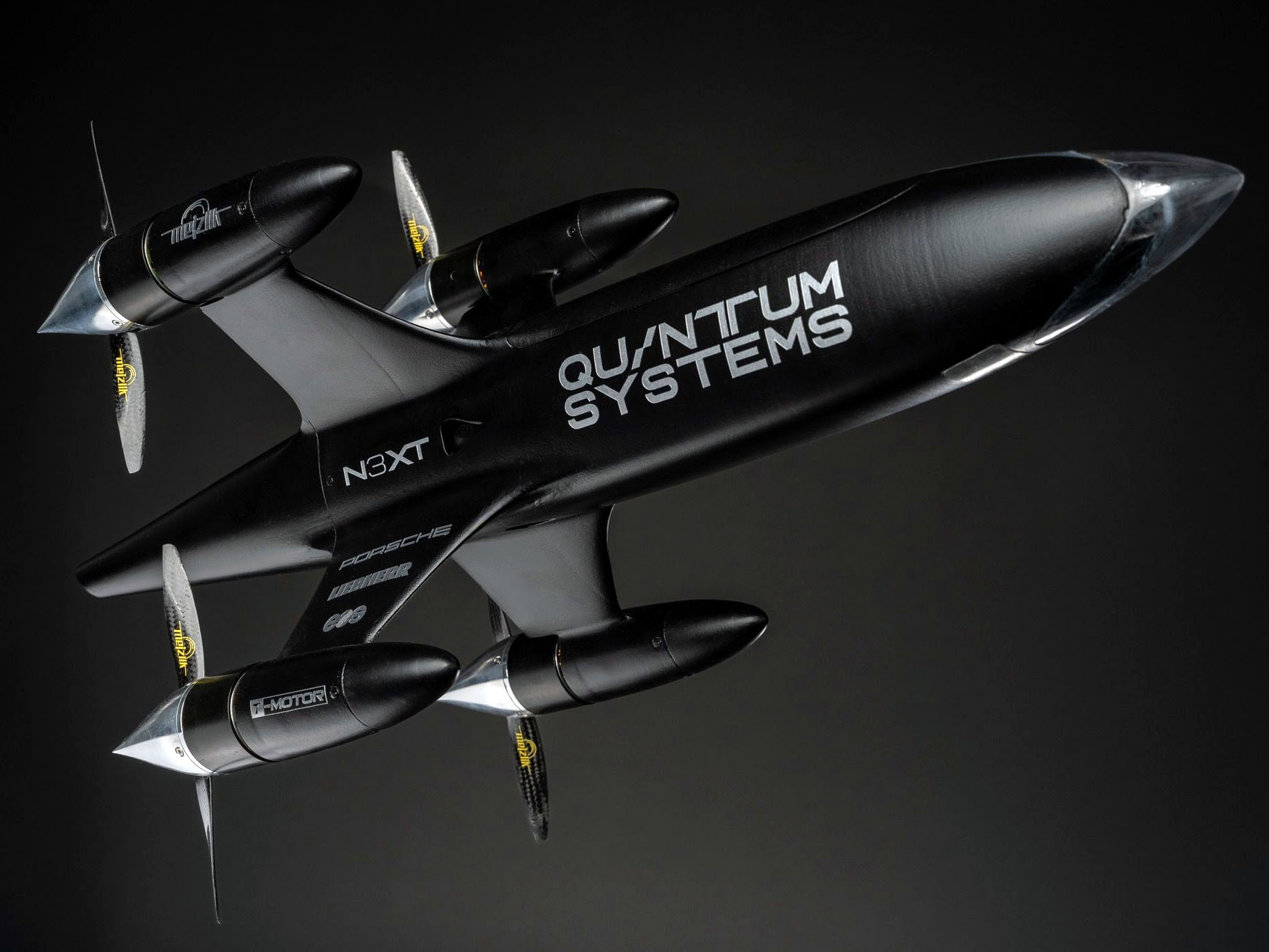
Quantum Systems Drone Hits 699 km/h in Bid for Fastest Battery-Powered Aircraft Record
A German drone team has pushed electric aviation into new territory after clocking an astonishing 699 km/h, or 434 mph, during level-flight testing. The aircraft, known as the Apex Recordhunter, was developed by Quantum Systems’ N3XT team and completed the high-speed run on June 26.
If certified by the Fédération Aéronautique Internationale, the result would set a new world best for a battery-powered aircraft. The achievement also places the Apex Recordhunter ahead of some of the most celebrated electric aircraft milestones, including Rolls-Royce’s Spirit of Innovation, which previously reached 555.9 km/h, and the Siemens-powered Extra 330 LE, which recorded 337.5 km/h.
The drone world has already seen extreme speed attempts from highly specialized aircraft, far beyond what consumer drones are built to achieve. South Africa’s Bell family previously reached 657.59 km/h with the Peregrine V4, while an Australian team has claimed a 730 km/h run under downwind conditions, though that result has not been officially certified.
Quantum Systems has positioned the Apex Recordhunter as more than a record-chasing machine. The project is a technology demonstrator designed to test the limits of battery power, aerodynamics, propulsion, and control systems at extreme speeds. Backed by battery technology support from V4Smart, a Porsche-linked company, the lessons learned from this drone are expected to influence future interceptor drone designs.
Robert Gardemin from the N3XT team described the project as the result of more than a year of relentless work, including early mornings, late nights, setbacks, and breakthroughs. He called 699 km/h an incredible milestone but made it clear that the team is not finished yet, saying the goal is to return soon, go even faster, and make the record official.
The speed breakthrough could have major implications beyond record books. Quantum Systems’ Ukrainian partner, WIY Drones, is also preparing to certify two additional records. One involves Strila, an FPV interceptor designed to carry a 0.5 kg payload at record-setting speed. The other is Spys, an anti-aircraft-class interceptor drone built for rapid response against airborne threats.
Speed is becoming increasingly important in modern drone defense. As low-cost attack drones become faster, more common, and more difficult to stop, interceptor drones need greater acceleration, longer reach, and shorter reaction times. A drone capable of approaching 700 km/h could dramatically improve the ability to respond to incoming aerial threats before they reach their targets.
While the Apex Recordhunter’s 699 km/h flight still awaits official certification, the achievement already signals a major step forward for high-speed electric aviation. It also suggests that battery-powered aircraft may still have far more performance potential than previously expected.
For now, Quantum Systems has delivered one of the most impressive drone speed demonstrations to date. And if the team’s next attempt succeeds, the fastest battery-powered aircraft record may soon move even higher.