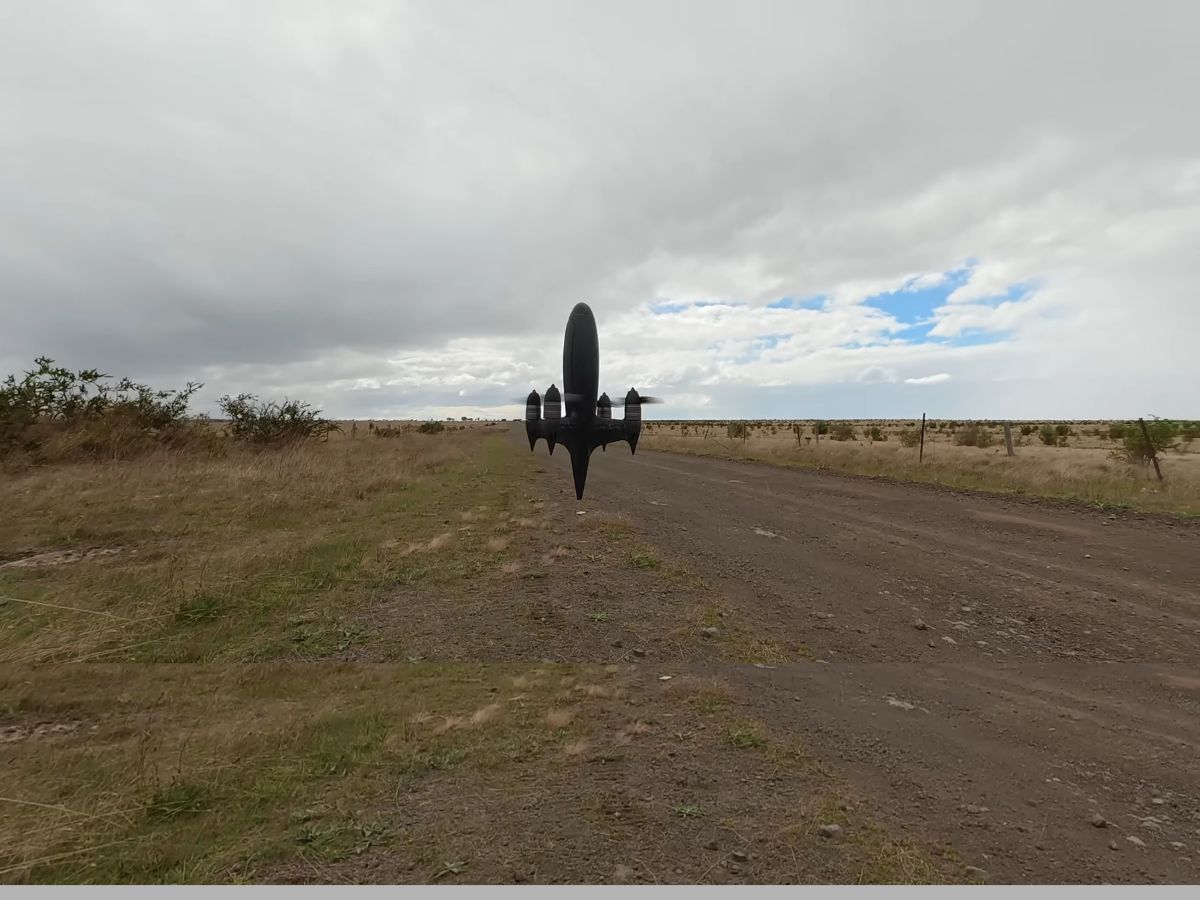
DIY Drone Hits 454 MPH as Benjamin Biggs Pushes the Black Bird to a New Speed Record
DIY drone builder and speed enthusiast Benjamin “Ben” Biggs has raised the bar once again with the latest version of his Black Bird racing drone. His fifth-generation design reached an incredible peak speed of 730 km/h, or 453.6 mph, making it one of the fastest battery-powered RC drones ever built.
The achievement comes only a few months after Biggs previously reclaimed the title for the fastest RC battery-powered drone. The competition around high-speed custom drones has been heating up, with rival builders trading records and constantly improving their designs. This time, Biggs has moved the target even further out of reach with a recorded average top speed of 685 km/h, or 425.6 mph.
To reach these extreme speeds, Biggs made several key upgrades to the Black Bird. One of the biggest changes was increasing the pitch of the propellers, allowing the drone to move more air and generate greater forward thrust. He also switched to carbon fiber propellers, a crucial upgrade for strength, stiffness, and durability at such high RPMs.
Another interesting design tweak was the use of toothed propeller edges. According to Biggs, this helps guide airflow more directly past the blades instead of allowing it to swirl around them. At speeds approaching half the speed of sound, even small aerodynamic improvements can make a major difference.
The record attempt was not without drama. During testing, one drone was lost after the video feed failed, leaving Biggs unable to maintain control. A second drone, however, delivered the headline-grabbing run. With help from a strong tailwind, it blasted downwind at 730 km/h. On the return run into the wind, it still managed an impressive 640 km/h, or 397.7 mph.
Because of the windy conditions, Biggs kept the drone at full throttle longer than usual. That extra strain pushed the power system to its limits. After the run, the batteries were drained so heavily that they began smoking following a crash landing.
The numbers behind the flight are just as wild as the speed itself. The drone weighs about 2 kilograms, or 4.4 pounds, yet it pulled a peak of 19.1 kW of power, equal to roughly 25.6 horsepower. During the run, the system drew 449 amps at 42.5 volts, showing just how extreme modern DIY drone engineering has become.
Biggs is not stopping here. His next goal is to take the Black Bird into an official Guinness World Record attempt, which could turn this already stunning achievement into a formally recognized milestone.
The latest Black Bird run highlights how far home-built drone technology has advanced. With lightweight materials, powerful battery systems, custom propellers, and relentless experimentation, DIY engineers are pushing small electric aircraft into speed ranges that once seemed impossible.