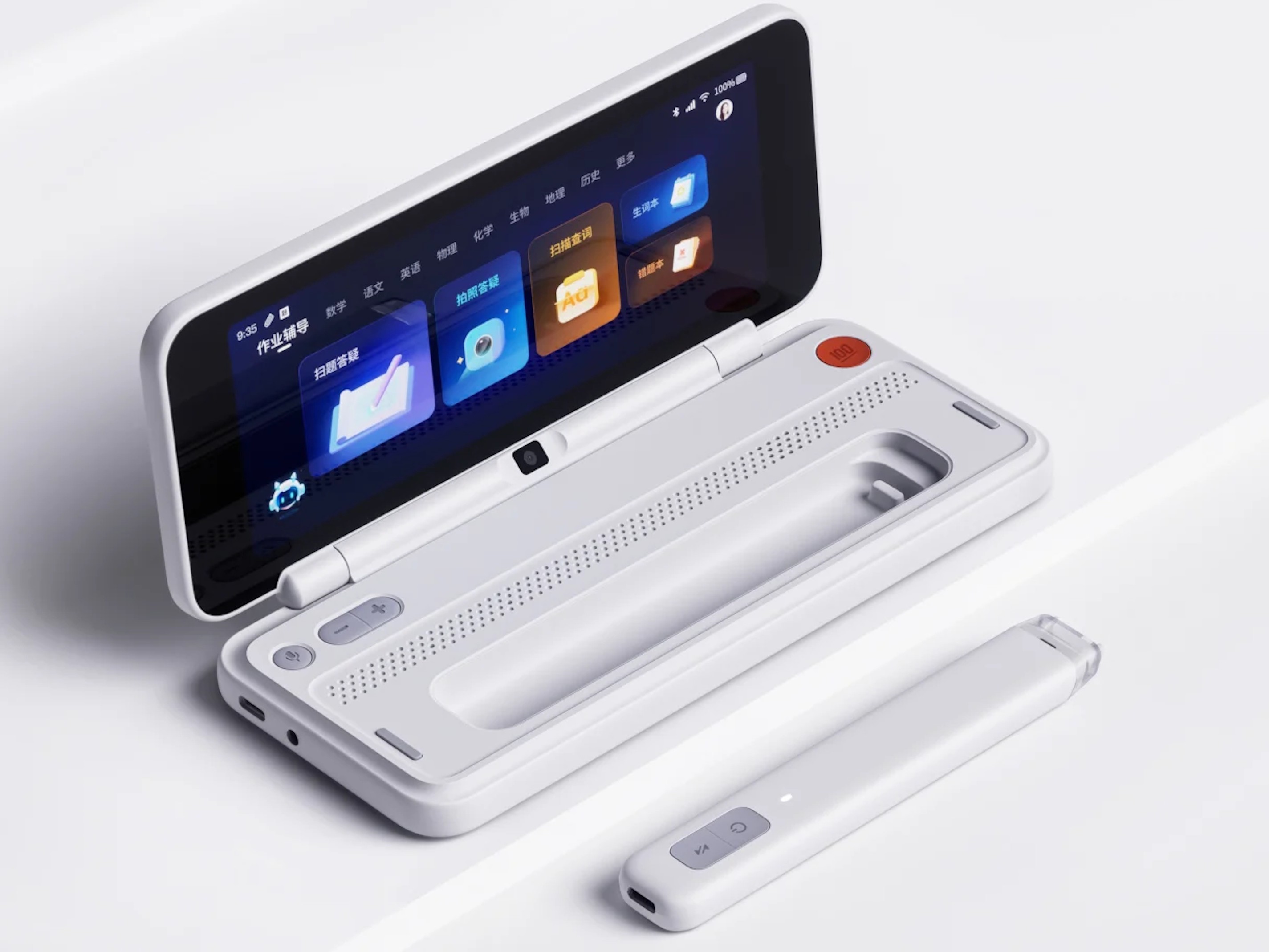
A fresh concept device called the Pokepad is drawing attention with an idea that challenges the familiar laptop formula. While laptops remain the go-to option for everything from schoolwork to gaming, their core clamshell design and keyboard-first approach haven’t changed much in years. The Pokepad imagines a different path—one designed specifically for students who want a compact study companion built around focus, handwriting, and minimal distractions.
At its core, the Pokepad is a learning-focused mobile device that replaces the traditional keyboard with a dedicated stylus, positioned as the main way you interact with the system. This stylus, referred to as the Flip Pen, is meant to handle everyday student tasks like taking notes and practicing handwriting. Concept visuals suggest the pen includes two physical buttons, adding quick controls without cluttering the interface.
The Pokepad itself also appears to include a small set of physical controls, including buttons for volume and a control for voice input. Another interesting idea is how the pen fits into the device: it can be used to scan assignments, then stored neatly inside the Pokepad afterward, keeping everything together in one slim package.
In terms of layout, the Pokepad is designed with a landscape-oriented display, and when folded it reportedly looks a lot like a smartphone—making it easy to carry and potentially more practical for commuting students than a full laptop.
Unlike typical tablets or convertible laptops, the Pokepad concept also leans into the idea of limited software rather than unlimited apps. There’s no mention of a full app store. Instead, it would ship with only a small set of basic tools, such as a dictionary. The goal is clear: reduce the temptation of social media and endless notifications, and create a more distraction-free environment for studying and learning.
For now, it’s important to note that the Pokepad is only a concept and isn’t available to buy. There’s also no clear indication that it will ever become a commercial product. Still, the idea taps into a growing demand for student-friendly devices that prioritize note-taking, handwriting, and focus—especially for learners who feel overwhelmed by all-in-one devices that constantly compete for attention.