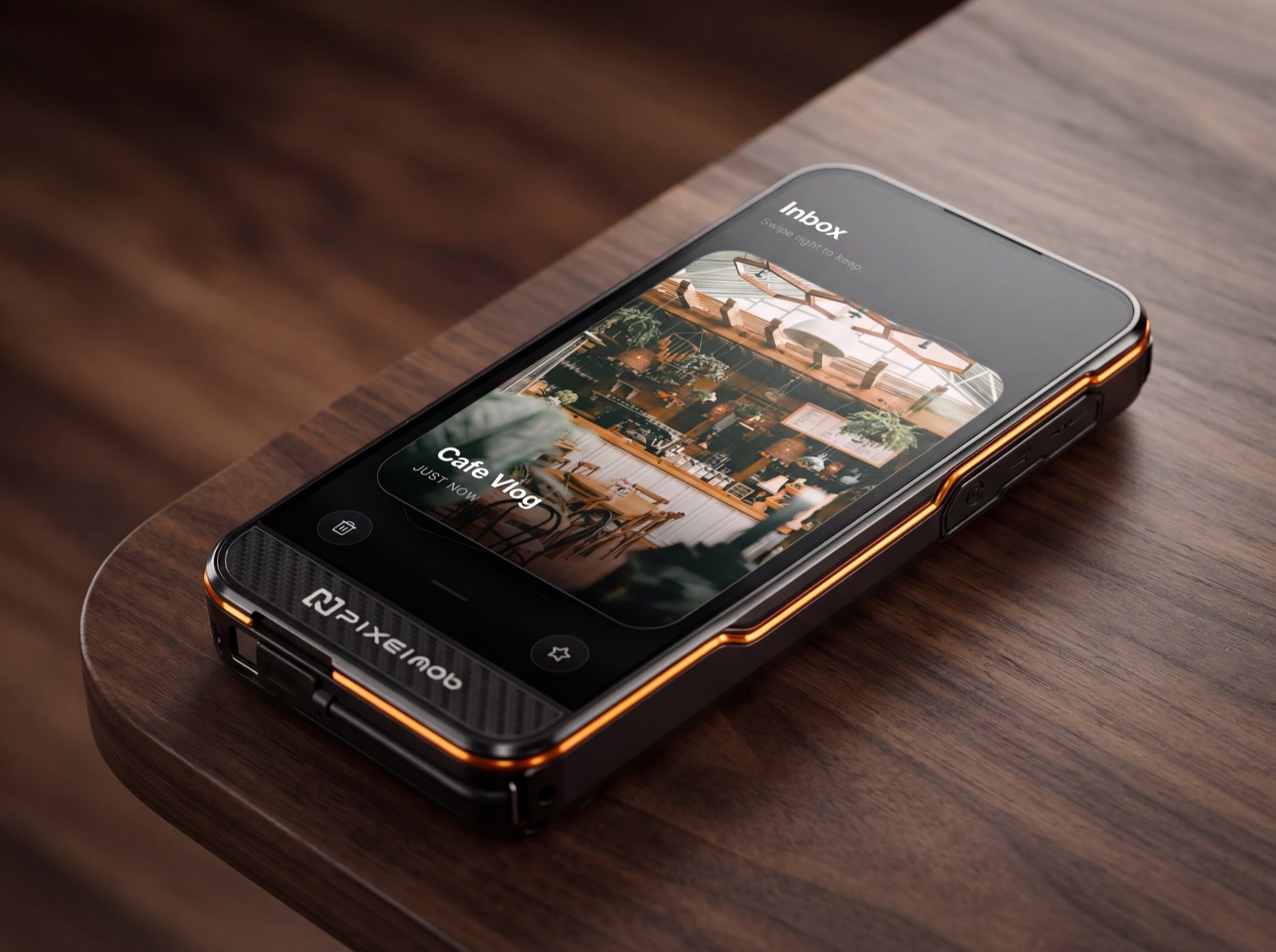
PixelMob is an unusual new gadget that blurs the line between a tiny computer and a smart portable SSD. Instead of positioning itself as a traditional mini PC, it’s being built around the idea of “intelligent storage” with a screen, networking, and AI-assisted tools designed to help you manage files and media on the go. The device is expected to launch through crowdfunding later this year.
At its core, PixelMob packs hardware that’s surprisingly capable for something meant to function like a storage device. It runs on an ARM-based Rockchip RK3588 processor paired with 12GB of RAM. This isn’t intended to compete with high-end desktops, but it’s strong enough for everyday lightweight tasks. In benchmark terms, the RK3588 has been shown landing around 800 points single-core and 2500 points multi-core in Geekbench 6, putting its general performance in the same ballpark as an AMD Ryzen 5 3500U for certain workloads.
What makes PixelMob stand out is the software direction. The makers are shipping it with a custom operating system that focuses on storage-centric features rather than letting it behave like a full mini PC. The goal appears to be turning your portable drive into a smarter hub for organizing, securing, and enhancing your data—especially photos and videos.
A big part of the pitch is AI-assisted functionality. PixelMob is said to include features like duplicate file detection and removal, AI-powered color grading, and even image edits triggered by voice commands. On top of that, it’s designed to support camera control and monitoring, plus a multi-step security approach described as “6-step security,” suggesting a stronger emphasis on protecting sensitive files than you’d get from a typical external SSD.
There will be two versions: PixelMob (standard) and PixelMob Pro. The standard model is expected to come with a 5.5-inch 1080p touch display using an LCD panel. The Pro model upgrades to a larger 7-inch 1080p OLED display with a peak brightness of 1300 nits, which should be more usable in bright environments and more appealing for media review.
Since storage is the main event here, the expansion options are a key detail. PixelMob Pro includes three PCIe 3.0 M.2 slots, giving it the flexibility to scale up capacity or configure drives based on your needs. The standard PixelMob comes with two M.2 slots. Both versions also include 64GB of onboard eMMC storage intended for the operating system.
Connectivity and ports are another area where PixelMob is aiming high for a compact device. The Pro version is listed as including Thunderbolt 4, while both models feature a mix of modern and creator-friendly inputs such as USB 3.2 Gen 1 Type-A and Type-C, Ethernet (2.5G), Wi‑Fi 6, Bluetooth 5.2, and HDMI input and output. For removable media, the Pro model supports SD, microSD, and CFexpress, while the standard model is listed with TF support.
PixelMob is being introduced by the team behind the UnifyDrive line of storage products, and given the combination of built-in display, multiple M.2 slots, high-speed networking, and AI-focused features, it’s unlikely to be cheap. Rising memory and storage costs could also push the final price higher than typical portable SSDs, especially for the Pro model with the OLED screen and Thunderbolt support.
If the final product matches the concept, PixelMob could appeal to photographers, videographers, and anyone who wants portable high-capacity storage with smarter file organization, security features, and quick media enhancements—without carrying a laptop everywhere.