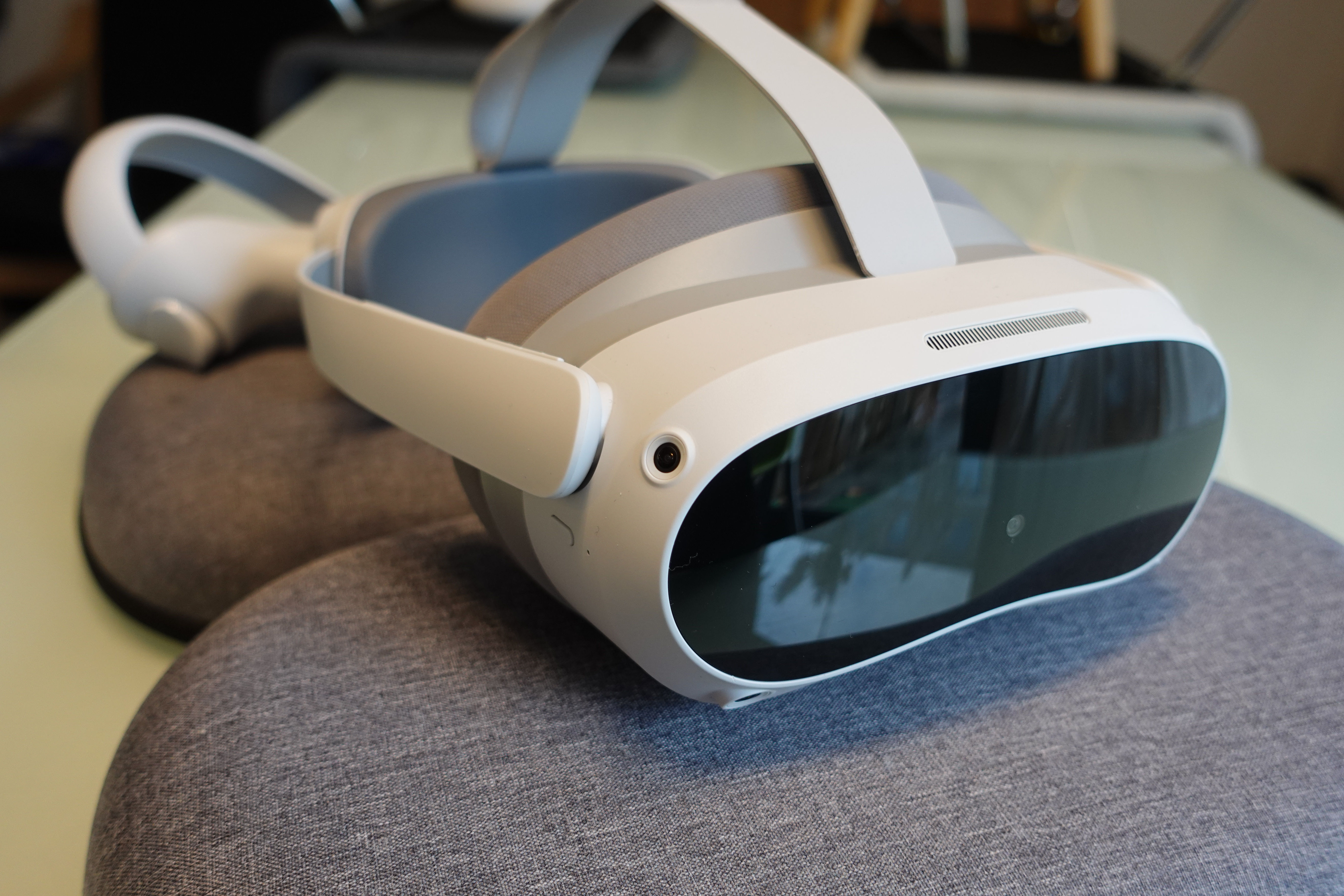
An unboxed Pico 4 headset in all its glory. (Image source: Wikimedia Commons)
For years, Meta’s Quest VR headsets have dominated the market, offering affordable and accessible standalone VR gaming experiences. However, a new challenger from the East emerged, aiming to dethrone Meta’s reigning headsets but missed one critical aspect.
Back in 2020, Meta revolutionized the VR landscape by launching the Quest 2 headset. This affordable, standalone device eliminated the need for complex setups or high-end PCs—users simply put it on and played. For more demanding gamers, the Quest 2 could also connect to a PC for high-fidelity VR gaming through Oculus Link. With 20 million headsets sold, it quickly became the VR headset of choice.
Enter ByteDance, the Chinese digital titan, eyeing this burgeoning market. In 2022, they released the Pico 4. Aimed at conquering both local and international markets, this headset was priced competitively—around €320 in its home market and about €400 in Europe. Despite its budget-friendly tag, the Pico 4 boasted superior specs, including 2GB of extra RAM, higher resolution per eye, and advanced pancake lenses for a broader field of view. Additionally, its battery placement at the back of the strap ensured better weight distribution for enhanced comfort. Like the Quest 2, it also supported PCVR through the PICO Connect app.
On paper, these features gave the Pico 4 an edge over the Quest 2. In reality, it garnered a following among budget-conscious gamers interested in PCVR. However, it stumbled in one crucial area: its game library.
ByteDance had hoped to mimic Meta’s success by banking on software sales through their own PICO store. Unfortunately, the PICO store couldn’t compete with Meta’s robust library featuring exclusives like Assassin’s Creed Nexus and Batman: Arkham Shadow. Without compelling exclusive content, the Pico 4 struggled to stand out.
As a result, the Pico 4 fell into relative obscurity, ultimately marketed as a budget PCVR headset rather than a standalone contender. ByteDance had the opportunity to rival Meta but faltered due to its lackluster software offerings.
This scenario isn’t unique. Sony’s PlayStation VR 2 faced similar struggles despite its hardware prowess. Reviewers lauded its comfort and OLED display, but a hefty price tag and limited game library held it back, leading to disappointing sales and a recent price cut to tap into the PCVR market.
The lesson here? Great hardware is no match for inadequate software. Meta’s VR headsets have had years to establish themselves with a solid content library and brand recognition. Future competitors need to tread carefully, knowing that taking on Meta is a daunting task, and the fate of the Pico 4 could become a recurring theme.
As a 3D artist with a passion for computer hardware and gaming, I find the intersection of technology and gaming endlessly fascinating. From gaming laptops to GPUs, I love exploring how much power can be packed into portable devices. This fascination has led me to share my insights and stories through writing, bridging my love for technology and creativity.
Please consider sharing this article to help spread the word! Every share counts!


