PC Hardware Market Slows in Q1 2026 as CPU and GPU Shipments Decline
The PC hardware market had a softer start to 2026, with both desktop CPU and discrete GPU shipments falling in the first quarter. Rising memory costs, higher component prices, and early signs of supply pressure appear to be weighing on demand, especially among mainstream PC builders and gamers.
According to the latest market figures from Jon Peddie Research, discrete graphics card shipments reached 11.8 million units in Q1 2026. Desktop CPU shipments also dropped sharply, falling to 15.7 million units for the quarter.
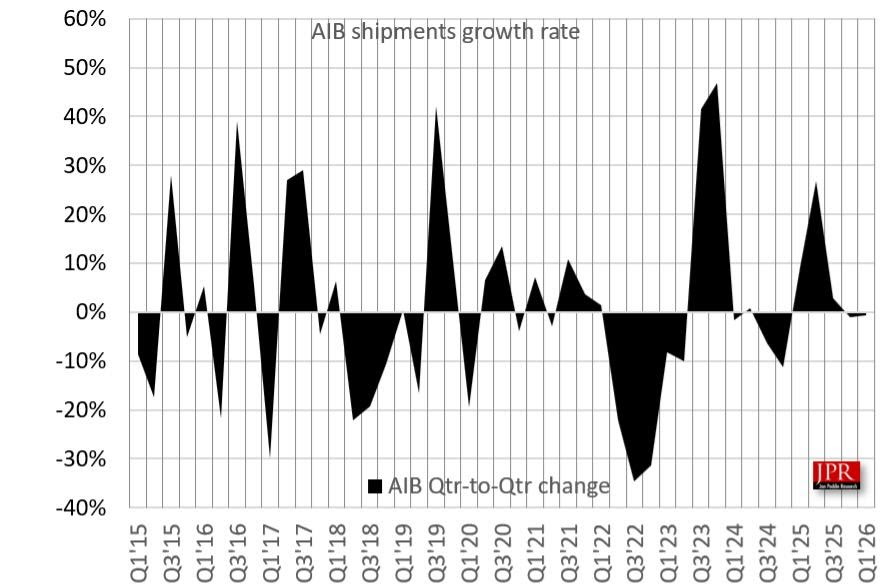
The add-in board GPU market, which includes discrete graphics cards used in desktop PCs, declined by 0.6% compared to the previous quarter. Longer-term projections also remain cautious, with the segment expected to see a compound annual growth rate of -3.3% from 2024 through 2029. During that period, the installed base is projected to reach 183 million units, while AIB GPUs are expected to represent 129% of the desktop PC market.
While the numbers point to a cooling market, the situation in Q1 2026 was not as severe as previous downturns, such as the crypto-related crash of 2018-2019 or the post-pandemic correction seen in 2022-2023. However, the first quarter appears to have marked the beginning of new pricing pressure. Since then, memory shortages and higher component costs have continued to push PC hardware prices upward, potentially making future quarters more challenging for the desktop PC market.
In the discrete GPU market, NVIDIA remained the dominant force with around 90% market share. AMD held second place with 8%, while Intel reached 1%. Both NVIDIA and AMD saw shipment declines during the quarter, while Intel managed a small increase, giving it a slightly larger foothold in the discrete graphics segment.
The overall attach rate for add-in board GPUs in desktop PCs increased to 76% during the quarter, rising 33.2% from the previous quarter. This suggests that even though total shipments declined, a larger share of desktop systems still relied on discrete graphics cards.
The desktop CPU market had an even steeper decline. Shipments were down 25% year over year and fell 24% compared to the previous quarter. This sharp drop highlights the broader slowdown in desktop PC demand, as consumers and system builders respond to higher prices and uncertain upgrade timing.
One reason for the slower quarter was the lack of major new GPU product launches. Neither of the two leading graphics card makers introduced a broad new lineup in Q1 2026, with several expected releases reportedly pushed forward or adjusted. NVIDIA has been refreshing older GPUs for mainstream buyers while working to meet demand for its newer products. AMD recently introduced the Radeon RX 9070 GRE, while Intel expanded its Arc Pro series with two additional models.
Looking ahead, the next major generation of graphics cards is currently expected around the 2027-2028 timeframe. There is also renewed attention on potential RTX SUPER refresh models. However, launch timing remains uncertain, and memory availability is expected to play a major role in whether new GPUs move ahead as planned or face further delays.
For PC gamers, creators, and hardware enthusiasts, the key issue is pricing. If memory and component costs continue to rise, graphics cards, processors, and complete desktop systems could become more expensive throughout 2026. That may lead many users to delay upgrades, search for older-generation hardware, or wait for clearer signs of improved supply.
The first quarter of 2026 may not represent a full market crisis, but it does show that the PC hardware industry is entering a more cautious phase. GPU shipments are slipping, desktop CPU demand is down significantly, and the next wave of major hardware launches may depend heavily on memory supply and manufacturing conditions.