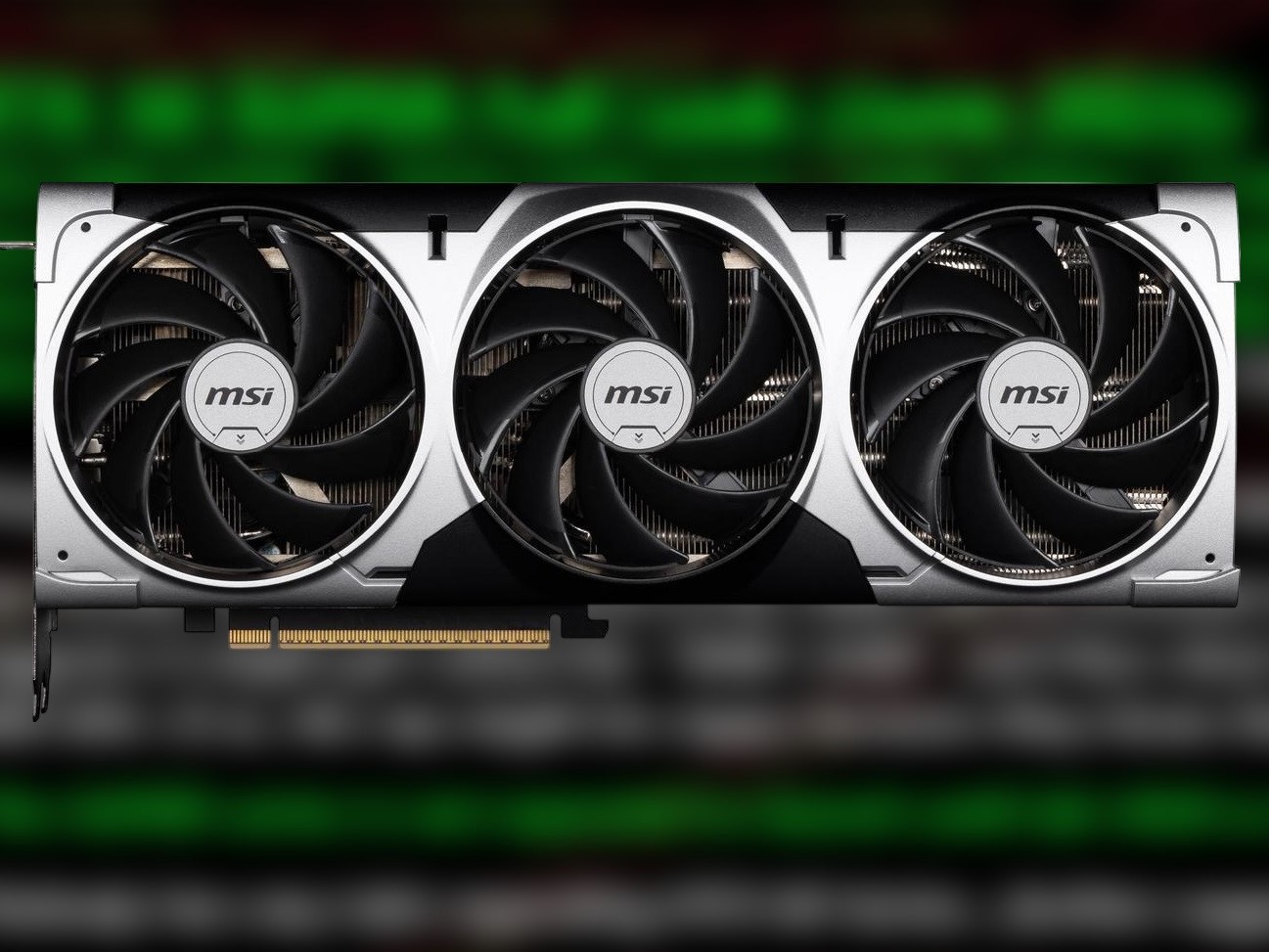
Nvidia GeForce RTX 50 Super GPUs could bring more VRAM and faster gaming performance
Nvidia’s GeForce RTX 50 Super desktop graphics cards may still be on the way, according to fresh leak details covering specifications, power targets, and expected performance gains. The rumored lineup includes the GeForce RTX 5080 Super, RTX 5070 Ti Super, RTX 5070 Super, and RTX 5060 Super, with the biggest upgrades centered around larger VRAM capacity, faster memory, and higher power limits.
Rumors about an RTX 50 Super refresh have been circulating for some time, but the lineup never arrived during the earlier expected window. Now, new information suggests Nvidia and its board partners could be preparing these refreshed gaming GPUs for a possible release in late 2026 or early 2027. As always with unconfirmed GPU leaks, the details should be treated with caution until Nvidia makes an official announcement.
The most notable change across the rumored GeForce RTX 50 Super series is memory. Instead of major increases in CUDA core counts, Nvidia appears to be focusing on more VRAM and higher bandwidth. That could make the cards more attractive for modern PC games, especially as new titles continue to demand more video memory at 1440p and 4K resolutions.
The GeForce RTX 5080 Super is expected to sit at the top of the refreshed lineup. According to the leak, it may keep the same 10,752 CUDA cores as the standard RTX 5080, but upgrade to 24 GB of GDDR7 memory running at 32 Gbps. That would be a major VRAM increase and could help the card perform better in memory-heavy games, ray tracing workloads, and high-resolution texture packs.
However, the extra performance may come with higher power consumption. The RTX 5080 Super is rumored to have a 415 W power rating, compared to 360 W for the regular RTX 5080. This suggests Nvidia may be pushing clock speeds higher alongside the memory upgrade to squeeze out more gaming performance.
The GeForce RTX 5070 Ti Super is also said to receive a major memory boost. While the standard RTX 5070 Ti comes with 16 GB of GDDR7 memory, the Super version is rumored to feature 24 GB of 28 Gbps VRAM. Like the RTX 5080 Super, the CUDA core count may remain unchanged, meaning most of the performance improvement would likely come from increased bandwidth, larger memory capacity, and higher operating clocks.
Power consumption is again expected to rise. The RTX 5070 Ti Super is reportedly rated at 350 W, up from 300 W on the regular RTX 5070 Ti. For gamers, this could mean stronger performance, but also a greater need for a quality power supply and good case airflow.
The GeForce RTX 5070 Super may be one of the more interesting cards in the rumored lineup. Unlike the RTX 5080 Super and RTX 5070 Ti Super, this model is expected to receive a small CUDA core increase. The leak points to 6,400 CUDA cores, roughly 4% more than the standard RTX 5070.
The memory upgrade could be even more important. The RTX 5070 Super is said to come with 18 GB of VRAM, giving it 6 GB more than the regular RTX 5070. Its power rating may rise to 275 W, which is 25 W higher than the standard model. If priced well, this could make the RTX 5070 Super a strong choice for high-refresh 1440p gaming and entry-level 4K gaming.
At the lower end, Nvidia may introduce a GeForce RTX 5060 Super, though the card could potentially launch under a name like RTX 5060 12 GB. It is rumored to keep the same 3,840 CUDA cores as the regular RTX 5060, but increase memory capacity to 12 GB. That would be a welcome upgrade, as many gamers have criticized lower-VRAM graphics cards for aging poorly in newer titles.
No clear power rating has been shared for the RTX 5060 Super, but based on the rest of the rumored lineup, a higher power limit would not be surprising.
In terms of performance, the GeForce RTX 50 Super series may deliver noticeable but not revolutionary gains over the standard RTX 50 cards. The improvements are expected to come mainly from faster memory, higher bandwidth, larger VRAM buffers, and increased clock speeds.
The RTX 5080 Super is rumored to be around 7% to 14% faster than the RTX 5080. If the card launches near the previously rumored $999 to $1,199 price range, it could offer better value than the original model by combining more memory with higher performance.
The RTX 5070 Ti Super may deliver a smaller but still useful uplift, with estimated gains of around 5% to 10% over the RTX 5070 Ti. Pricing rumors suggest a possible $749 to $799 range, though real-world pricing may depend heavily on supply, demand, and retailer markups.
The RTX 5070 Super could land around 8% to 12% ahead of the standard RTX 5070. With rumored pricing between $549 and $599, it may become one of the more appealing options in the lineup if Nvidia can keep availability healthy and pricing close to official targets.
The biggest question is not whether the RTX 50 Super cards can deliver better performance. The bigger issue is whether gamers will actually be able to buy them at reasonable prices. Recent GPU launches have often suffered from limited stock, inflated retail pricing, and strong demand from buyers looking to upgrade.
If Nvidia releases the GeForce RTX 5080 Super, RTX 5070 Ti Super, RTX 5070 Super, and RTX 5060 Super with enough supply, the refresh could improve the desktop GPU market and give gamers better options with more VRAM. But if availability is limited or prices rise far above suggested levels, the RTX 50 Super series may struggle to deliver the value many PC gamers are hoping for.
For now, the rumored Nvidia GeForce RTX 50 Super lineup sounds promising, especially for players who want more video memory for modern games. The combination of GDDR7 memory, higher bandwidth, larger VRAM capacities, and modest performance gains could make these cards attractive upgrades. Still, until Nvidia confirms the specifications, pricing, and release date, the RTX 50 Super series remains an exciting but unconfirmed refresh.