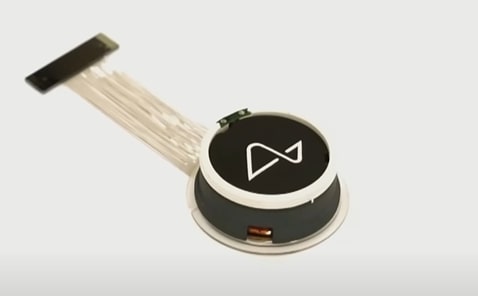
Neuralink, the brain-computer interface company founded by Elon Musk, has announced a significant milestone with their second PRIME study participant, Alex. Alex, an automotive technician, became quadriplegic after a spinal cord injury and recently received his Neuralink implant at the Barrow Neurological Institute.
Upon connecting his Link device to a computer, Alex was able to control an on-screen cursor using just his thoughts. Remarkably, within hours, he surpassed the performance he had achieved with traditional assistive technologies, even breaking a world record for BCI cursor control on his very first day.
The integration of the Link device enabled Alex to quickly engage in activities that were previously challenging or out of reach. Impressively, he began playing Counter-Strike 2, a popular first-person shooter game, using the Link in conjunction with a Quadstick. The Quadstick is a mouth-operated joystick designed for quadriplegics, and when used alongside the Link, it allowed Alex to move and aim simultaneously in the game—capabilities he couldn’t achieve with the Quadstick alone.
On the second day of using the Link, Alex further demonstrated his adaptability by employing Fusion 360, a computer-aided design (CAD) program, to design a custom mount for his Neuralink charger. The design was then 3D-printed and incorporated into his setup. Neuralink plans to enhance Alex’s control further by mapping his intended movements to various mouse clicks, which will facilitate his use of complex software.
Neuralink has made adjustments to their procedures based on experiences with their first participant, Noland Arbaugh. To mitigate issues related to thread retraction that Noland faced, the team minimized brain movement during Alex’s surgery and reduced the gap between the implant and the brain’s surface. So far, these improvements appear to be successful, as Alex has not encountered the same issues.
Looking forward, Neuralink aims to develop algorithms capable of recognizing handwriting intent to optimize text entry speed, and plans to expand control options to provide full mouse and video game controller functionality. These advancements are designed to help individuals with mobility impairments regain digital independence and improve communication for those with neurological conditions like ALS.
As Neuralink continues to refine its BCI technology, the company moves closer to its goal of enhancing human-machine interaction and significantly improving the quality of life for people with neurological challenges.


