### Medicare Expands Coverage to Include Personal Robotic Exoskeletons
RICHMOND, Va. (August 13, 2024) — The Centers for Medicare & Medicaid Services (CMS) has recently approved reimbursement for personal robotic exoskeleton devices. This crucial development means that individuals like 70-year-old Ivan Vargas can now receive their very own exoskeleton for use at home and in the community.
In 2020, Vargas suffered a T10 spinal cord injury after falling through a ceiling while assisting his son-in-law with home renovations. The accident left him paralyzed from the waist down and also resulted in torn rotator cuffs, rendering his arms immobile. “I tried to stop myself from falling and tore both of my rotator cuffs as well, so I didn’t have my arms to do anything,” says Vargas. “That really set me back… it was awful.”
For years, FDA-approved robotic exoskeletons—which cost about $100,000 each—have been available for patient use during in-clinic therapy sessions. Personal devices could either be purchased out of pocket or provided at no cost for qualifying U.S. veterans under a Veterans Administration (VA) policy. Thanks to CMS’ 2024 Home Health Rule, exoskeletons are now reclassified under the brace benefit category, allowing individuals to apply for Medicare coverage at an established rate of $91,032. With secondary insurance, beneficiaries’ copays may also be covered, making these devices more accessible.
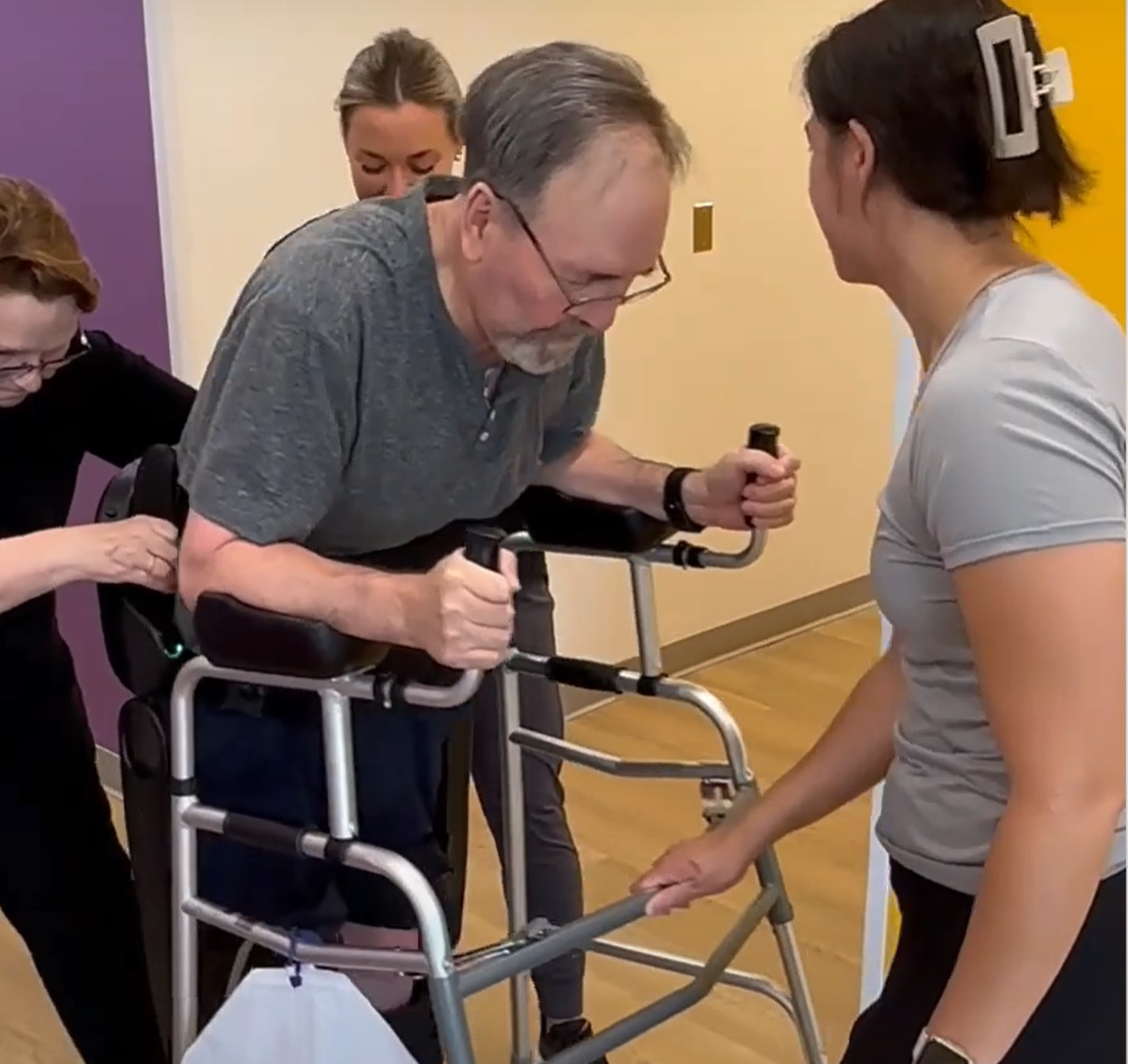
Vargas, who uses the Ekso Indego exoskeleton, is the first person on the East Coast to apply for Medicare coverage for his device. “It is a life changer for me. I can go to church, see my grandkids play sports, and volunteer my time. It will give me the freedom to walk,” says Vargas. He and his wife, Connie, started a rigorous 40-hour home training program in June at the Sheltering Arms Institute’s Hanover outpatient center, guided by physical therapist Alivia Thorn. The training ensures that the couple can safely use the device on their own, and Connie is excited about the new possibilities: “It’s amazing. This way, he’ll eventually be able to get in and out of a car while wearing the Indego.”
The Ekso Indego is worn over a user’s clothing and attaches to their legs and trunk, transferring its load to the ground, so the user doesn’t bear the weight of the 29-pound device. Battery-powered motors drive the legs to create a walking pattern for those unable to stand or walk due to spinal cord injuries or other neurological issues. The device is suitable for individuals with spinal cord injuries between the T3 to L5 vertebrae and can be used at home or in the community. However, it’s not recommended for sports or stair climbing.
Medicare coverage makes these devices financially attainable and brings hope for newfound independence, along with numerous physical and psychological benefits. “It opens up accessibility for a lot of people,” says Christina Smith, PT, DPT, NCS, physical therapist, and manager of therapy services at the Sheltering Arms Institute’s Bon Air outpatient center. “There are numerous secondary benefits of using an exoskeleton at home, such as maintaining range of motion, improving blood pressure and cardiovascular function, and increasing bone density. These benefits not only enhance daily life activities but also help in preventing future illnesses among non-ambulatory individuals.”
Currently, training for exoskeleton use with certified therapists is offered at Sheltering Arms Institute’s Bon Air and Hanover outpatient centers to help patients fully leverage this transformative technology.
If you or someone you know might be interested in a personal exoskeleton, you are encouraged to ask a physician about eligibility. The Ekso website also provides helpful information for those looking to see if they qualify.
### About Sheltering Arms Institute
Sheltering Arms Institute is a non-profit physical rehabilitation hospital and network of outpatient centers, supported by donors. It combines the reputation of Sheltering Arms with the nationally recognized programs and research of VCU Health through a joint venture. Ranked #1 in Virginia and #19 in the nation by U.S. News & World Report, the Institute integrates advanced technology, research, and evidence-based clinical treatment to create an innovative rehabilitative care model, facilitating superior patient outcomes.