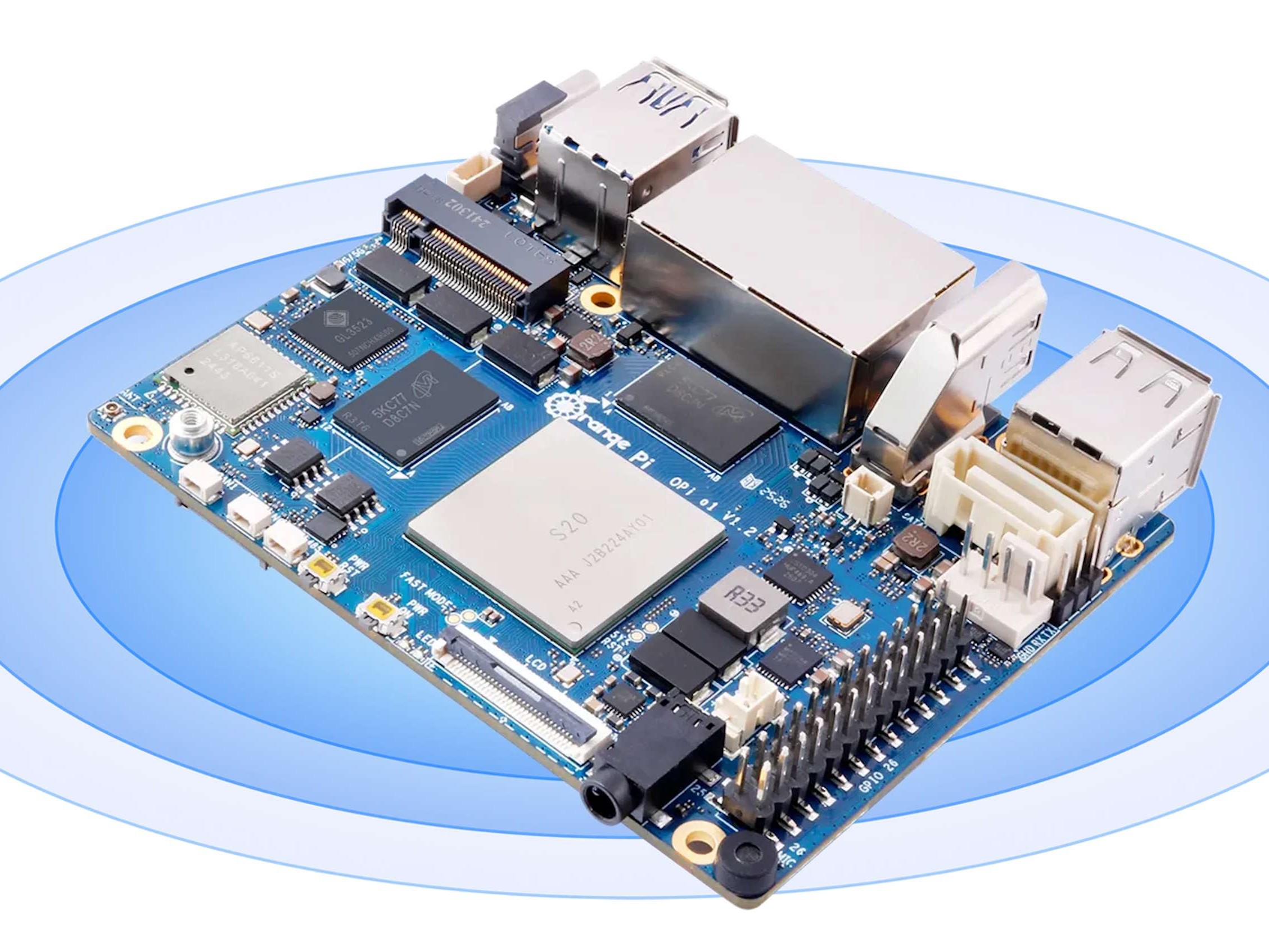
Orange Pi O1 Debuts as a Compact AI Single-Board Computer with 16 TOPS, NVMe, SATA, and Dual Ethernet
The Orange Pi O1 has arrived as a new single-board computer aimed at users who need more than a basic Raspberry Pi-style board. With built-in AI acceleration, flexible storage options, and a strong selection of ports, this compact SBC is designed for developers, makers, edge AI projects, networking tasks, and lightweight desktop use.
At the center of the Orange Pi O1 is the Sophgo BM1688 processor. This chip combines eight ARM Cortex-A53 CPU cores with a RISC-V C906 co-processor, giving the board a versatile architecture for a wide range of workloads. Its biggest highlight, however, is the integrated TPU, which can deliver up to 16 TOPS of INT8 AI performance. That makes the board especially interesting for local artificial intelligence tasks such as image recognition, machine vision, smart monitoring, automation, and edge computing applications.
The Orange Pi O1 is available with either 8 GB or 16 GB of LPDDR4 or LPDDR4X memory, giving users enough RAM for development, multitasking, and more demanding embedded workloads. For onboard storage, the board can be equipped with an optional eMMC module offering up to 128 GB of capacity.
Storage flexibility is one of the board’s strongest features. In addition to eMMC and a microSD card slot, the Orange Pi O1 includes an M.2 slot with PCIe 3.0 support for NVMe SSDs. This is a major advantage for users who want faster boot times, quicker file access, or reliable storage for heavier applications. Even more notable is the inclusion of a dedicated SATA connector, a feature that is still uncommon on many compact single-board computers. This opens the door for connecting SATA SSDs or hard drives for file servers, data logging, media libraries, and backup systems.
Despite its small 90 x 70 mm footprint, the Orange Pi O1 is equipped with a generous selection of ports. It includes dual Gigabit Ethernet, making it suitable for network-focused projects such as routers, firewalls, gateways, or edge servers. There are also two USB 2.0 ports and two USB 3.0 ports for peripherals, external drives, cameras, and other accessories.
For display output, the board features HDMI 2.0 with support for up to 4K video. This allows the Orange Pi O1 to work as a compact desktop computer, digital signage device, media terminal, or development workstation without needing an additional carrier board.
The board also includes specialized interfaces that will appeal to hardware developers and industrial users. These include MIPI connectors, CAN bus, RS485, and an expansion header for connecting sensors, actuators, and other external modules. This makes the Orange Pi O1 a practical choice for robotics, industrial automation, smart home systems, AI cameras, and custom embedded devices.
Power is supplied through USB Type-C at 20 V, while wireless networking support adds another layer of convenience for projects that require cable-free connectivity.
The Orange Pi O1 stands out because it combines AI acceleration, fast NVMe storage, SATA support, dual Ethernet, and broad expansion options in a compact format. For users looking for a Raspberry Pi alternative with stronger AI capabilities and more storage flexibility, this board could be a compelling option.
Availability appears to be limited at launch, so pricing and broader distribution may vary by region. However, based on its specifications, the Orange Pi O1 is clearly positioned as a powerful single-board computer for developers, AI enthusiasts, and anyone building compact systems that need both performance and connectivity.