OneXPlayer 3 Debuts as a Powerful Intel Arc G3 Extreme Gaming Handheld With OLED Display
OneXPlayer has introduced the OneXPlayer 3, a new high-performance gaming handheld powered by Intel’s Arc G3 Extreme platform. Designed for players who want desktop-like gaming performance in a compact portable device, the handheld combines a next-generation Intel chip, a large OLED screen, and a flexible 3-in-1 design.
The arrival of Intel Arc G3 marks an important step for the handheld gaming market. Built for portable gaming systems, the new Intel platform is expected to deliver strong CPU and GPU performance, with configurations reaching up to 14 CPU cores and 12 Xe3 GPU cores. That gives handheld makers more room to target modern PC games at smoother frame rates while keeping the device portable.
The OneXPlayer 3 is one of the first gaming handhelds to adopt Intel’s Arc G3 Extreme hardware. It is being positioned as a flagship device for gamers who want reliable performance in demanding titles, whether they are playing at home, traveling, or using the system as part of a broader mobile setup.
One of the biggest highlights of the OneXPlayer 3 is its 3-in-1 design. The device can work as a traditional handheld gaming console, a compact laptop-style machine, or a standalone display. This makes it more versatile than a standard handheld and gives users different ways to play, work, or stream content.
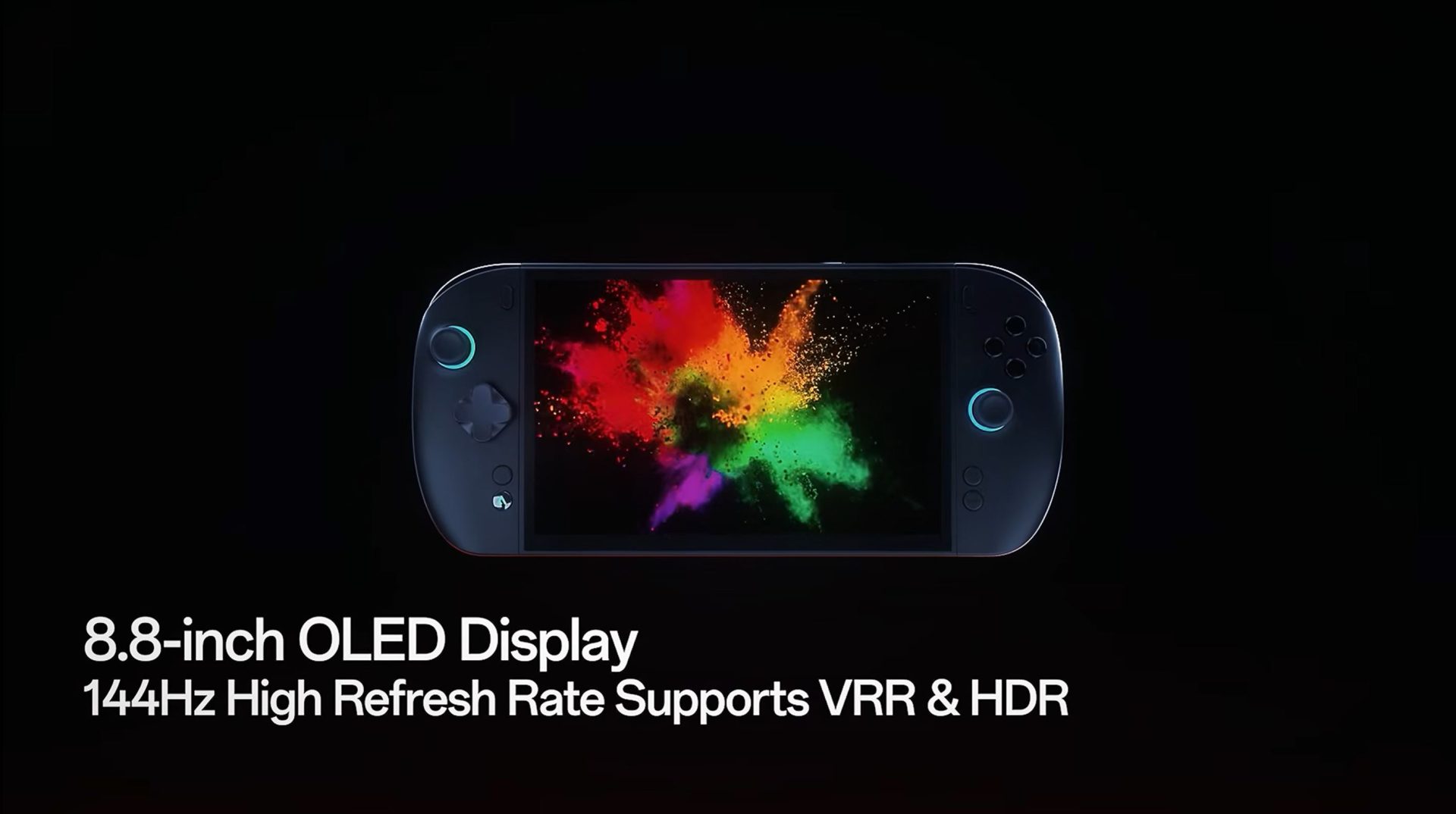
The handheld features an 8.8-inch OLED display, which should offer deep contrast, vibrant colors, and sharper visuals compared to many LCD-based handhelds. The screen also supports VRR and HDR, helping improve smoothness and visual quality in supported games. With a 144Hz refresh rate, the display is built for fast gameplay and can make action titles, racing games, and shooters feel more responsive.
OneXPlayer has also focused on controls. The OneXPlayer 3 includes a detachable control system, giving users more flexibility depending on how they want to use the device. The controller setup includes a capacitive touchpad designed for precise cursor movement, making it easier to navigate desktop-style interfaces or games that benefit from mouse-like control.
The device also comes with two-stage triggers, allowing players to switch between micro and linear trigger modes. This feature could be especially useful in racing games, shooters, and simulation titles where different trigger sensitivity can affect gameplay.
Powering all of this hardware is an 85Wh battery, a large capacity for a handheld gaming PC. Since high-performance portable gaming devices can consume a lot of power, the bigger battery should help extend play sessions and make the system more practical for users who want longer gaming time away from a charger.
In terms of performance expectations, the OneXPlayer 3 is said to target a level suitable for modern PC gaming, with the potential to deliver 60 FPS or higher in many current titles depending on settings and resolution. With Intel’s Arc G3 Extreme graphics and Xe3 GPU technology, the handheld is clearly aimed at users who want more than casual portable gaming.
OneXPlayer has launched the device through an Indiegogo campaign, with the campaign expected to go live in June. Pricing has not yet been announced, but given the premium display, large battery, detachable controls, and next-generation Intel hardware, the OneXPlayer 3 is likely to compete in the high-end gaming handheld category.
With the OneXPlayer 3, the company is pushing further into the premium handheld gaming PC space. Its combination of Intel Arc G3 Extreme performance, OLED visuals, 144Hz refresh rate, detachable controls, and multi-mode usability could make it one of the most interesting portable gaming devices of the year.