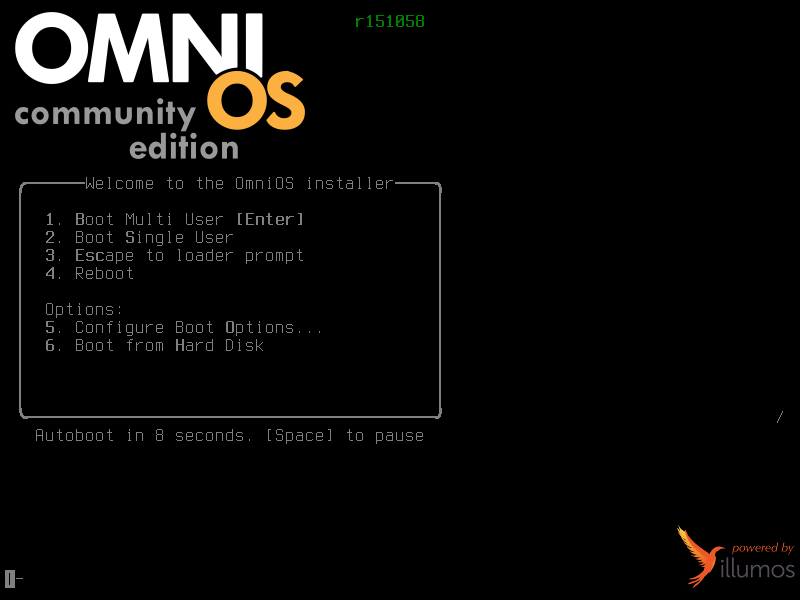
OmniOS r151058 is now available, bringing a solid round of tool updates, new features, performance gains, and broader hardware support for admins who rely on this illumos-based operating system in production. Built with servers in mind, OmniOS positions itself as a secure, open-source enterprise server OS that traces its roots back to OpenSolaris (which was discontinued in 2010). This new release continues that long-running focus on stability while still pushing meaningful improvements in networking, storage, virtualization, and system tooling.
It’s important to note that OmniOS r151058 is intended as an upgrade path only for systems already running r151054 or r151056. If you’re on older builds, you’ll need to move to one of those supported versions first before stepping up to r151058.
One of the most notable enhancements in this release is improved IPv6 performance. OmniOS now includes a fast path IPv6 networking implementation similar to what has already existed for IPv4. By bypassing the DLS layer for certain traffic, this approach can boost throughput and help IPv6-heavy environments run more efficiently. Alongside that, kernel MAC framework softring polling code has received fixes, rounding out the network-side improvements with additional stability and correctness.
Security and authentication also get a meaningful upgrade. AES-GMAC sign and verify support has been added to PKCS#11, and the underlying kernel AES implementation now supports GMAC input through standard MAC interfaces. On top of that, SMB 3.1.1 now supports GMAC signing, including the capability negotiation required for it. For organizations depending on Windows interoperability, there are also improvements to SMB Active Directory join behavior, and SMB workloads running on ZFS should see better performance.
Storage and multipathing management is another area that benefits. This release adds the ability to configure load-balancing policy for individual logical units through mpathadm for scsi_vhci, giving administrators more granular control when tuning multipath setups.
Virtualization isn’t left out either. The bhyve hypervisor now supports transitional virtio devices, which can present both legacy and modern (1.0+) virtio interfaces at the same time. That should make it easier to maintain compatibility across different guest OS expectations while still taking advantage of newer virtio capabilities.
Hardware support expands significantly through new drivers built on I2C/SMBus and GPIO frameworks. Additions include support for Intel SMBus controllers, PCA954x family I2C multiplexers, DDR4 and DDR5 I2C SPD EEPROMs, LM75 family I2C temperature sensors, and other related components. For operators deploying OmniOS on a wider range of modern platforms, these driver updates can translate directly into smoother installs and more complete sensor and bus support.
There are also a number of boot loader improvements and fixes, including IP fragment reassembly work, and Intel IOMMU code is now more informative when it encounters unknown remapping structures—useful for troubleshooting complex systems and newer hardware.
On the toolchain side, OmniOS userland is now built with GCC 15 by default, while GCC 14 remains available for those who need it. This kind of update typically matters for maintainers and anyone compiling software directly on the platform, offering a newer compiler baseline without forcing everyone to drop the previous option immediately.
As with many mature server operating systems, r151058 also continues the cleanup of older components. The deprecated list includes the grub boot loader, OpenSSL 1.0.x and 1.1.1, Python 2, and OpenSSH support for GSSAPI key exchange. If your environment still depends on any of these legacy pieces, it’s a good time to plan migrations and verify compatibility before they disappear entirely from future releases.
For those looking to deploy fresh, the installation images remain compact: the ISO is about 301 MB and the USB-DD image is about 401 MB. Also, OmniOS version 151046 has now reached end of life, meaning it will no longer receive updates. Anyone still running 151046 should plan an upgrade to r151054 or r151058 to stay on a supported track and continue receiving fixes and improvements.
Overall, OmniOS r151058 is a practical, admin-focused release: better IPv6 performance, stronger SMB and crypto capabilities, faster ZFS-backed SMB workloads, improved bhyve virtio handling, expanded I2C/SMBus and GPIO driver support, and an updated default toolchain—all aimed at keeping OmniOS competitive as a modern, secure, illumos-based server operating system.