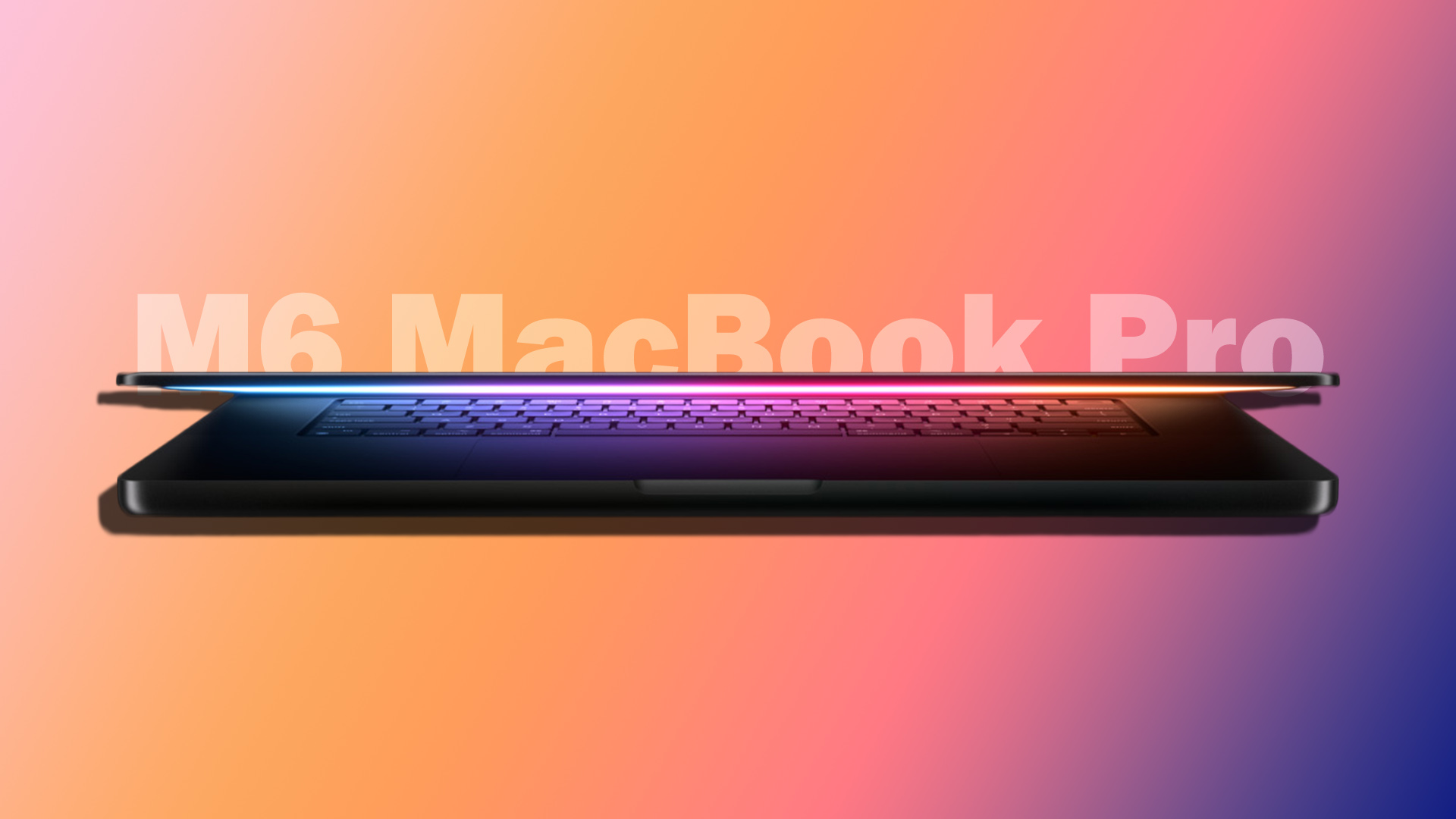
Apple’s mini‑LED MacBook Pro era is nearing its finale. After nearly five years on the market (with the mini‑LED lineup set to hit its fifth anniversary in 2026), Apple is widely expected to shift the MacBook Pro to OLED, starting with the M6 MacBook Pro generation. And this upgrade likely won’t be limited to better picture quality—reports suggest Apple is preparing a larger refresh that could bring a thinner chassis, a notch-free screen, touchscreen support, and even a new class of Apple Silicon built on an advanced 2nm process.
Below is what to expect from the M6 MacBook Pro lineup, including design changes, hardware possibilities, pricing expectations, and which models may (or may not) get OLED.
OLED is coming, and the design may change with it
The headline change is the move from mini‑LED to OLED. Because OLED panels don’t need the same kind of backlight system used in mini‑LED laptops, Apple could reduce internal thickness and slim the overall chassis by a few millimeters. In other words: OLED isn’t just about deeper blacks and better contrast—it could also enable a noticeably thinner MacBook Pro.
At the same time, Apple is rumored to be working toward a cleaner display design, including removing the notch. That alone would be a major visual shift for the MacBook Pro, especially for users who’ve been waiting for a more uninterrupted screen.
Touchscreen MacBook Pro: a big shift (with a practical challenge)
Another potential change is touchscreen support. A touch-enabled MacBook Pro would be a significant new direction for Apple’s pro laptops, giving users a more direct way to interact with macOS apps and on-screen content.
But there’s a real-world downside: tapping a laptop display can cause wobble, even on sturdy hinges. The expectation is that Apple is developing a reinforced hinge system to reduce the “push back” effect that happens when you touch the screen. A stronger hinge could improve usability, but it may also help explain why the OLED models could become more expensive.
Display sizes and slimmer bezels
Apple is expected to stick with the familiar 14-inch and 16-inch MacBook Pro sizes. However, OLED could allow for slimmer bezels—especially if Apple uses flexible OLED panels—potentially making the machines feel more modern without changing their overall footprint.
M6 chips could be Apple’s first 2nm Macs
On the silicon side, the M6 family is rumored to be a major step forward. The M6, M6 Pro, and M6 Max are expected to benefit from process and packaging improvements that boost both performance and power efficiency. There’s also speculation that these chips could be mass-produced using TSMC’s 2nm “N2” process—putting the M6 generation on the cutting edge of consumer computing silicon.
If that happens, users could see efficiency gains, stronger GPU performance, and refinements to Apple’s graphics features such as Dynamic Caching, along with other architectural upgrades that typically arrive with a new manufacturing node.
Pricing: expect OLED models to cost more
All these changes—OLED, a redesigned chassis, a reinforced hinge for touch input, a notch-free screen approach, and next-gen M-series chips—point to higher prices, especially for the premium configurations.
Exact pricing isn’t known yet, but it’s reasonable to expect Apple to charge more for the models that get the full set of upgrades. As a reference point for today’s lineup pricing structure, Apple has kept entry pricing relatively competitive for base models in recent cycles, while the Pro/Max tiers climb quickly.
One key detail: the base 14-inch M6 MacBook Pro may not get OLED
If you’re hoping for an “entry” OLED MacBook Pro, you may need to budget higher than expected. Based on model identifier information, the base 14-inch M6 MacBook Pro is expected to continue using mini‑LED rather than switching to OLED. The premium OLED experience—along with the rumored touchscreen and redesigned body—appears more likely to be reserved for the M6 Pro and M6 Max versions.
Identifiers mentioned for recent and upcoming models include:
– J604 – 14-inch MacBook Pro (M4)
– J704 – 14-inch MacBook Pro (M5)
– J804 – 14-inch MacBook Pro (M6) with mini‑LED
– J716 – upcoming 16-inch MacBook Pro (M5 Pro / M5 Max)
– K116 – M6 MacBook Pro with OLED, touchscreen, and redesign (M6 Pro / M6 Max configurations)
If this split holds, Apple would continue a familiar strategy: keep the base model more affordable (and less radically changed), while making the higher-tier versions the true “next-generation” MacBook Pros.
Potential launch timing
Apple often introduces new Macs in the fourth quarter, and an October-style announcement window is a realistic expectation based on past patterns. The belief is that Apple could launch the M6 Pro and M6 Max models alongside the base M6 version rather than staggering the releases—especially because the higher-end machines would likely draw the most attention thanks to OLED, touchscreen capability, and the new design.
What this means for buyers
If you want the biggest MacBook Pro upgrade in years—OLED, possible touchscreen support, a cleaner front design without the notch, and a new chip generation that may move Macs to 2nm—then the M6 Pro and M6 Max models are the ones to watch. If you’re shopping on value, the base M6 model may remain closer to what today’s MacBook Pro experience looks like, and previous-generation Pro/Max models could become the sweet spot once discounts start appearing.
The remaining question is the one buyers care about most: which upgrade matters most to you—OLED image quality, a thinner design, touchscreen support, or the performance and efficiency jump expected from the M6 chip family?


