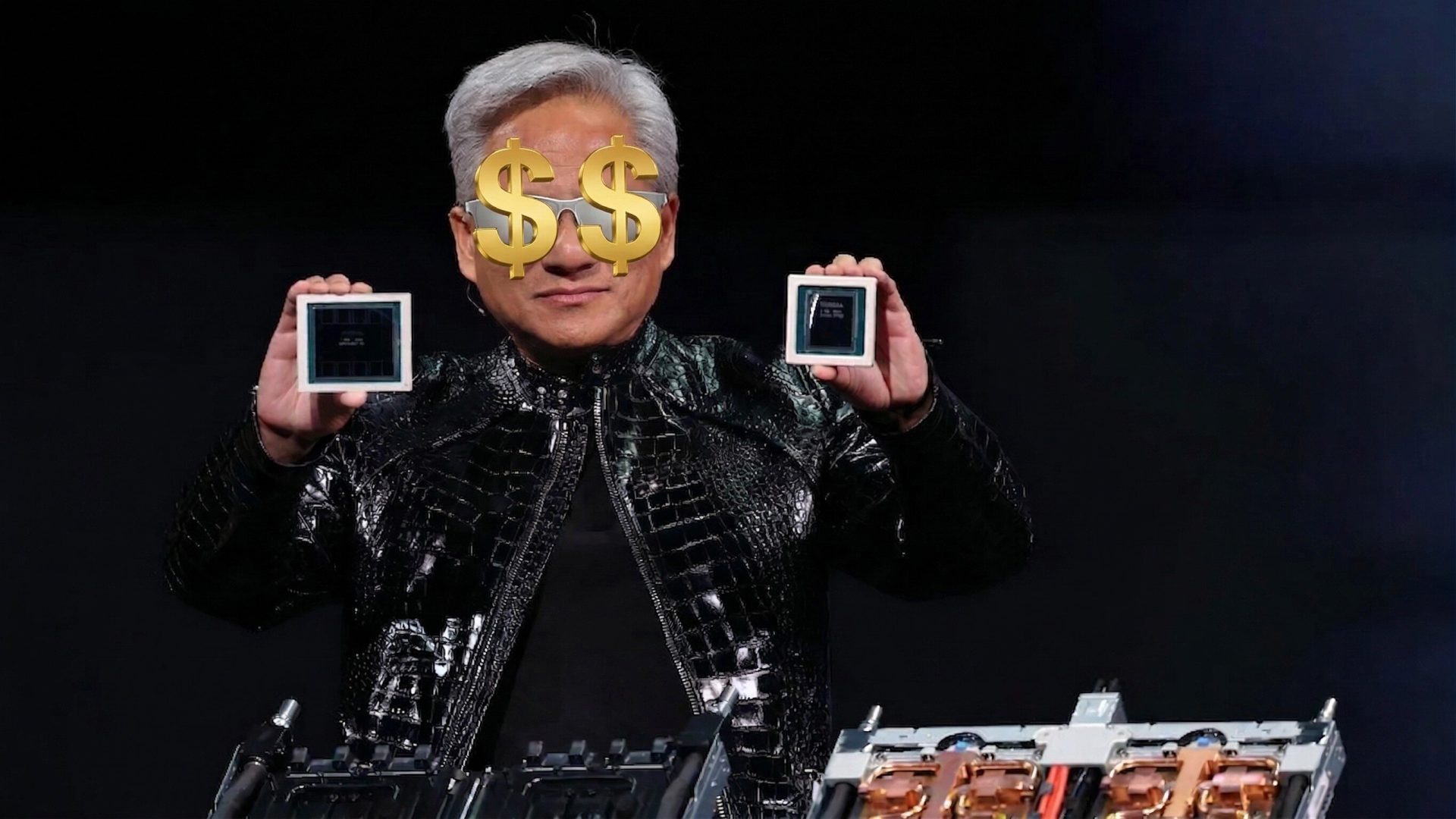
NVIDIA’s next-generation Vera Rubin AI racks are quickly becoming the must-have infrastructure for companies racing to build and scale advanced AI. But that prestige comes with a steep premium. Industry chatter indicates a single Vera Rubin rack could land anywhere from about $3 million to as much as $7 million, a meaningful jump versus systems based on NVIDIA’s Blackwell era.
So why are these racks so expensive, and why is demand still climbing?
A big part of the answer is sheer complexity. Vera Rubin isn’t a simple GPU refresh. It’s a rack-scale platform built around multiple newly designed components meant to cover nearly every critical layer of the system. The lineup is said to include the Vera CPU, the Rubin GPU, an upgraded NVLink 6 interconnect, and other specialized silicon and rack infrastructure upgrades. When you add that all up, the bill of materials for a Rubin rack is expected to be significantly higher than what data centers have been paying for previous generations.
At the same time, those higher system prices are squeezing the companies that actually build the racks. For major server manufacturers and ODMs, the shift toward rack-scale deployments has pressured traditional profit margins. As the total price per rack rises into multi-million-dollar territory, some customers are less willing to accept standard percentage margins on top. In practice, that can mean manufacturers earn less per rack generation-over-generation, even while the technical difficulty of building these systems goes up.
And the engineering burden is rising fast. Modern AI racks increasingly require major design changes such as modular architectures, liquid cooling, more advanced power delivery, and other data-center-grade reliability improvements. Those features take substantial research and development investment to get right, putting ODMs in a tough spot: they must spend more to build the next wave of AI racks, while also facing tighter margin expectations from the biggest buyers.
Despite all of that, interest in Vera Rubin NVL72 racks has reportedly surged. Hyperscalers and AI leaders are lining up because compute remains the critical bottleneck. With AI models growing in scale and complexity, companies that can secure more high-end training and inference capacity gain a real advantage in product speed, model quality, and market position.
That urgency is also showing up in spending plans. Hyperscaler capital expenditure commitments have reportedly climbed to around $660 billion this year, fueled largely by the need to expand AI compute infrastructure. NVIDIA CEO Jensen Huang has also projected an enormous revenue opportunity from Blackwell and Rubin systems across 2025 to 2027—suggesting demand could remain elevated even as prices move higher. And that outlook doesn’t even factor in adjacent growth areas such as networking and CPU-focused deployments.
One quote making the rounds compares today’s AI infrastructure race to the dot-com era, warning that companies that fail to keep up could fade the way early internet giants did. The example often cited is Yahoo: a dominant name early on, backed by widely used products, but unable to maintain momentum as the market evolved—famously passing on the chance to buy Google because it believed its position was secure.
Whether or not the comparison is perfect, the message resonates with today’s AI buyers. In an environment where access to cutting-edge compute can shape who leads in AI, hyperscalers don’t want to be the company that hesitated. That fear of falling behind is helping turn NVIDIA’s Vera Rubin racks into the next prized possessions in AI—even at prices that can reach several million dollars per rack.