Nvidia Vera Rubin AI Platform Enters Full Production as Taiwan Manufacturers Scale Up Server Systems
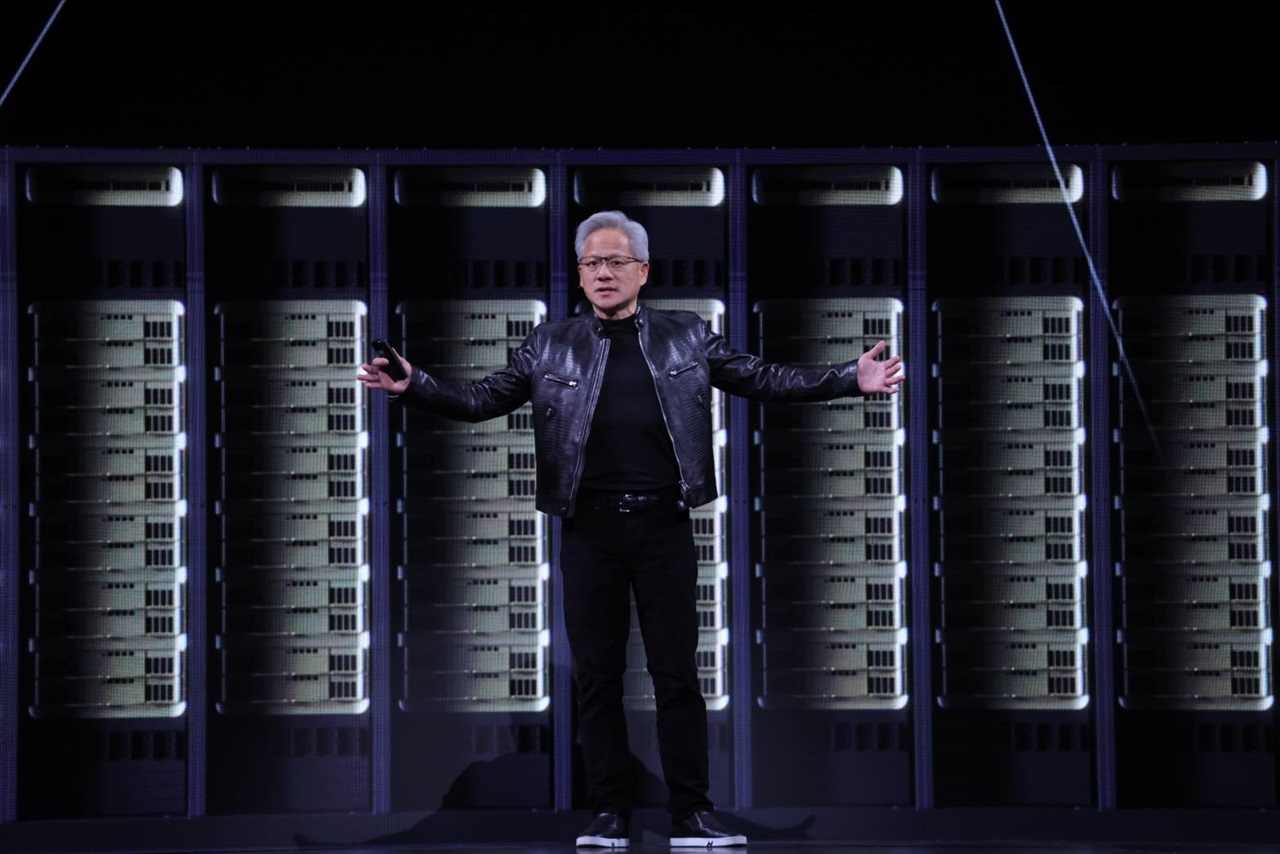
Nvidia has confirmed that its next-generation Vera Rubin platform is now in full production, marking a major step forward for the company’s AI hardware roadmap. The announcement was made by Nvidia CEO Jensen Huang during GTC Taipei on June 1, where he highlighted the growing role of Taiwan’s manufacturing ecosystem in powering the global artificial intelligence boom.
The Vera Rubin platform is being produced at scale with the support of Taiwan’s leading server manufacturers and Nvidia’s broader global supply chain. These systems are being built for some of the most demanding customers in the technology industry, including AI research labs, cloud service providers, and hyperscale data center operators.
This move signals that Nvidia is preparing for another major wave of AI infrastructure demand. As companies race to train larger models, deploy generative AI services, and expand high-performance computing capacity, the need for more powerful and efficient AI servers continues to grow rapidly.
Vera Rubin is expected to play a key role in Nvidia’s future data center strategy. The platform is designed for large-scale AI workloads, where performance, energy efficiency, and system-level optimization are critical. By entering full production, Nvidia is moving beyond development and into the phase where customers can begin preparing for broader deployment.
Taiwan remains central to this expansion. The island is home to many of the world’s most important server, component, and semiconductor supply chain partners. Nvidia’s close cooperation with these manufacturers allows the company to ramp up production quickly and deliver advanced AI systems to global customers.
Jensen Huang’s announcement also reinforces Nvidia’s confidence in the AI market’s long-term growth. Demand for AI accelerators and data center platforms has surged as businesses adopt machine learning, generative AI, robotics, digital twins, and advanced cloud computing. With Vera Rubin now in production, Nvidia is positioning itself to support the next generation of AI factories and cloud-scale computing environments.
For hyperscalers and cloud providers, full-scale production of Vera Rubin systems could help expand AI capacity at a time when access to advanced computing resources remains highly competitive. AI labs, in particular, are expected to benefit from more powerful infrastructure capable of handling increasingly complex model training and inference tasks.
The announcement also comes at a time when Nvidia continues to strengthen its influence across the global technology supply chain. By working closely with Taiwanese server makers, the company is ensuring that its AI platforms can be manufactured, integrated, and shipped at the scale required by modern data centers.
Vera Rubin’s move into full production is more than a product milestone. It reflects the accelerating shift toward AI-driven computing and the massive infrastructure investment needed to support it. As artificial intelligence becomes more deeply embedded in industries ranging from finance and healthcare to manufacturing and cloud services, platforms like Vera Rubin are expected to become essential building blocks for future data centers.
With production now underway, Nvidia’s Vera Rubin platform is set to become one of the company’s most important AI infrastructure releases, helping meet global demand for faster, more efficient, and more scalable computing systems.