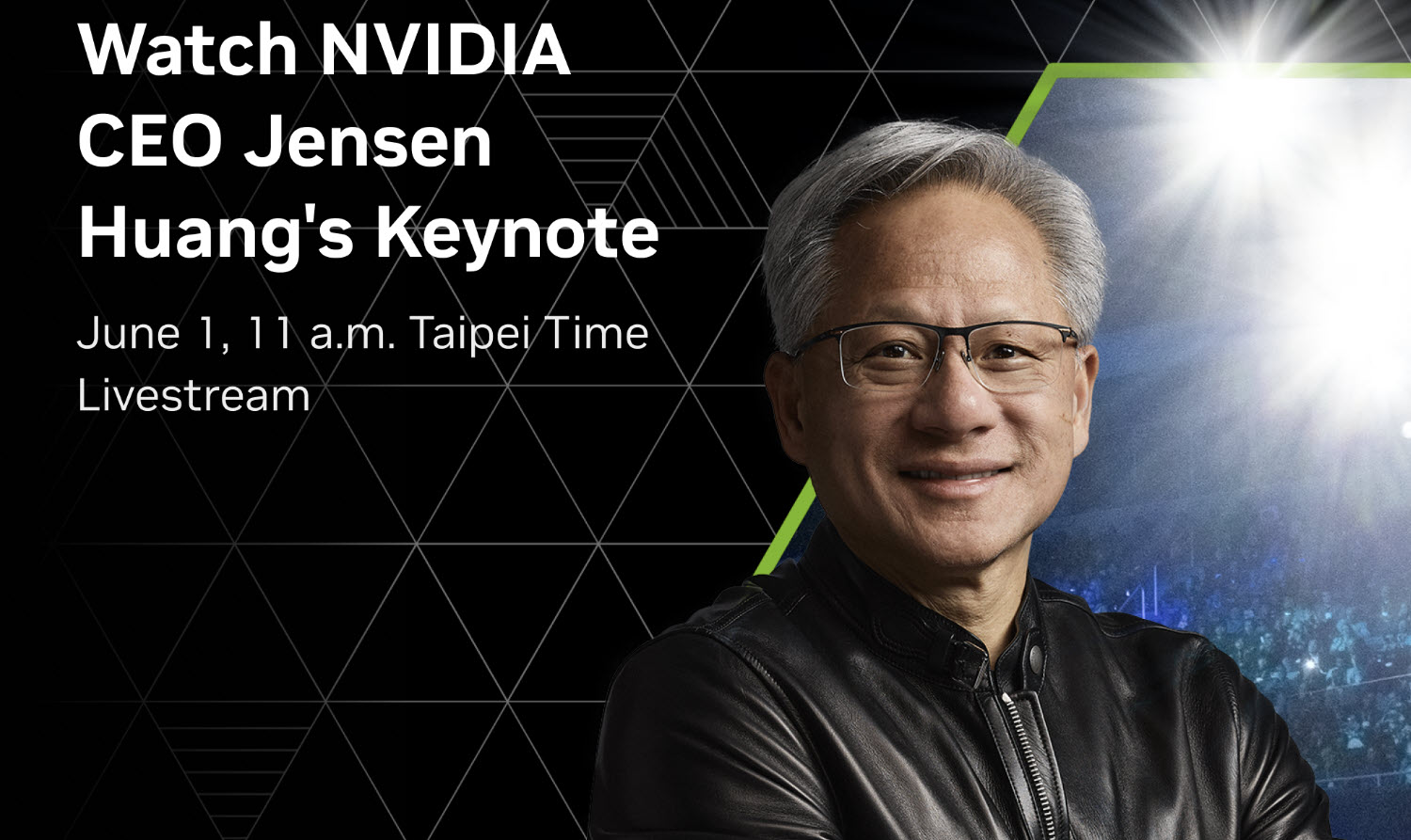
NVIDIA GTC Taipei 2026 Could Define the Next Era of AI PCs
NVIDIA’s GTC Taipei 2026 keynote is shaping up to be one of the most important technology showcases of the year. With CEO Jensen Huang preparing to take the stage in Taiwan, expectations are high for major announcements across AI PCs, data center platforms, robotics, and next-generation computing.
The biggest headline is expected to be NVIDIA’s rumored new PC platform, a major move that could reshape the future of personal computing. NVIDIA, Arm, and Microsoft have all been teasing what they call “a new era of PC,” sparking intense speculation across the industry. The coordinated messaging, along with location hints pointing to Taipei, strongly suggests that the companies are preparing to reveal something far more ambitious than a routine hardware update.
At the center of the excitement is NVIDIA’s anticipated AI PC chip. This new system-on-chip is believed to be linked to the GB10 silicon used in the DGX Spark platform, bringing advanced AI acceleration into a more consumer-focused PC environment. If the rumors prove accurate, NVIDIA could be preparing to enter the Windows PC market in a much bigger way, combining its AI expertise with Arm-based architecture and Microsoft’s software ecosystem.
For years, NVIDIA has dominated GPUs for gaming, professional workloads, and artificial intelligence. But an AI-focused PC platform would mark a significant expansion of its strategy. Instead of simply powering graphics cards inside PCs, NVIDIA could help define the entire computing experience, from local AI assistants and productivity tools to creative workflows and real-time generative applications.
The phrase “a new era of PC” is not being used lightly. The PC market is moving quickly toward devices that can run powerful AI workloads locally, rather than depending entirely on cloud servers. This shift could make future laptops and desktops faster, more private, and more responsive for AI-based tasks. NVIDIA’s deep experience in AI hardware and software gives it a strong position as this transition accelerates.
Another major focus of the keynote is expected to be Vera Rubin, NVIDIA’s next-generation AI and data center platform. Jensen Huang has already discussed Vera Rubin at previous events, but GTC Taipei 2026 could provide a clearer picture of how the platform will roll out across the broader AI ecosystem.
Vera Rubin represents NVIDIA’s push to offer a complete AI factory solution. The platform combines Rubin GPUs, Vera CPUs, networking, software, and infrastructure designed to support massive AI workloads. Rather than focusing on a single chip, NVIDIA is building an entire stack for training, inference, simulation, and enterprise AI deployment.
While a major new data center hardware launch may not be the main surprise of the event, NVIDIA is likely to share more information about partnerships, production timelines, system availability, and supply chain support. These details matter because demand for AI infrastructure remains extremely high, and companies are looking for scalable platforms that can handle increasingly complex models.
Beyond PCs and data centers, NVIDIA is also expected to highlight its growing role in physical AI and agentic AI. These two areas are becoming central to the company’s long-term strategy.
Physical AI refers to artificial intelligence systems that understand and interact with the real world. This includes robots, autonomous machines, industrial automation systems, smart factories, and vehicles. Agentic AI takes the concept further by enabling AI agents to reason, plan, take actions, and complete tasks with limited human input.
NVIDIA has been building toward this future for years through platforms such as Jetson, Isaac, Omniverse, and robotics-focused AI tools. At GTC Taipei 2026, Jetson Thor is expected to play a key role in showing how edge AI hardware can power real-time decision-making for robots and autonomous systems.
The company’s message will likely be clear: AI is no longer confined to data centers or chatbots. It is moving into machines, factories, vehicles, and personal computers. NVIDIA wants to provide the hardware and software foundation for all of it.
This is why GTC Taipei 2026 could become even more important than a traditional PC or component launch event. If NVIDIA unveils a serious AI PC platform while also expanding its data center and robotics roadmap, the keynote could signal a major turning point for the computing industry.
For consumers, the most exciting announcement may be the new AI PC chip and what it means for future laptops and desktops. For enterprises, Vera Rubin and AI factory updates could define the next wave of large-scale AI infrastructure. For developers and robotics companies, NVIDIA’s physical AI and agentic AI platforms may open the door to more capable autonomous machines.
Jensen Huang’s keynote is expected to bring all these themes together: AI on the PC, AI in the data center, and AI in the physical world. If NVIDIA delivers on the current expectations, GTC Taipei 2026 may be remembered as the event where the company made its boldest move yet into the future of personal and intelligent computing.


