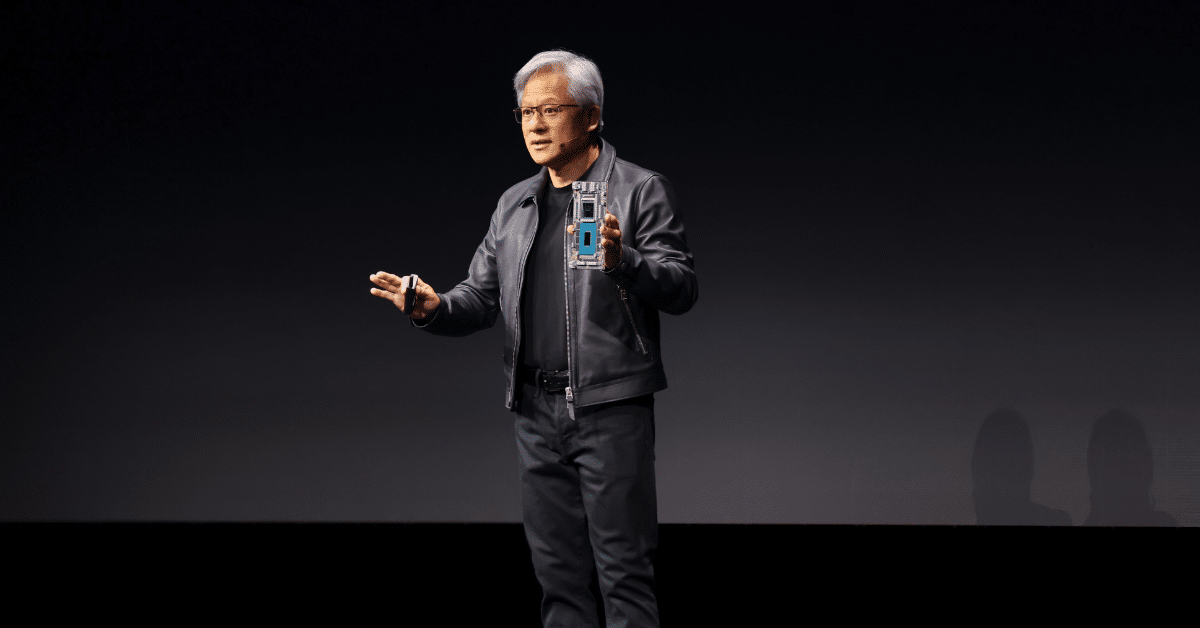
NVIDIA is making waves in the AI industry with its aggressive rollout of cutting-edge technology. In the aftermath of the GTC 2025, it’s clear that NVIDIA is accelerating its product releases at a pace that might overwhelm the competition and even the supply chain itself. They are moving briskly with their new Blackwell’s Ultra series alongside the impending launch of the Vera Rubin lineup, promising to keep the industry on its toes.
NVIDIA’s strategy appears to leave little room for competitors to catch up. The company jumped ahead early in the AI race and has maintained its lead by consistently pushing the envelope with a rapid succession of innovations. The influential analyst Dan Nystedt highlights a potential risk: NVIDIA might be stretching its resources too thin, as evidenced by the early hiccups seen with the Blackwell GB200 architecture.
The journey began with NVIDIA’s announcement at Computex in May 2024, where they set an ambitious goal to release new AI architectures annually. In line with this, the Blackwell GB200 AI servers were hurriedly introduced in late 2024. This move was intended to reinforce NVIDIA’s dominance, but it came with challenges – notably a significant yield rate issue that caused delays. The company only managed to resolve these problems early in 2025, allowing server manufacturers like Foxconn to increase production.
Despite initial hurdles, NVIDIA is pressing forward with the Blackwell Ultra GB300 lineup, slated for production by the second half of 2025. This schedule marks a shift from their previously announced yearly timetable, now halved, suggesting a strategic attempt to stay ahead in the AI computing race and keep competitors at bay.
Furthermore, the Vera Rubin architecture, unveiled at GTC 2025 and initially planned for release in late 2026, might actually hit the market earlier. With SK Hynix ready to mass-produce HBM4 memory by Q3-Q4 of 2025, there’s potential for an earlier debut—possibly a small-scale launch by the end of this year or a larger release in Q1 2026. NVIDIA currently stands alone in announcing plans to incorporate this new memory standard, setting the stage for yet another leap forward.
NVIDIA’s path forward in 2025 and beyond seems paved with innovation and ambition. As CEO Jensen Huang puts it: “the more you buy, the more you save.” Whether this strategy ultimately proves successful remains to be seen. What is certain, however, is that NVIDIA’s bold moves continue to challenge the industry’s pace and set the bar high for others in the field.