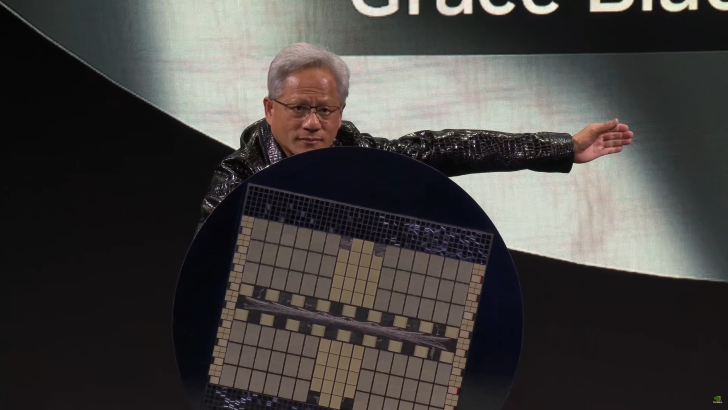
NVIDIA is moving aggressively to lock down next‑gen chip supply, with its CEO in Taiwan to secure a major share of TSMC’s 3nm production for upcoming AI products, including the Vera Rubin lineup. As AI infrastructure spending surges and Blackwell Ultra ramps, the company appears determined to ensure it has the silicon runway it needs for the next wave of data center growth.
Reports indicate Jensen Huang’s visit includes a tour of TSMC’s Tainan facility, the heart of its 3nm mass production. TSMC is said to be expanding monthly 3nm output at the Southern Taiwan Science Park from roughly 100,000 wafers to about 160,000 wafers—a near 50% boost. A substantial portion of that added capacity is expected to be reserved for NVIDIA, underscoring both the manufacturer’s reliance on high‑performance computing customers and NVIDIA’s confidence in demand for Rubin‑class AI accelerators.
Why this matters is straightforward: 3nm is set to be a multi‑quarter revenue engine for TSMC, and for NVIDIA, early capacity reservations reduce supply risk as AI training and inference requirements soar worldwide. With hyperscalers and enterprises racing to deploy larger models, guaranteed access to cutting‑edge process nodes translates directly into performance leadership and faster time‑to‑deployment.
The Rubin generation is positioned as a pivotal step for NVIDIA, promising a significant compute leap across architecture, process, and memory. Built on TSMC’s N3P process and paired with HBM4, the Vera Rubin Superchip is designed to push throughput and efficiency to new levels. Despite mass production still months away, NVIDIA has reportedly already lined up customers, a strong signal of market appetite for next‑generation AI systems.
For TSMC, high‑performance computing remains a cornerstone of its business, with NVIDIA as a primary demand driver. The foundry continues to accelerate its technology roadmap, with plans to move quickly toward A16 (1.6nm) in the coming cycles. It’s no surprise, then, that NVIDIA’s leadership regularly underscores TSMC’s strategic importance to the company’s AI roadmap.
Key takeaways:
– NVIDIA is negotiating a sizeable allocation of TSMC’s 3nm (N3/N3P) capacity to support its Rubin AI lineup.
– TSMC plans to expand 3nm output from around 100,000 to 160,000 wafers per month at its Southern Taiwan Science Park site.
– A large share of the added capacity is expected to be dedicated to NVIDIA, reflecting surging AI accelerator demand.
– Rubin targets a major performance jump, combining TSMC N3P with HBM4 to elevate data center AI capabilities.
– TSMC’s future nodes, including A16 (1.6nm), highlight a rapidly advancing roadmap aligned with HPC growth.
Bottom line: NVIDIA is securing the foundry capacity it needs to keep leading the AI compute race, while TSMC’s 3nm—and soon, even more advanced nodes—stand to benefit from the sustained boom in high‑performance, AI‑focused silicon.