Artificial intelligence can do a lot of the heavy lifting across modern IT, from generating content to accelerating software development and powering next-generation graphics features. But there’s a growing reality that companies can’t ignore: running AI at scale can cost far more than paying the humans who use it.
That message is coming from NVIDIA, one of the biggest drivers behind today’s AI boom. As AI expands into nearly every corner of enterprise technology, the expense of keeping the entire ecosystem running is climbing fast. Across the industry, firms are pouring enormous amounts of money into upgrading existing “AI factories” and building brand-new data center projects that demand massive amounts of electricity and hardware.
Inside NVIDIA, that cost pressure is easy to see. Bryan Catanzaro, the company’s vice president of applied deep learning, said the compute required for his team’s work costs far more than the employees themselves. In other words, the GPUs, servers, networking, power, and ongoing infrastructure required to train and run AI models can quickly become the biggest line item—outpacing payroll.
And NVIDIA isn’t alone. Other major companies are also watching AI-related infrastructure bills rise sharply as adoption accelerates. The broader trend is reflected in forecasts for worldwide IT spending, which is expected to keep climbing. By 2026, global IT spending is projected to reach about $6.31 trillion, representing a 13.5% increase compared with the prior year. Data center systems are among the fastest-growing categories, reflecting the intense demand for compute capacity driven by AI workloads, alongside continued growth in software, IT services, devices, and communications.
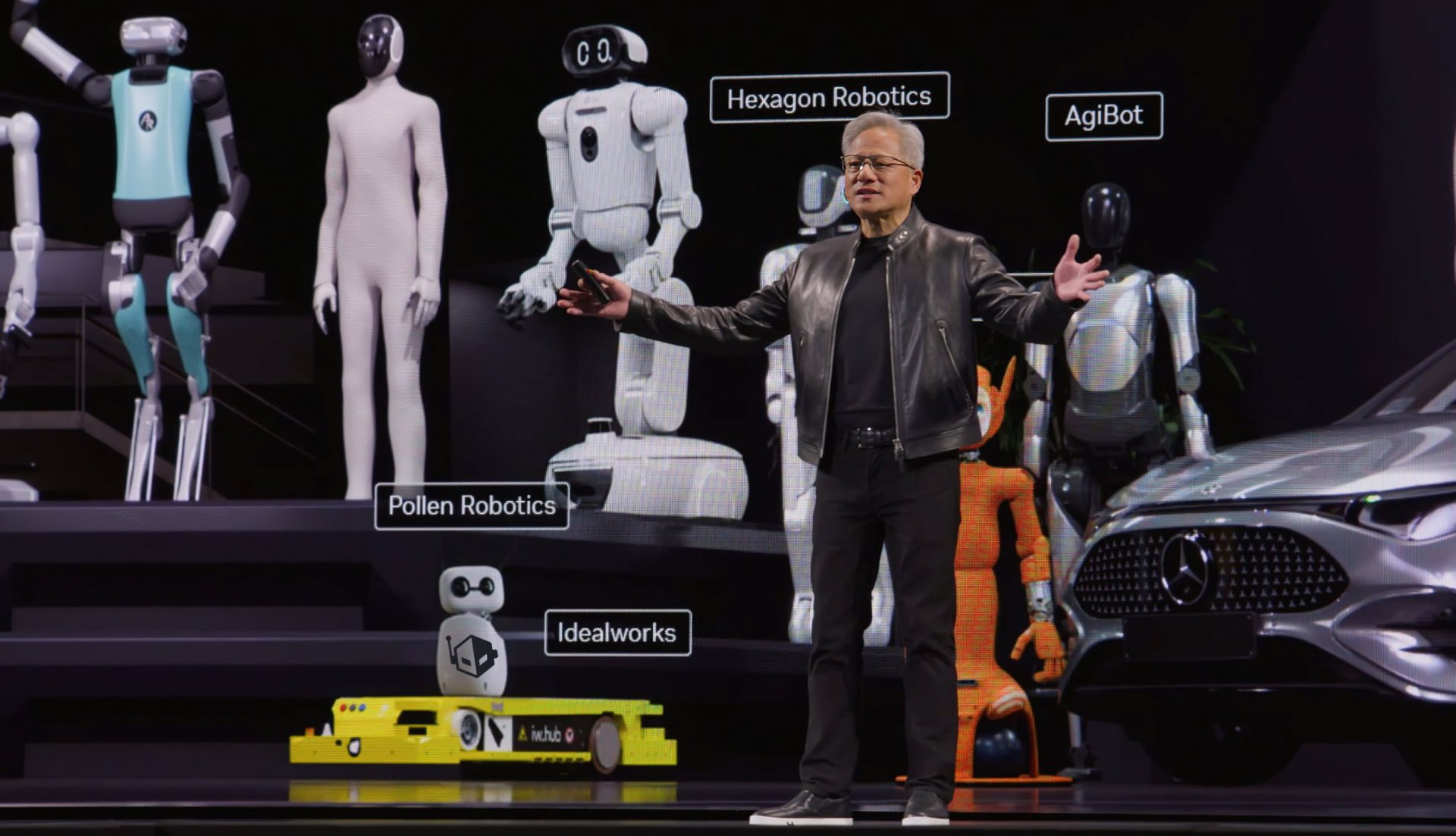
Despite the soaring costs, NVIDIA’s leadership continues to frame this moment as a major step forward rather than a warning sign. CEO Jensen Huang has repeatedly argued that the future belongs to people who know how to use AI to amplify their impact. He’s pushed back against the idea that AI simply “destroys jobs,” suggesting instead that humans are meant to solve problems, while AI increasingly handles repetitive tasks and accelerates execution.
Looking ahead, momentum around AI doesn’t appear to be slowing. Newer approaches—often described as “agentic AI,” where systems can act more independently to plan and carry out multi-step goals—are being positioned as the beginning of another wave of adoption. Even so, the technology is still widely viewed as being in its early stages, with infrastructure spending and operational costs rising as organizations race to build and scale what comes next.
The takeaway is clear for businesses and professionals watching the AI economy evolve: AI may boost productivity and unlock new capabilities, but it also comes with significant compute and infrastructure costs that can exceed the cost of human labor. The companies that win in this next phase are likely to be the ones that balance AI investment with practical returns—and equip their teams to use AI as a force multiplier rather than a replacement.