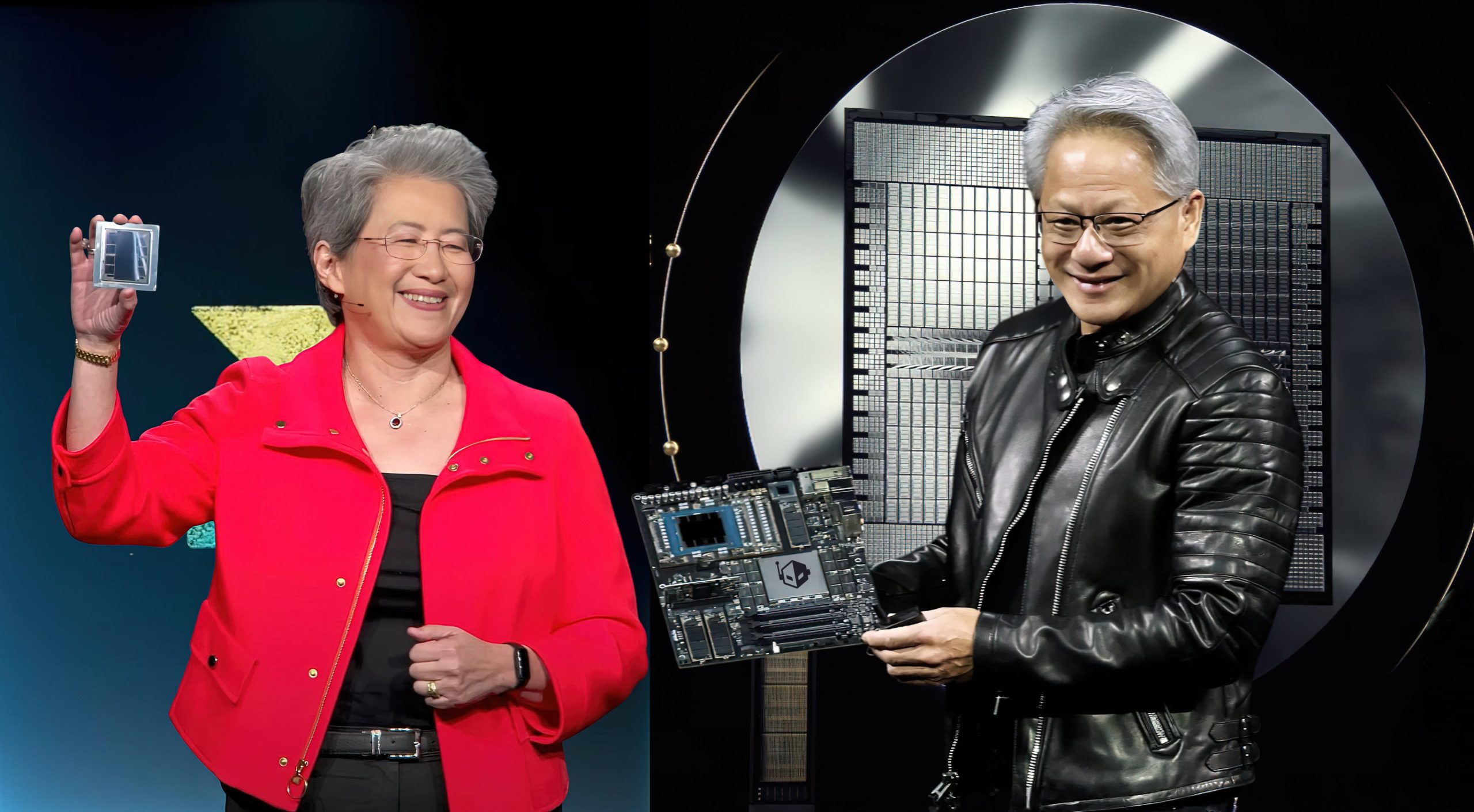
NVIDIA’s next-generation Vera Rubin AI platform is shaping up to be one of the most closely watched launches in the data center and AI infrastructure world, and new details suggest the company is pushing key specs higher than originally planned. The big focus: memory bandwidth, a make-or-break metric for today’s large-scale AI training and fast-growing inference and agentic AI workloads.
Recent reporting indicates NVIDIA has revised the Vera Rubin VR200 NVL72 configuration to deliver up to 22.2 TB/s of memory bandwidth. That’s a major step up from what was previously discussed earlier in the Rubin timeline, and it positions the platform to come in above AMD’s upcoming Instinct MI455X, which is said to offer 19.6 TB/s. In other words, NVIDIA appears to be tuning Rubin to preserve a clear performance edge right where hyperscalers care most: feeding the GPU fast enough to keep massive AI models moving without bottlenecks.
What makes this increase especially notable is how dramatic the jump is compared to earlier figures associated with Rubin. Over time, the platform has reportedly moved from around 13 TB/s to roughly 22.2 TB/s, signaling that NVIDIA isn’t standing still as competition tightens in the high-end accelerator market.
So how does NVIDIA get there? The answer appears to be an aggressive approach to HBM4 memory. Rather than sticking closely to standard baseline specifications, NVIDIA is reportedly encouraging suppliers to push higher pin speeds—up to 11 Gbps. With NVIDIA’s design approach also leaning on a narrower 8-stack interface, increasing pin speed becomes the most direct path to boosting total bandwidth.
AMD, meanwhile, initially grabbed attention with a different strategy. By emphasizing 12-Hi HBM4 stacks, AMD could drive memory bandwidth to the 19.6 TB/s range on MI455X—an impressive number that likely helped force NVIDIA’s hand to respond with an even higher Rubin target.
This is shaping up to be a real heavyweight fight for hyperscaler deployments. AMD has been openly confident about its Instinct MI400 series direction, and MI455X is expected to be a more compelling alternative for buyers looking for competition at the top end of AI compute. Whether this turns into a meaningful shift in market share will depend on real-world pricing, availability, software maturity, and how quickly each platform becomes mainstream in large-scale deployments.
Either way, one thing is clear: in the current AI arms race, memory bandwidth is no longer a nice-to-have spec. It’s becoming one of the defining battlegrounds—and both NVIDIA Vera Rubin and AMD MI455X are being engineered to win it.