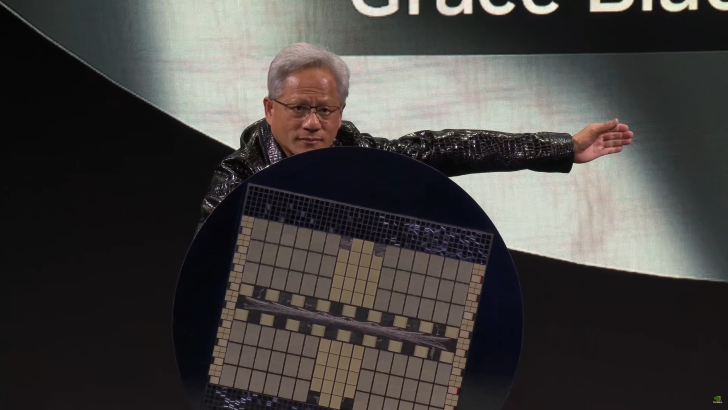
NVIDIA’s upcoming Rubin lineup is facing a potential delay of a few months as the company undertakes a redesign to better compete with AMD. This move aims to enhance their foothold in the rapidly evolving AI hardware market.
The next-generation hardware from NVIDIA is undergoing changes that could affect production volumes in 2026. According to Fubon Research from a leading Taiwanese bank, the Rubin lineup might see limited availability, delayed by about four to six months.
This strategic redesign appears to be a response to increased competition from AMD’s Instinct MI450 AI series, which is set to feature advanced IF64 and IF128 configurations. AMD is expected to invest heavily in HBM capacity, offering up to 432 GB per GPU, which could prove formidable against NVIDIA’s offerings. AMD’s focus on modular design, utilizing Infinity Fabric over Ethernet for simpler rack deployment, highlights the competitive landscape.
Rubin’s redesign is anticipated to mirror current limitations seen with Blackwell Ultra, affecting shipment volumes in 2026. This timing coincides with AMD’s MI450 release, suggesting that Rubin Ultra could also see a postponement. Although specific reasons for the delay aren’t fully detailed, it’s likely tied to NVIDIA’s aggressive product development cycle, potentially causing challenges as they strive to maintain market leadership.


