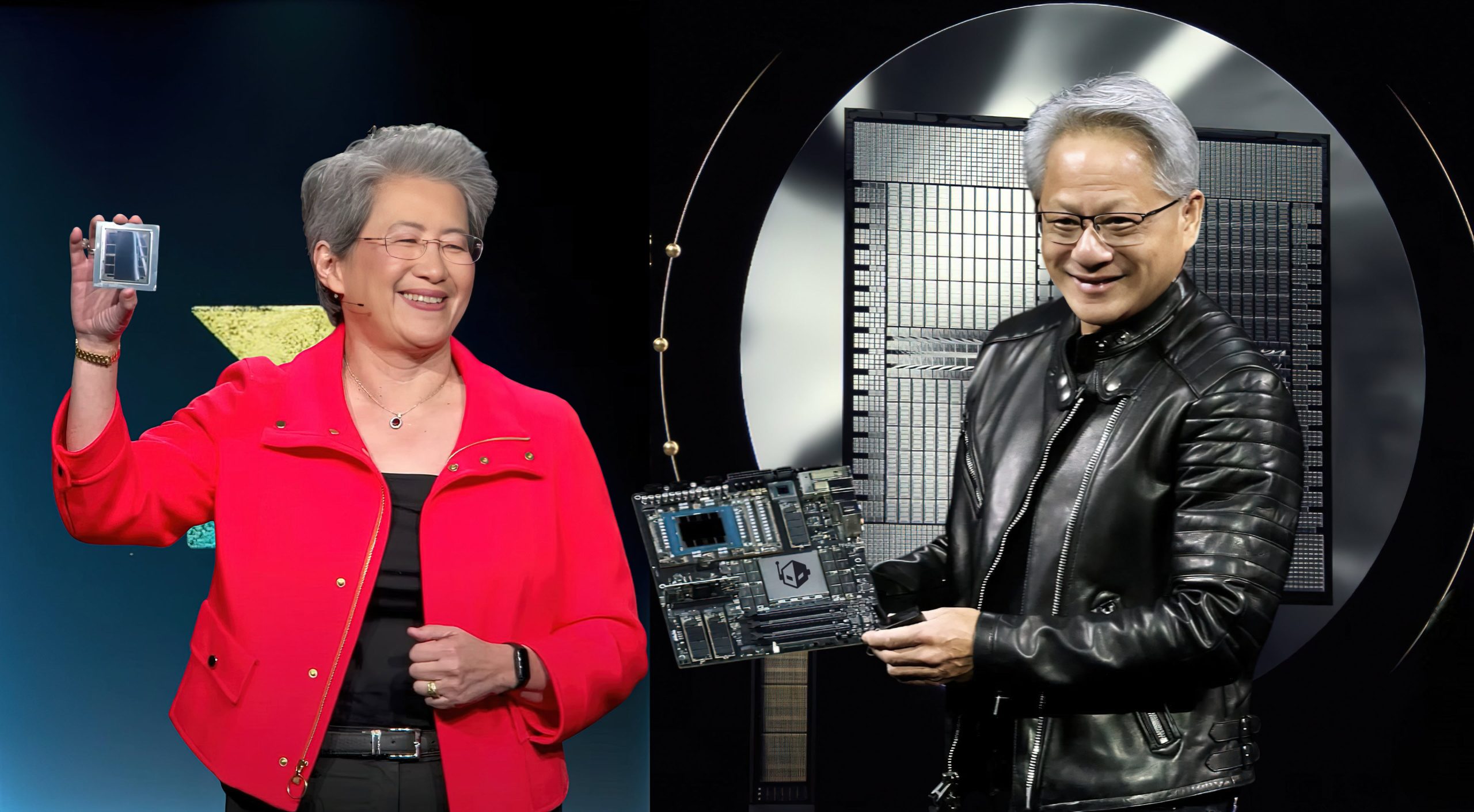
NVIDIA’s CEO, Jensen Huang, has weighed in on AMD’s headline-grabbing deal with OpenAI, and his reaction underscores just how intense the AI chip race has become.
AMD recently secured a massive commitment from OpenAI to supply more than six gigawatts of compute built around upcoming accelerators, including the unreleased Instinct MI450. The agreement landed just days after OpenAI touted a separate collaboration with NVIDIA, setting the stage for a high-stakes showdown between the two dominant providers of AI compute.
Speaking in an interview, Huang called the move “imaginative” and “surprising,” noting that AMD’s enthusiasm centers on a next-generation product that hasn’t shipped yet. He also quipped that he was surprised to see AMD “give away 10% of the company before they even built it,” a cheeky nod to how aggressive the terms and expectations appear to be. Huang added that NVIDIA wasn’t aware of AMD’s arrangement with OpenAI at the time of NVIDIA’s own announcements, highlighting how quickly the competitive landscape is shifting.
The implications are big for the broader AI ecosystem. OpenAI’s procurement signals meaningful interest in both NVIDIA’s next-gen platforms, such as the Vera Rubin architecture, and AMD’s Instinct MI450 lineup. That puts the rivals on more equal footing in the race to power the next wave of generative AI, LLM training, and inference at scale.
AMD, for its part, is projecting enormous upside. CEO Lisa Su has indicated the OpenAI partnership could generate around $100 billion over the coming years, driven by accelerators like the MI450 and full rack-scale solutions. If those plans materialize, NVIDIA will face its fiercest competition yet across GPUs, networking, and turnkey data center systems—areas where it has long enjoyed a quasi-monopoly thanks to a mature software stack and deep integration with hyperscalers.
Healthy rivalry typically translates into faster innovation, broader supply, and potentially better economics for customers building AI infrastructure. With AMD’s momentum and NVIDIA’s incumbent advantage, expect accelerated roadmaps, more aggressive performance-per-watt targets, and a sharper focus on total platform value—from hardware to software to services.
Bottom line: AMD’s blockbuster commitment from OpenAI and Jensen Huang’s candid response make one thing clear—the AI accelerator market is entering its most competitive phase to date, and the next generation of chips could redefine who leads the data center AI era.


