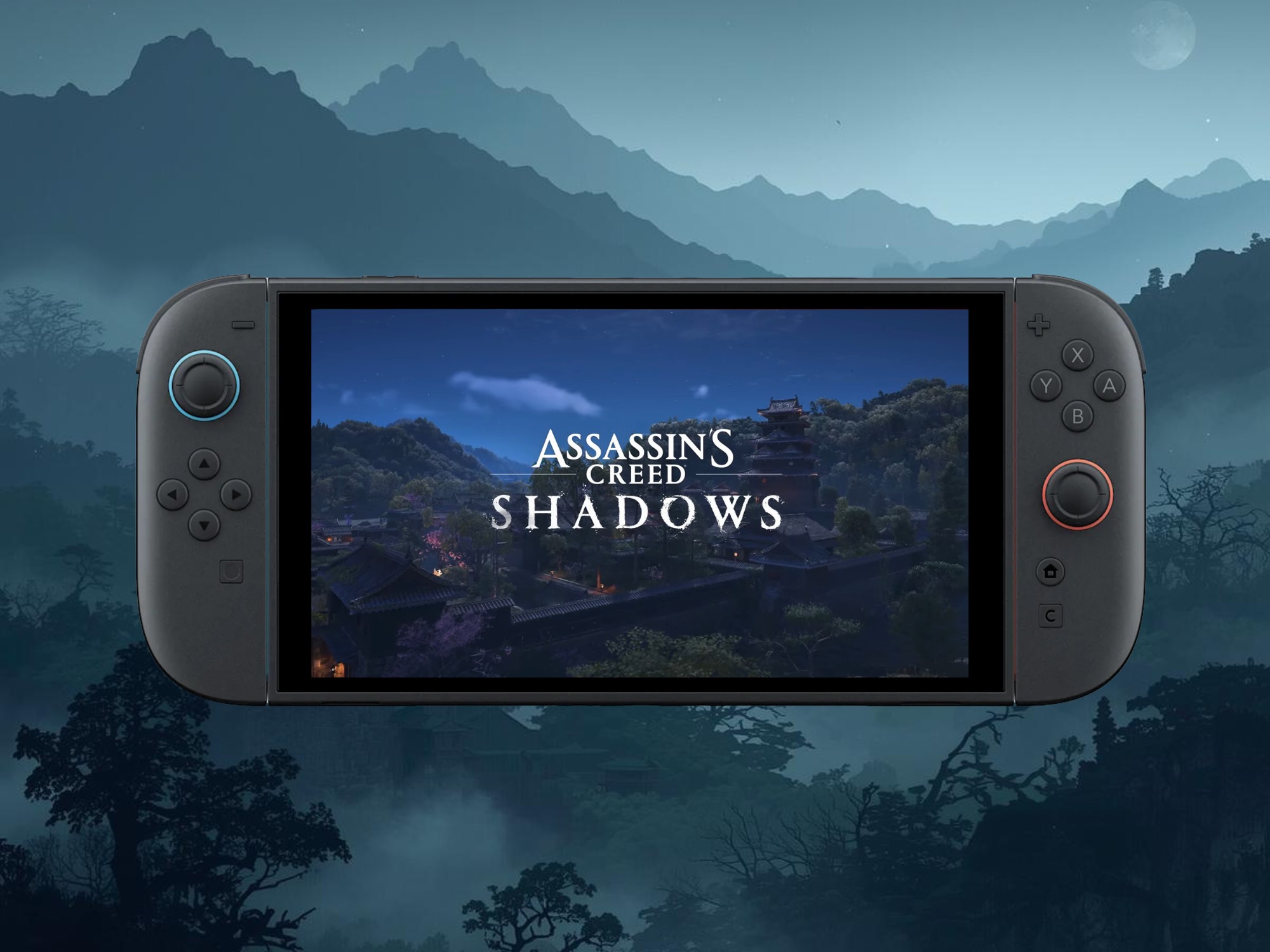
Third-party games on Nintendo’s Switch 2 are already showing flashes of what the new hardware can do, but performance isn’t always as smooth as players expect. Some titles, like Ubisoft’s Assassin’s Creed Shadows, can look surprisingly fluid even when running at lower frame rates. Others, however, still suffer from noticeable stutter and inconsistent motion—despite offering unlocked frame rates and support for Variable Refresh Rate (VRR) on paper.
The root of the conversation is VRR on Switch 2. While the console introduces more modern display features than the original Switch, VRR has become a sticking point for many players. It isn’t supported in docked mode, and in handheld mode it often doesn’t deliver the “buttery smooth” result people associate with VRR on other platforms.
A clear example came from performance testing of Hitman World of Assassination. Even with an unlocked frame rate, gameplay often hovered around the 30–40 frames-per-second range, and the experience still looked choppy. The expectation was that VRR would help hide those fluctuations and reduce judder, but in practice it didn’t seem to work as hoped. A later update pushed the game to a fixed 30fps cap, which can stabilize performance, but many players see that as more of a compromise than a true solution.
So why does Switch 2 VRR feel disappointing in some games? The key issue appears to be how the system behaves when frame rates dip below roughly 40fps. VRR is typically most effective within a specific operating window, and when games fall beneath that range, stutter can return.
Ubisoft shared that it found a workaround to keep gameplay smooth even around 30fps in games such as Assassin’s Creed Shadows and Star Wars Outlaws. The approach relies on an algorithm that effectively repeats frames in a controlled way: the same frame is presented twice—once mid-frame and again at the end—allowing the hardware to output on a 60Hz interval while still maintaining smoother motion. In simpler terms, it’s a technique designed to make lower frame rates look and feel more consistent on the handheld display.
There’s also a well-known solution that could help more Switch 2 games: Low Frame-rate Compensation (LFC). LFC is designed to keep VRR benefits alive when performance drops below the VRR floor by displaying frames multiple times in a way that preserves smoothness. The problem is that implementation across titles has been inconsistent, which is why some games benefit and others don’t.
The encouraging part is that Ubisoft says it’s continuing to work with Nintendo to improve VRR support moving forward. If those improvements translate into better system-level behavior, more third-party Switch 2 games could see smoother motion and fewer performance hiccups without relying on per-game tricks or forcing a hard 30fps cap.
Ubisoft also weighed in on DLSS, Nvidia’s AI upscaling technology included as part of the Switch 2’s broader toolkit. The company believes DLSS already beats its own Temporal Anti-Aliasing (TAA) solution, but also suggests the feature still has untapped potential. In other words, even with better Switch 2 specs, upscaling remains one of the most important ways developers can boost image quality and performance at the same time—yet many studios still haven’t fully explored what DLSS can do on the platform.
If Nintendo and its partners can tighten VRR behavior (especially at 30–40fps) and more developers lean into DLSS effectively, Switch 2 performance could improve significantly across a wide range of games—turning today’s mixed results into a more consistently smooth handheld experience.