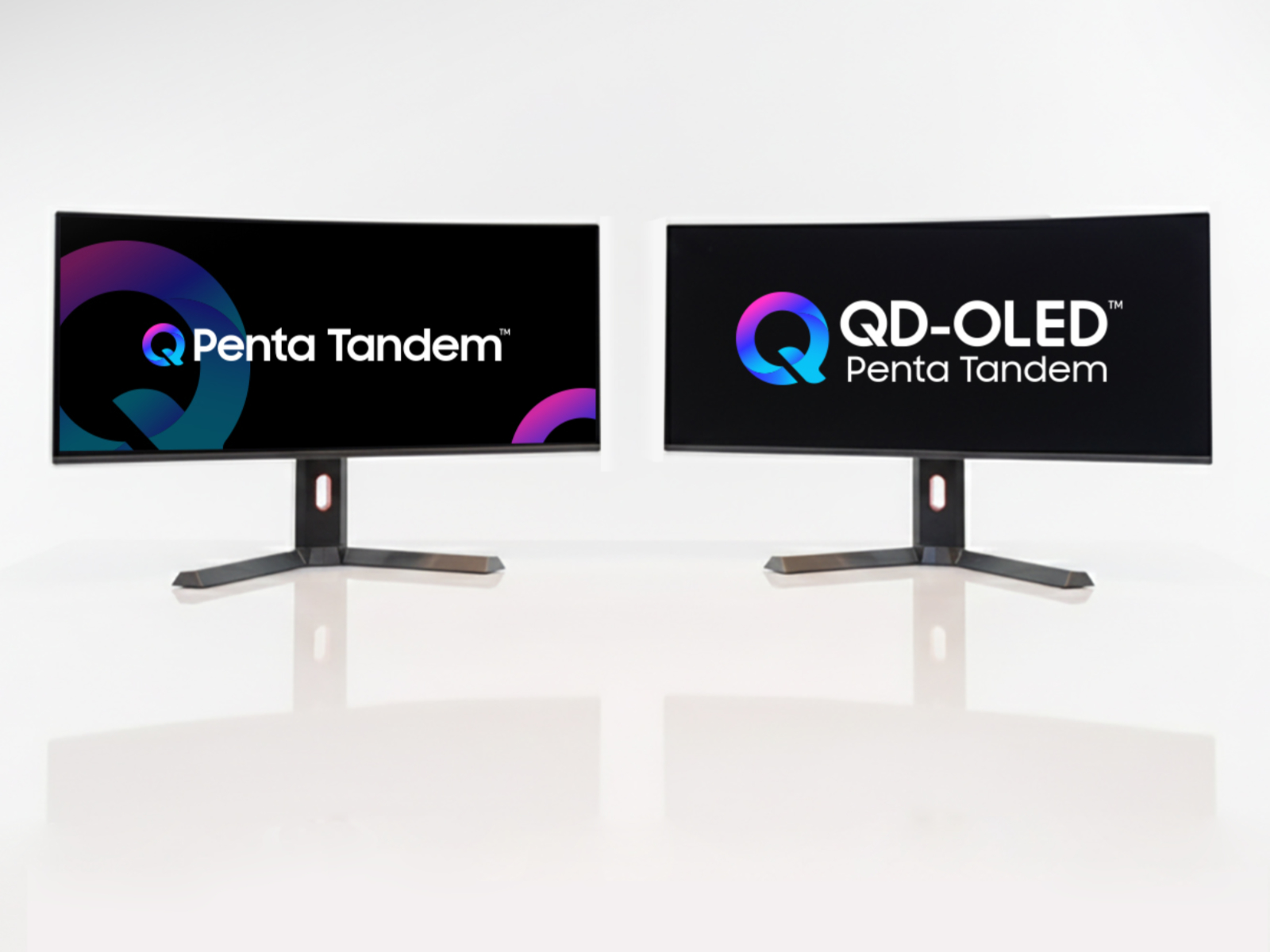
Samsung Display has officially locked in the naming for the core panel tech powering its newest wave of QD-OLED gaming monitors, clearing up months of “Gen 4” chatter in the display community. The company has now formalized Electroluminescent Layer Gen 3.0 (EL 3.0) along with its five-stack OLED structure—two key advancements that have been quietly driving recent high-end QD-OLED monitor launches.
While “Gen 4 QD-OLED” became a popular unofficial label, Samsung Display and its partners have largely been promoting these screens as “3rd Gen” or “Gen 3” QD-OLED. That messaging isn’t going away, but now there’s a clearer, official technology identity behind it—something that should make it easier for buyers to understand what they’re getting when shopping for premium OLED monitors.
The timing is no accident. Rival OLED branding has been getting more aggressive, with LG Display pushing “Tandem OLED” as the headline feature for its latest WOLED panels. Samsung Display is answering with a distinct, attention-grabbing name of its own: QD-OLED Penta Tandem.
The “penta” part is important, because it describes what’s physically happening inside the panel. This latest structure uses five emitting layers in total—three blue layers and two green layers. That five-layer approach is the foundation behind several of the newest QD-OLED gaming monitors arriving from major brands, including models such as the Asus ROG Swift OLED PG32UCDM3 and the MSI MPG 272URX. In other words, “QD-OLED Penta Tandem” isn’t just marketing flair—it’s a direct reference to the panel’s multi-layer light-emitting design.
Samsung Display also confirmed that the QD-OLED Penta Tandem lineup won’t stop with the current sizes. A new QD-OLED Penta Tandem segment is scheduled to arrive later this year, highlighted by a 49-inch panel that could become one of the most desirable options for ultrawide gaming and productivity setups.
So far, Samsung Display has only shared a few concrete details about this upcoming 49-inch QD-OLED Penta Tandem panel, but the essentials are big: it will output at 5,120 x 1,440 resolution, widely known as Dual QHD (DQHD). That pixel count is a favorite for super-ultrawide displays because it effectively delivers the width of two 1440p monitors without the seam, making it appealing for immersive gaming, racing and flight sims, content creation timelines, and multi-window workflows.
Refresh rate hasn’t been finalized publicly, but Samsung Display is expected to pair the panel with a high-speed option—most likely 240 Hz or even 360 Hz—putting it squarely in the enthusiast category where QD-OLED monitors already compete on motion clarity and responsiveness.
What remains unknown is which monitor makers will be first to adopt the new 49-inch QD-OLED Penta Tandem panel. Given how quickly leading brands have embraced Samsung’s latest QD-OLED generations so far, it wouldn’t be surprising to see several flagship super-ultrawide gaming monitors announced soon after the panel becomes available.
For anyone tracking the best OLED gaming monitors, QD-OLED vs WOLED developments, or the next big leap in ultrawide display tech, Samsung Display’s new naming makes one thing clear: the company wants its newest OLED architecture to be recognized as a standout category—not just another incremental update.


