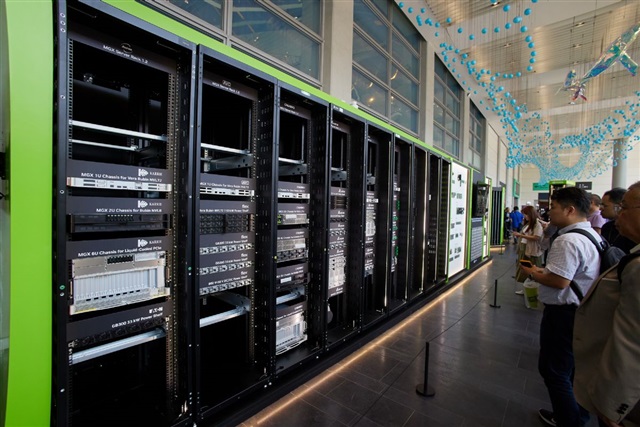
AI Server Demand Set to Surge in Late 2026 as Next-Generation Accelerators Enter Mass Production
The global AI infrastructure boom is showing no signs of slowing down. As demand for advanced computing power continues to climb, server manufacturers and supply-chain partners are becoming increasingly optimistic about the second half of 2026.
A major wave of new AI hardware platforms is expected to move into mass production, driving stronger server shipments and intensifying competition across the data center market. Key platforms tied to Nvidia Vera Rubin, AMD Helios, AWS Trainium 3, and Google TPU are expected to play a central role in this next phase of growth.
The rapid expansion of artificial intelligence workloads is pushing cloud providers, enterprise customers, and hyperscale data centers to invest heavily in high-performance servers. These systems are essential for training large AI models, powering generative AI services, handling inference workloads, and supporting next-generation cloud computing applications.
For server supply-chain companies, this growing demand is creating a more positive outlook. Component makers, system integrators, cooling solution providers, power supply vendors, and contract manufacturers are all preparing for increased orders as AI infrastructure spending continues to accelerate.
The second half of 2026 is expected to be especially important because several new accelerator platforms are scheduled to ramp up at the same time. Nvidia’s Vera Rubin platform is anticipated to be a major driver for high-end AI server deployments, while AMD’s Helios platform is expected to strengthen competition in the AI data center space. At the same time, custom silicon from major cloud service providers, including AWS Trainium 3 and Google TPU, will further expand the market for purpose-built AI computing systems.
This shift highlights a broader trend in the technology industry: AI servers are becoming one of the most important growth engines for the global hardware market. Traditional server demand may remain uneven in some areas, but AI-focused systems are generating strong momentum due to their role in cloud AI, machine learning, enterprise automation, and large-scale data processing.
As more businesses adopt AI tools and services, the need for powerful backend infrastructure will continue to grow. Data centers are not only upgrading processors and accelerators, but also investing in faster memory, advanced networking, high-efficiency cooling, and improved power management. These upgrades are necessary to support the massive energy and performance requirements of modern AI workloads.
The expected production ramp of next-generation AI platforms could also benefit the wider semiconductor and electronics ecosystem. Stronger server shipments may increase demand for high-bandwidth memory, advanced packaging, printed circuit boards, power components, thermal modules, and networking equipment.
Overall, the outlook for AI server shipments in the second half of 2026 appears strong. With major accelerator platforms entering mass production and demand from cloud and enterprise customers remaining high, the AI infrastructure market is positioned for another period of rapid expansion.
For the server industry, 2026 could become a defining year as artificial intelligence continues to reshape data center investment and drive the next major wave of computing growth.


