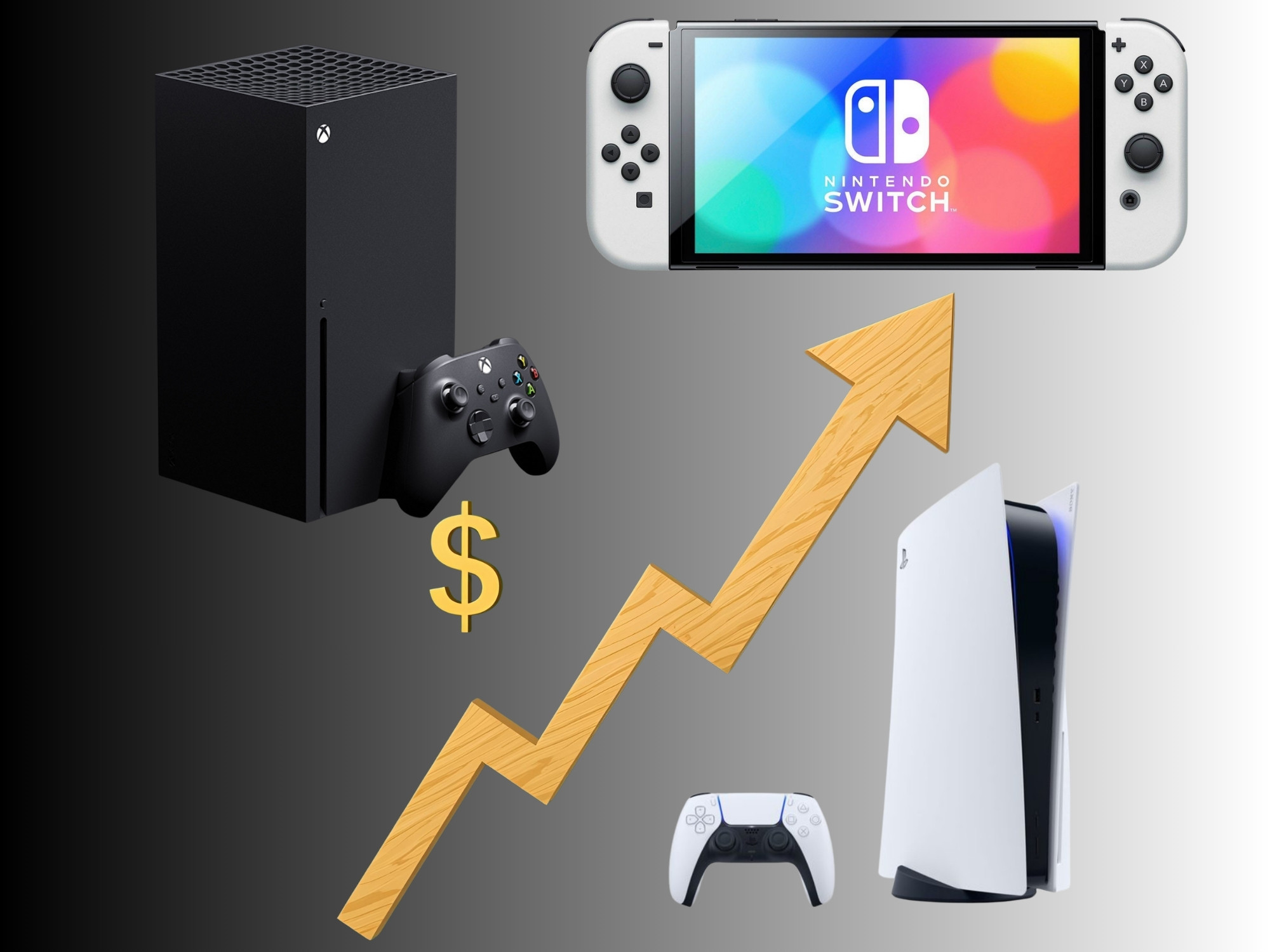
Remember when game consoles got cheaper the longer they were on shelves? This generation flipped the script. Four years in, the PlayStation 5, Xbox Series X|S, and Nintendo Switch are holding their prices—or even climbing—despite decades of history that suggest they should be much cheaper by now.
A new analysis compared inflation-adjusted launch prices of consoles dating back to 1977 with what they typically cost a few years later. Historically, most systems dropped more than 50% by year three. Today’s hardware is the outlier: PS5, Xbox Series X|S, and Switch remain close to, or higher than, their original launch prices.
What the numbers suggest if current systems followed historical trends:
– PS5 Digital Edition: around $229.02
– PS5 with disc drive: around $286.28
– Nintendo Switch (original, non-OLED): around $116.21
– Nintendo Switch OLED: around $216.04
Reality looks very different. The PS5 Digital recently climbed to $500 in the U.S., now even higher than its inflation-adjusted launch MSRP of $497.17. The Switch OLED hovers around $400—nearly double what the historical trend would imply. Xbox Series X|S pricing also remains near launch levels instead of sliding as past generations did.
Why prices are stuck or rising:
– Prolonged component shortages and higher manufacturing costs
– Chips that haven’t shrunk enough to meaningfully reduce costs
– Tariffs and logistics pressures that add friction to the supply chain
Where this leaves buyers:
– Sony can justify a higher PS5 price as long as demand stays strong.
– Nintendo has kept the next Switch’s price steady for now while nudging up prices on older handhelds and accessories.
– Microsoft appears to be shifting focus away from pushing Xbox Series X|S hardware as aggressively as before.
Layer on $70 game releases, and budget-conscious gamers get little relief. Unless production costs fall or demand softens, don’t expect the kind of price cuts that defined earlier console cycles anytime soon.