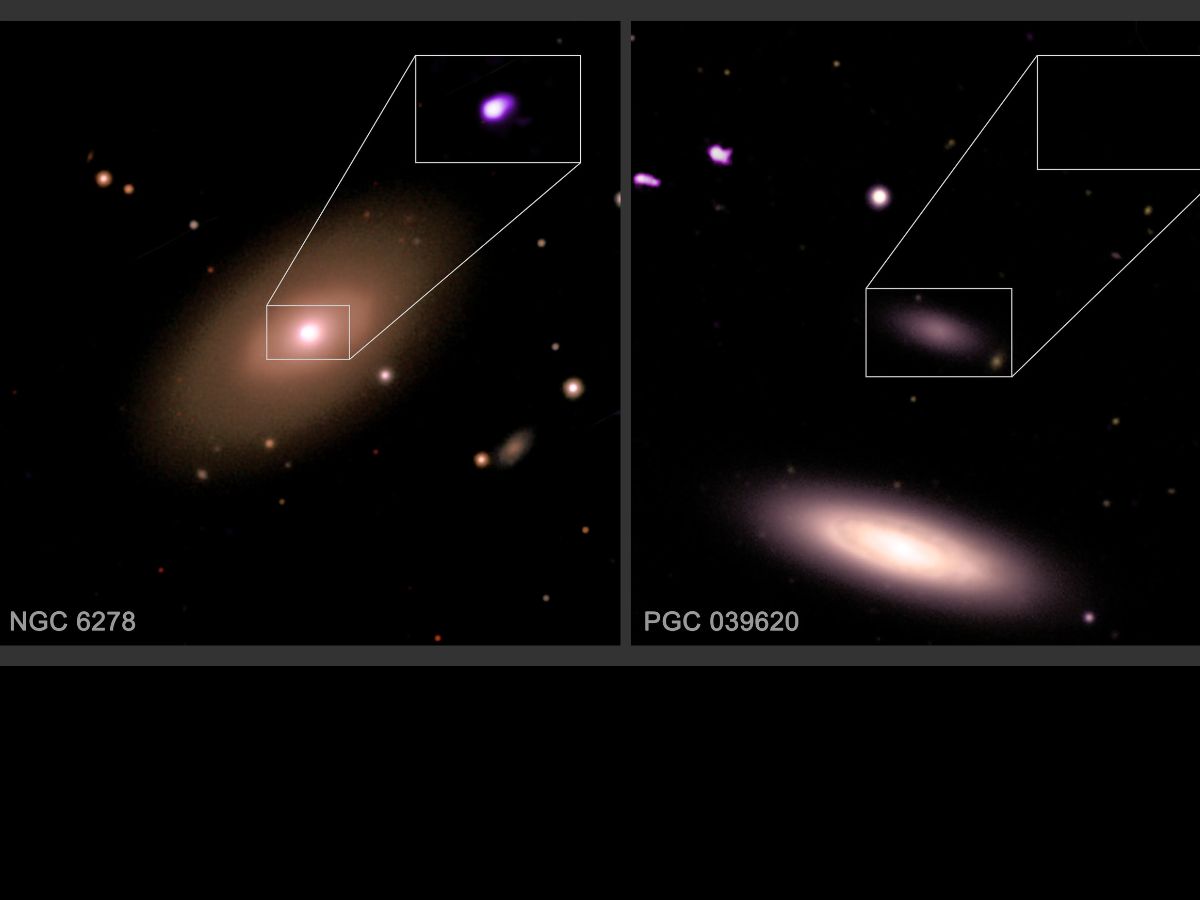
A new astronomy study is challenging one of the most familiar ideas in space science: that nearly every galaxy has a supermassive black hole at its core. Using years of observations from NASA’s Chandra X-ray Observatory, researchers report that many small galaxies may not host these giant black holes at all. If follow-up work confirms the results, the discovery could reshape theories about how supermassive black holes are born—and even influence expectations for future gravitational-wave discoveries.
For decades, astronomers have treated supermassive black holes as a near-universal feature of galaxies. The reasoning is straightforward: in many galaxies, the central region shows energetic activity that’s difficult to explain without a massive black hole feeding on surrounding matter. When gas and dust spiral inward, they heat up and emit powerful radiation, including X-rays. That’s where the Chandra X-ray Observatory becomes especially valuable, because it can spot the high-energy signatures often linked to actively feeding black holes.
In this study, scientists examined Chandra’s long-running archive of galaxy observations. Over roughly two decades, the telescope has observed about 1,600 galaxies spanning a wide range of sizes—from galaxies more than ten times the mass of the Milky Way to much smaller systems. When the team compared X-ray detections across these groups, a clear pattern emerged: smaller galaxies produced fewer of the X-ray signals that typically point to a supermassive black hole at the center.
The researchers interpret that shortage as more than just a minor statistical quirk. Their conclusion is striking: only around 30% of small galaxies are likely to contain supermassive black holes. In other words, the majority of these smaller galaxies may be missing the very feature scientists long assumed was practically guaranteed.
If that estimate holds up, it could help answer a major open question in astrophysics: how supermassive black holes form in the first place. One popular idea has been that supermassive black holes grew over time from smaller “seed” black holes that merged and accreted matter. But the new findings lend support to a different possibility—that many supermassive black holes were “born big,” forming from massive initial seeds rather than slowly building up from countless smaller mergers.
The implications extend beyond black holes themselves. The results could also affect the outlook for the Laser Interferometer Space Antenna (LISA), an upcoming mission designed to detect gravitational waves—ripples in spacetime created by extreme cosmic events, including black hole mergers. If fewer small galaxies contain central supermassive black holes, then there may be fewer supermassive black hole mergers overall, which could mean fewer gravitational-wave signals of the type LISA expects to capture.
While scientists will need more observations and analysis to confirm the picture, the study highlights how much is still unknown about the “rules” galaxies follow. If most small galaxies truly don’t have supermassive black holes, it wouldn’t just tweak existing models—it would force astronomers to rethink how galaxies and black holes evolve together across cosmic time.


