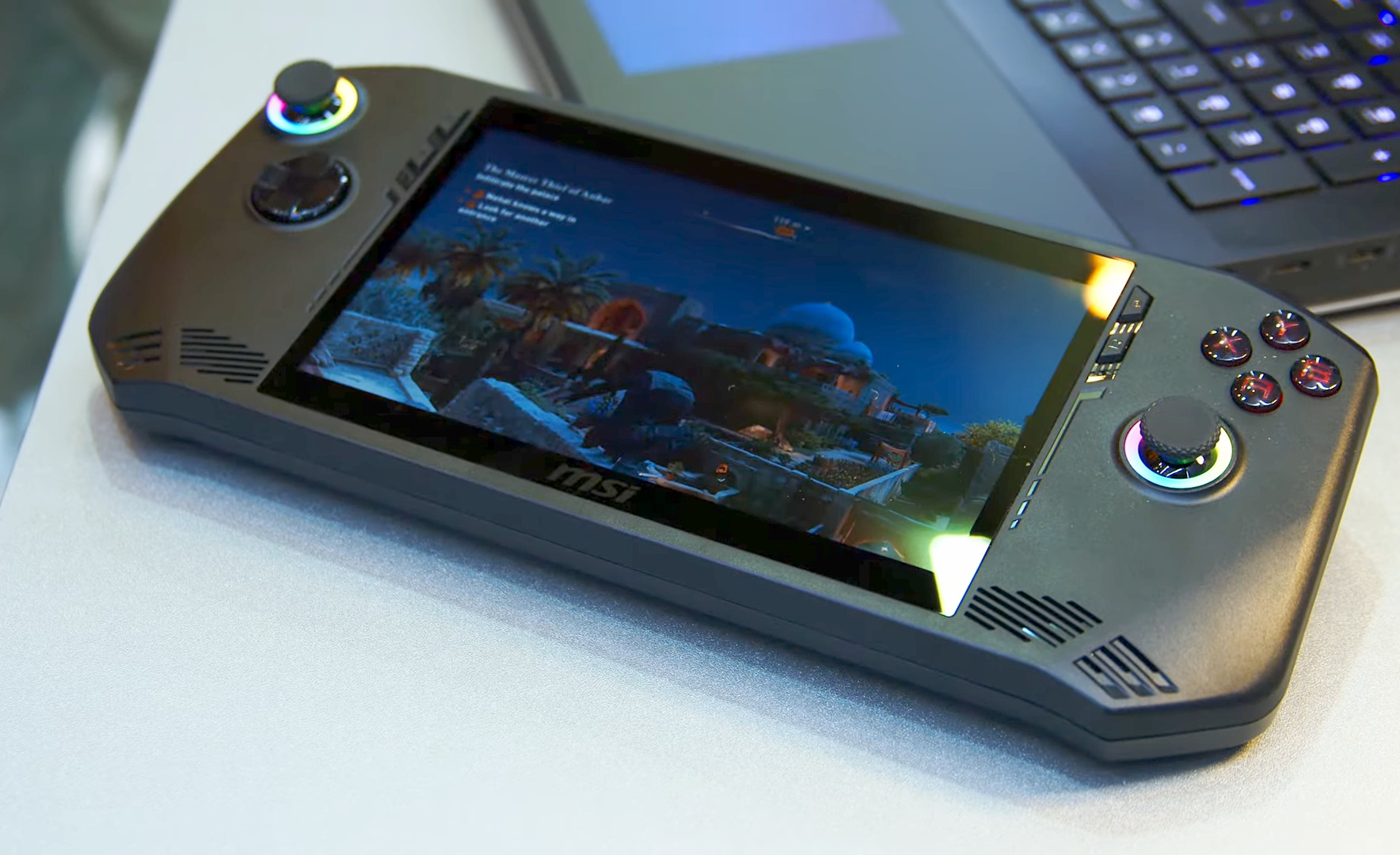
Excitement was in the air when word spread that MSI intended to debut a new Windows gaming handheld in 2024, named the MSI Claw, with anticipated features like a variable refresh rate (VRR) display. The technology was expected to optimize the gaming experience by smoothing out frame rate inconsistencies utilizing the Intel Arc 8-Core iGPU of the Core Ultra 7 155H.
However, in a new development reported by The Verge, MSI has stated that their definition of “variable” pertains to the ability to change the refresh rate, but not in an adaptive manner like AMD’s FreeSync or Nvidia’s G-Sync technologies. Instead, the MSI Claw A1M will provide preset refresh rate options, allowing users to switch manually between 48 Hz, 60 Hz, and 120 Hz—a feature similar to what’s available on Valve’s Steam Deck devices.
The MSI Claw A1M’s offered refresh rates do provide options meeting different gameplay performance levels, but this falls short of the fluidity promised by true VRR capability, such as that found in the competitively priced Asus ROG Ally, which sells at Best Buy for $599.99 featuring an AMD Ryzen Z1 Extreme processor. The ROG Ally’s ability to dynamically adjust the refresh rate between 48 Hz to 120 Hz in real-time stands in contrast to MSI’s “variable” offering.
MSI seems to have taken a more liberal approach to their definition of variable refresh rate possibly to enhance the perceived capabilities of the Claw A1M. Despite this, it’s crucial to note that the absence of true VRR does not render the MSI Claw A1M an undesirable choice. The handheld gaming PC can still leverage other technologies such as Intel’s XeSS, Nvidia DLSS, and AMD FidelityFX Super Resolution, combined with manual refresh rate adjustments and frame rate limiters, to achieve a satisfying gaming experience.
For those on the lookout for the latest in gaming handhelds, the supersized Lenovo Legion Go is another option available for consideration.
As the gaming hardware landscape continues to evolve, the presence of different refresh rate technologies in handheld gaming PCs is becoming a pivotal feature that discerning gamers weigh in their purchasing decisions. It’s always advisable to compare the features and specs of the latest devices on the market to determine which system best suits individual gaming needs and preferences.


