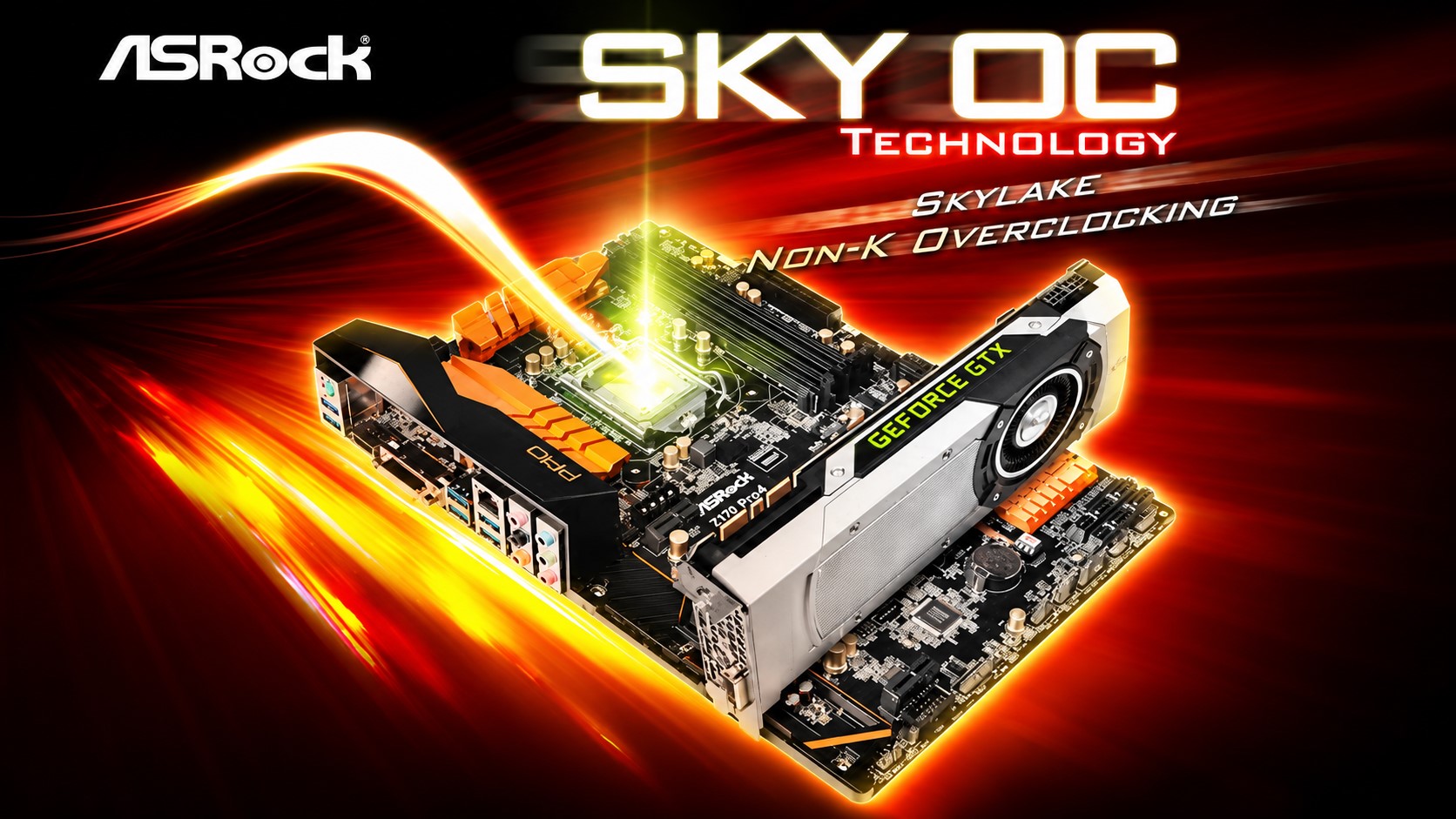
AI-Assisted BIOS Mod Attempts to Revive ASRock SkyOC for Intel Non-K CPU Overclocking
An overclocking enthusiast has attempted to bring back ASRock’s long-discontinued SkyOC feature using AI, raising fresh interest in BCLK overclocking for locked Intel desktop processors.
The experiment involved using GPT Astra to analyze and compare older ASRock BIOS files, including one version that supported SkyOC and another released after the feature was removed. The goal was to identify the BIOS-level changes that enabled the workaround and adapt them for use on a newer Intel motherboard platform.
The project was demonstrated by the user Hardware 360°, who claimed that the AI tool helped decompile the BIOS files, locate the relevant SkyOC-related code, and modify it for a modern board. A shared screenshot reportedly showed a modified firmware file prepared for an ASUS ROG Maximus XI Extreme Z390 motherboard.
However, whether the revived SkyOC method actually works remains unclear. At the time of the original post, there was no confirmed update showing a successful overclock or long-term system stability using the modified BIOS.
SkyOC became popular in the Skylake era because it allowed certain Intel non-K processors to be overclocked through base clock adjustments. Intel’s non-K CPUs usually have locked multipliers, meaning users cannot raise the CPU frequency through the standard multiplier method. Instead, enthusiasts sometimes turn to BCLK overclocking, where the base clock is increased from its default 100 MHz value.
BCLK overclocking is more complicated than traditional multiplier overclocking because the base clock can influence other parts of the system, including memory, PCIe devices, and storage controllers. This can lead to instability if the motherboard does not have the right hardware design. Higher-end motherboards with independent clock generators are better suited for this kind of tuning because they can isolate the CPU clock more effectively.
ASRock’s SkyOC feature was designed to make this process easier on Skylake processors. It reportedly worked around Intel’s restrictions by allowing the processor to operate at a higher actual BCLK while presenting a different value to the CPU. This helped bypass a limitation that could cause shutdowns when the base clock rose beyond roughly 103 MHz.
Intel later moved to block this type of non-K CPU overclocking, and motherboard makers were pushed to remove similar features through BIOS updates. As a result, SkyOC disappeared, becoming a notable piece of PC overclocking history.
The new AI-assisted attempt is interesting because it shows how modern tools may help enthusiasts analyze firmware behavior that would otherwise require deep reverse-engineering knowledge. By comparing old and new BIOS versions, AI can potentially highlight code differences and assist in reconstructing removed features.
Still, this kind of project comes with serious risks. Flashing a modified BIOS can permanently damage a motherboard, cause boot failure, break hardware compatibility, or introduce unpredictable system instability. It may also void warranties and create security concerns. Even if the modified firmware boots successfully, there is no guarantee that overclocking will be stable or safe for daily use.
For now, the revived SkyOC experiment should be seen as a technical proof of concept rather than a practical recommendation. It is an impressive example of how AI tools are being used in the PC enthusiast community, but anyone considering BIOS modification should proceed with extreme caution.
If confirmed to work, this could become a fascinating moment for overclocking fans who remember the excitement around Intel non-K BCLK tuning. Until then, it remains an ambitious and risky attempt to bring back one of the most controversial motherboard features from the Skylake era.