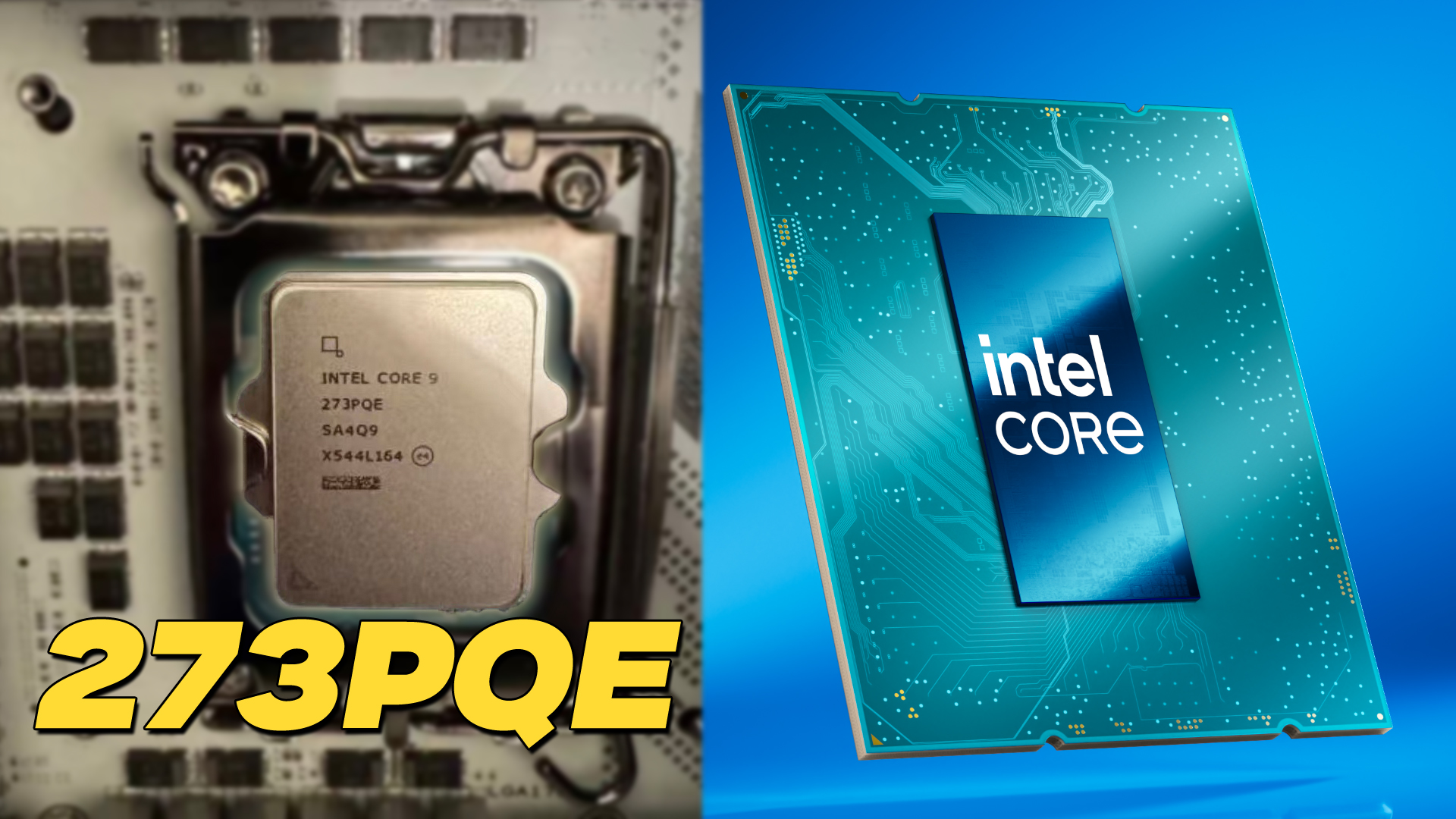
A PC enthusiast has taken a major step toward making Intel’s unusual Bartlett Lake processor work on everyday LGA 1700 desktop motherboards, even though the chip isn’t officially supported there. The result is a fascinating proof of concept: with the right BIOS tweaks, the system can recognize the CPU and begin the boot process on a mainstream board.
The processor in question is the Intel Bartlett Lake Core 9 273PQE, a recently launched “edge” CPU designed for specialized deployments rather than typical consumer desktops. Even though Bartlett Lake uses the familiar LGA 1700 socket found on many 600- and 700-series boards, these chips don’t officially run on standard consumer motherboards because compatible BIOS support isn’t provided.
That’s where the modding comes in. An overclocking forum user known as “kryptonfly” reported successfully getting a Core 9 273PQE to POST on an ASUS Z790 AYW-OC motherboard after using a custom-modified BIOS. The most eye-catching detail is how the BIOS was produced: the user claims an AI model (Claude) wrote the BIOS modifications entirely. According to the report, the board displays a POST screen that clearly identifies the Bartlett Lake processor by name, suggesting the platform is at least partially initializing the chip without requiring a physical BIOS chip replacement.
There’s still a major hurdle, though. While the system reaches the initial POST stage, it doesn’t fully boot into a usable state. When the user proceeds past the initial screen (such as pressing F1), the display goes black. That points to missing patches or incomplete microcode/platform initialization—exactly the kind of roadblock you’d expect when running a CPU outside its official support matrix. Even so, the fact that it can POST at all is a strong sign that wider compatibility may be possible with additional BIOS work.
Interest in Bartlett Lake comes from what makes the Core 9 273PQE different from typical modern Intel desktop chips. It’s closely related to Raptor Lake Refresh, but instead of mixing Performance cores (P-cores) and Efficiency cores (E-cores), this model is P-core only. Even more notably, it’s the only Bartlett Lake chip that offers 12 Performance cores, giving enthusiasts a rare configuration that doesn’t exist in the usual consumer lineup.
That unique layout is also why people are eager to see it running on a normal Z790 or similar motherboard. Reports suggest the Core 9 273PQE can land in the performance territory of higher-end chips like the Core i9-14900K, despite having far fewer total cores than Intel’s flagship hybrid designs. If the community can push beyond POST and achieve full stability, it could open the door to deeper testing—especially gaming benchmarks that reveal how a 12 P-core-only Intel CPU behaves in real-world desktop workloads.
For now, this remains an enthusiast experiment rather than a plug-and-play upgrade path. But it’s an intriguing glimpse at what’s possible when LGA 1700 hardware, a rare edge-focused CPU, and custom BIOS development collide—especially with AI-assisted tooling accelerating the trial-and-error process.