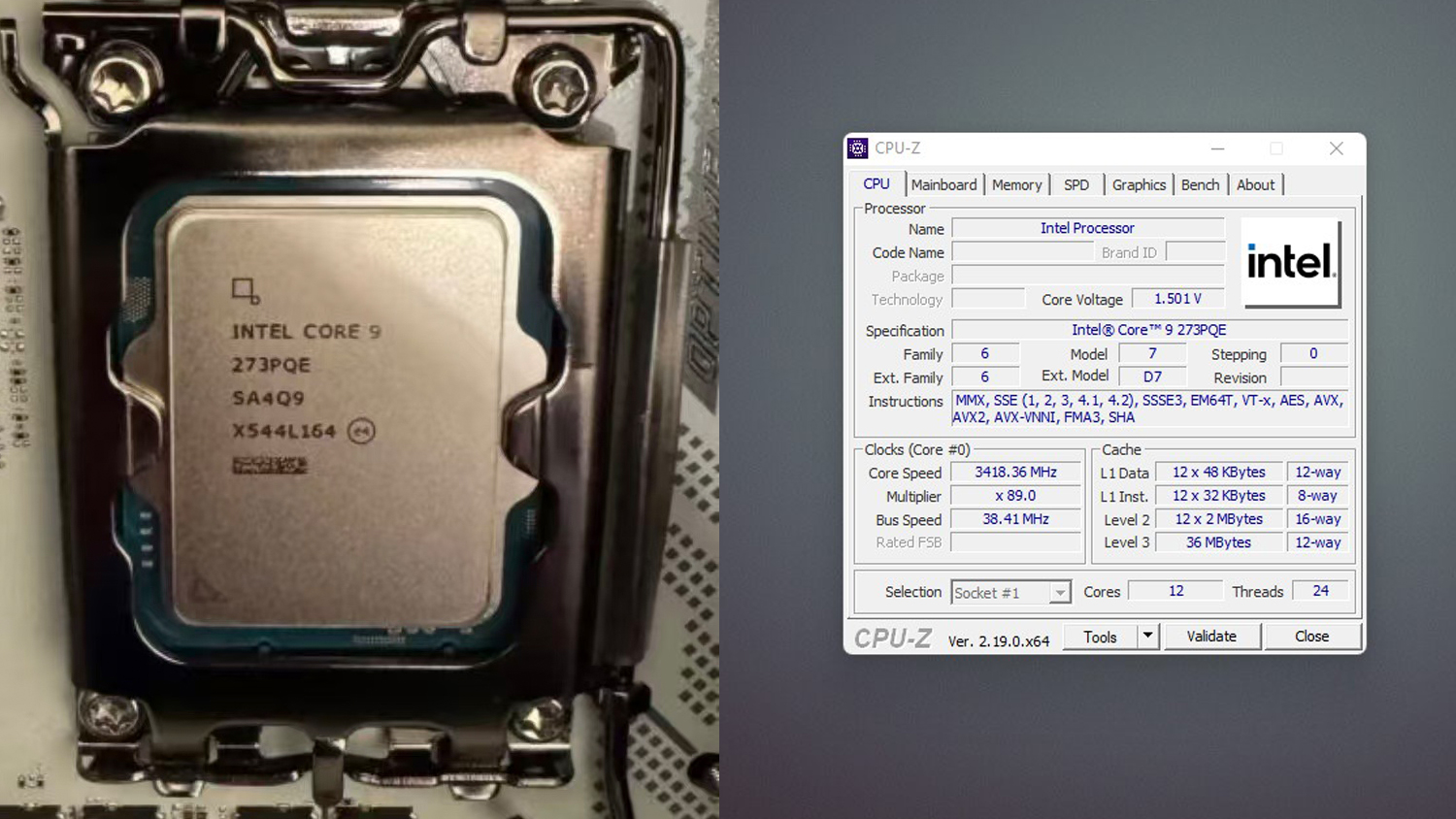
A long-running curiosity in the PC enthusiast world just took a big step forward: someone has successfully booted Intel’s Bartlett Lake “P-core only” processor on a standard LGA 1700 consumer motherboard after modifying the BIOS.
Overclocking enthusiast Kryptonfly is the first known user to power on and reach Windows using the Intel Bartlett Lake Core 9 273PQE on a conventional Z790 board. That’s a notable milestone because Bartlett Lake chips, while physically compatible with the LGA 1700 socket (the same socket used by Alder Lake and Raptor Lake), are not officially supported on consumer motherboards. In normal circumstances, this lack of support prevents the system from properly initializing the CPU, stopping the boot process before you can even enter BIOS setup or load an operating system.
What makes this breakthrough especially interesting is how it was achieved. Rather than waiting for official motherboard firmware that may never arrive, Kryptonfly reportedly patched the BIOS and used custom tweaks to “trick” the early initialization process into identifying the Bartlett Lake Core 9 273PQE as a Raptor Lake processor. With that workaround in place, the system was able to move past the usual boot failure behavior, including the notorious motherboard debug code error that previously blocked progress.
Screenshots shared by the user indicate the chip is operating normally once in Windows. The Core 9 273PQE shown features 12 Performance cores and 24 threads, and in the posted readouts it was running at around 3418 MHz. Because it’s a P-core-only design, it immediately raises a question enthusiasts have been asking since the first leaks: how would a 12-core/24-thread all–Performance-core CPU stack up against flagship consumer desktop parts that reach higher total core counts using a hybrid design?
That comparison is exactly what hardware fans want to see next. Intel’s recent high-end mainstream desktop CPUs typically combine Performance cores and Efficient cores, boosting multi-threaded throughput through sheer core count. A Bartlett Lake part built entirely around Performance cores could deliver a different balance of scheduling behavior, responsiveness, and performance consistency in certain workloads, making head-to-head testing against chips like the Core i9-class Raptor Lake models particularly compelling.
There is one catch: despite the excitement, Bartlett Lake isn’t expected to arrive as a mainstream consumer release. That makes this kind of DIY experimentation even more intriguing, because it offers a glimpse of “what could have been” for desktop builders—especially at a time when competition in the mainstream desktop CPU market remains intense.
For now, the achievement stands as a win for the tinkering community: a previously unsupported Intel Bartlett Lake P-core-only CPU has been coaxed into running on a standard Z790 LGA 1700 motherboard, reaching Windows with the help of custom BIOS patching and firmware tricks. The next big story will be performance testing—if more users can replicate the setup and stability holds up under real workloads.