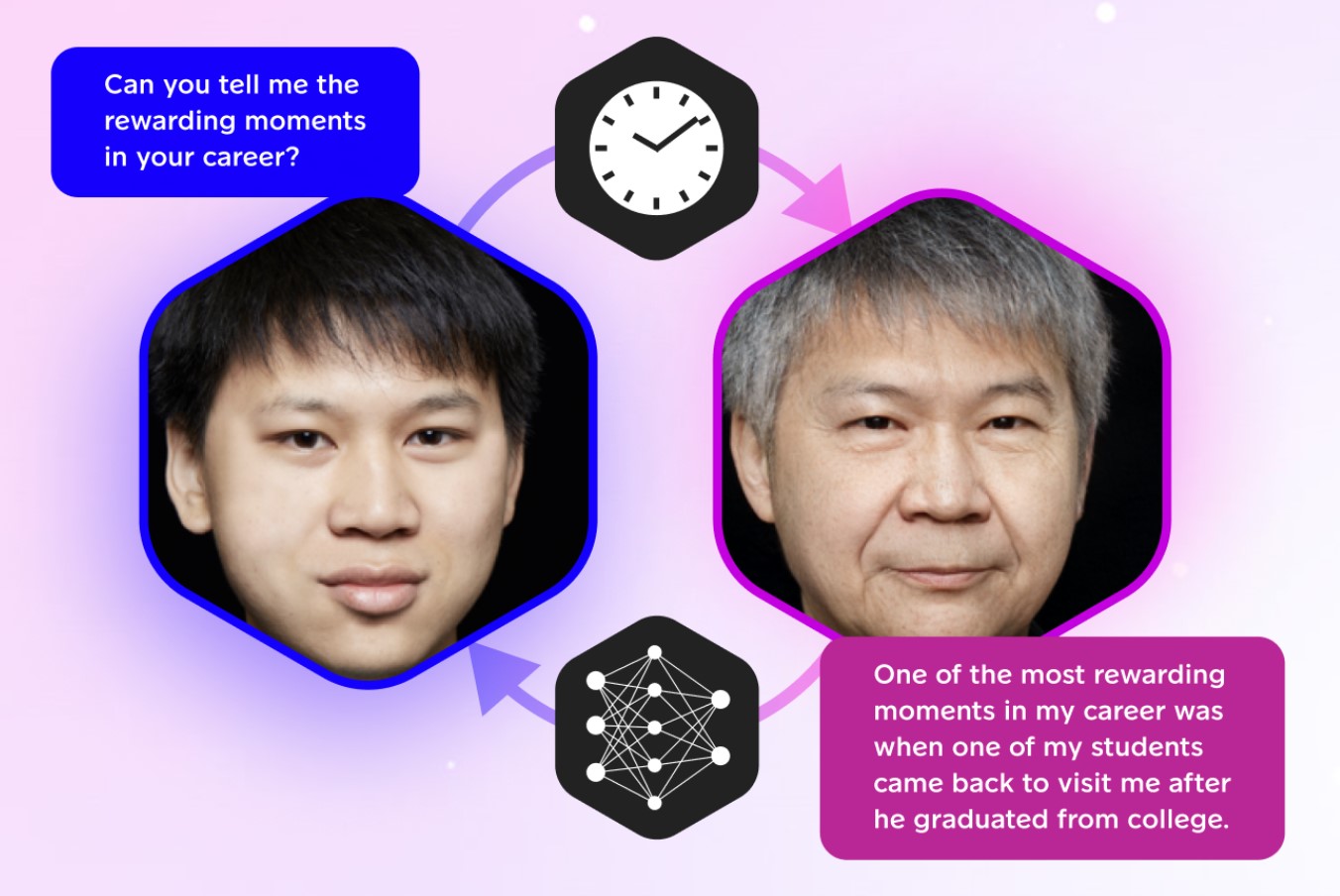
Imagine a tool that allows you to have a heart-to-heart with an older version of yourself—a kind of virtual time travel that lets you peek into your possible future. Thanks to cutting-edge generative AI, that’s precisely what the Future You project offers.
Developed by a team of researchers from MIT and other institutions, Future You is designed to help young people connect with a potential future version of themselves through an interactive, online conversation. The idea is to bridge the gap between the present and the future, fostering what psychologists refer to as “future self-continuity.” This concept is crucial because the more connected you feel to your future self, the more likely you are to make decisions that benefit you in the long run—whether it’s saving money or focusing on academic achievements.
By employing a sophisticated large language model, Future You generates a life-like simulation of you at age 60 based on information you share today. This AI-driven counterpart can offer advice, share insights, and help you explore various life paths—all within a realistic conversational framework.
Initial studies highlight the promise of this approach. Participants who spent just half an hour chatting with their AI future selves reported less anxiety and a stronger connection to who they might become.
Pat Pataranutaporn, whose work at MIT focuses on advancing human-AI interactions, describes Future You as a “virtual time machine” that nudges users to contemplate the long-term consequences of their choices. Imagine the possibilities: an AI that doesn’t just simulate your future but interacts with you, helping you map out a meaningful life journey.
Participants begin by filling out a series of questions that capture their current lifestyle and aspirations. The AI then uses this data to craft “future self memories,” setting the stage for your future self to share what your life might look like decades down the line.
This innovative system offers a two-fold engagement experience: introspection, where you reflect on your life and goals, and retrospection, assessing whether the simulated future resonates with your vision of who you hope to be.
The AI even generates an age-progressed image to enhance realism, ensuring the advice from your future self feels both vivid and authentic. This personal touch can make the guidance more impactful—a sentiment echoed by Hal Hershfield, a professor from UCLA, who appreciates how the experience of talking to oneself can transform future anxieties into concrete reflection points.
While the process is highly immersive, it’s not without its cautions. The system is careful to remind users that it represents just one possible future, empowering them to shape their destiny.
In a study involving 344 participants, those who interacted with Future You reported establishing a closer bond with their envisioned future selves while experiencing diminished future-related anxiety. This feedback underscores the meaningful potential of an AI that deftly combines robust psychological frameworks with digital capabilities.
As the development of Future You progresses, the researchers remain committed to enhancing the system’s context-setting abilities and safeguarding its use against potential misuse. They’re also exploring new applications, such as career planning or examining personal contributions to societal issues like climate change.
The overarching goal is not to create dependency but to offer an enlightening experience—one that enriches self-perception and fosters growth. With such innovative applications of AI, the researchers are eager to see how Future You might reshape conversations about our future selves.