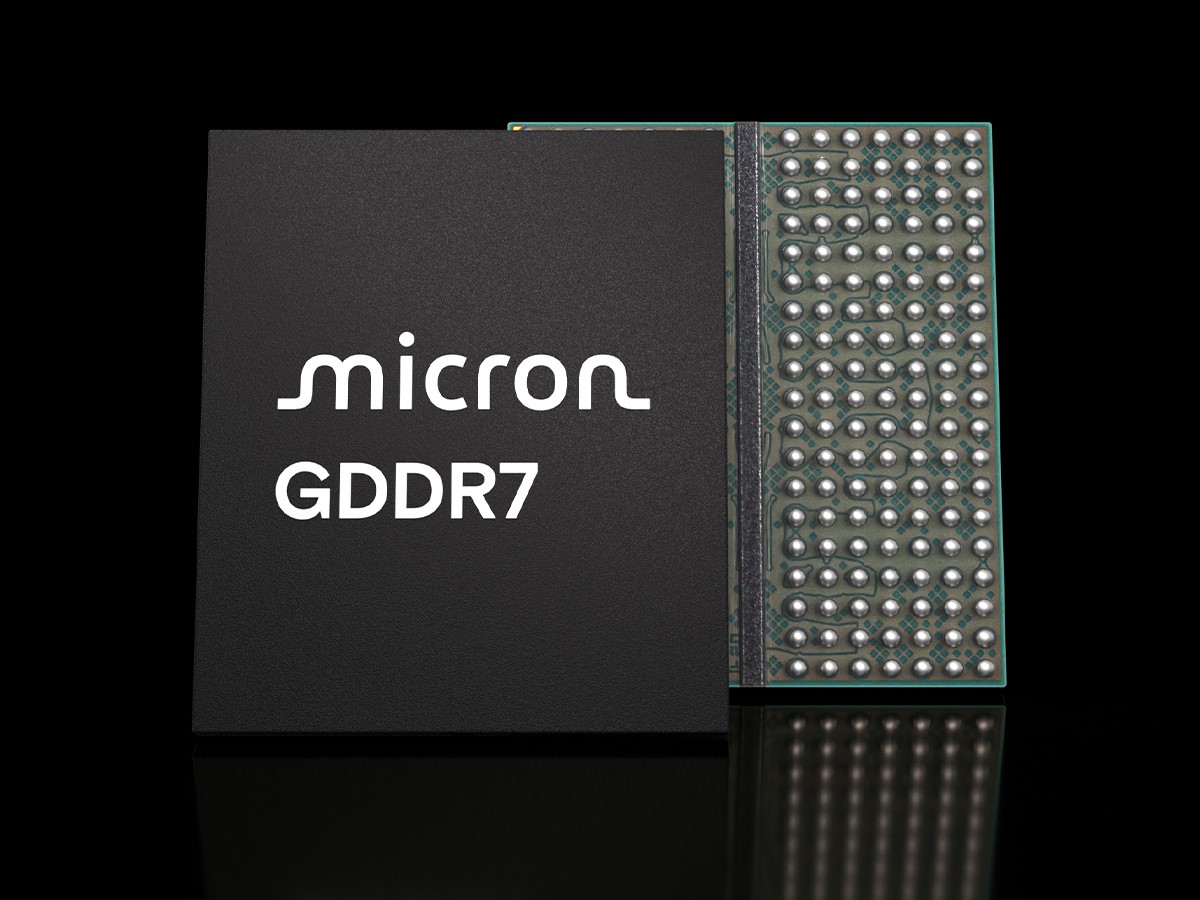
Micron Technology has set a new benchmark in the world of memory manufacturing by shipping sample units of its latest DDR5 modules. These modules are crafted on Micron’s innovative sixth-generation 10nm-class DRAM node, affectionately known as 1-gamma, marking the debut of the company’s use of extreme ultraviolet (EUV) lithography. This cutting-edge technology ushers in remarkable advancements in speed, energy efficiency, and yields during production.
The new approach has propelled Micron’s 16 GB DDR5 integrated circuits to achieve speeds reaching an impressive 9200MT/s, which is a significant 15 percent enhancement from the previous 1-beta generation. This leap in performance comes paired with a more than 20 percent reduction in power consumption. Additionally, Micron’s updated manufacturing method promises to deliver over 30 percent higher bit density, suggesting the potential for cost reductions as the technology becomes more established.
Scott DeBoer, Micron’s executive vice president and chief technology & products officer, underscored the company’s commitment to innovation: “Micron’s expertise in proprietary DRAM technologies, combined with our strategic adoption of EUV lithography, yields a robust lineup of 1-gamma-based memory products designed to accelerate advancements in the AI sector.”
The applications of the 1-gamma node are broad and far-reaching:
1. For data centers, the technology offers up to 15 percent faster performance alongside enhanced energy efficiency, effectively managing power and heat.
2. In mobile devices, the LPDDR5X variants are set to elevate AI capabilities right on smartphones and tablets.
3. In automotive systems, LPDDR5X, running at speeds up to 9600MT/s, promises greater capacity, longevity, and performance strength.
Both AMD and Intel are already validating Micron’s cutting-edge DDR5 lineup. AMD’s Corporate VP of Server Platform Solutions Engineering, Amit Goel, has emphasized how this collaboration aligns with AMS’s ongoing innovation in EPYC processors and consumer hardware. Simultaneously, Dr. Dimitrios Ziakas from Intel spotlighted the improved power efficiency and density advantages that promise significant benefits for server environments and AI-driven PCs.
Micron is currently producing these groundbreaking 1-gamma DRAM chips at its Japanese facilities, which saw the arrival of the company’s first EUV lithography system in 2024. As the production scales, Micron plans to enhance its capabilities further with more EUV deployments in Japan and Taiwan.