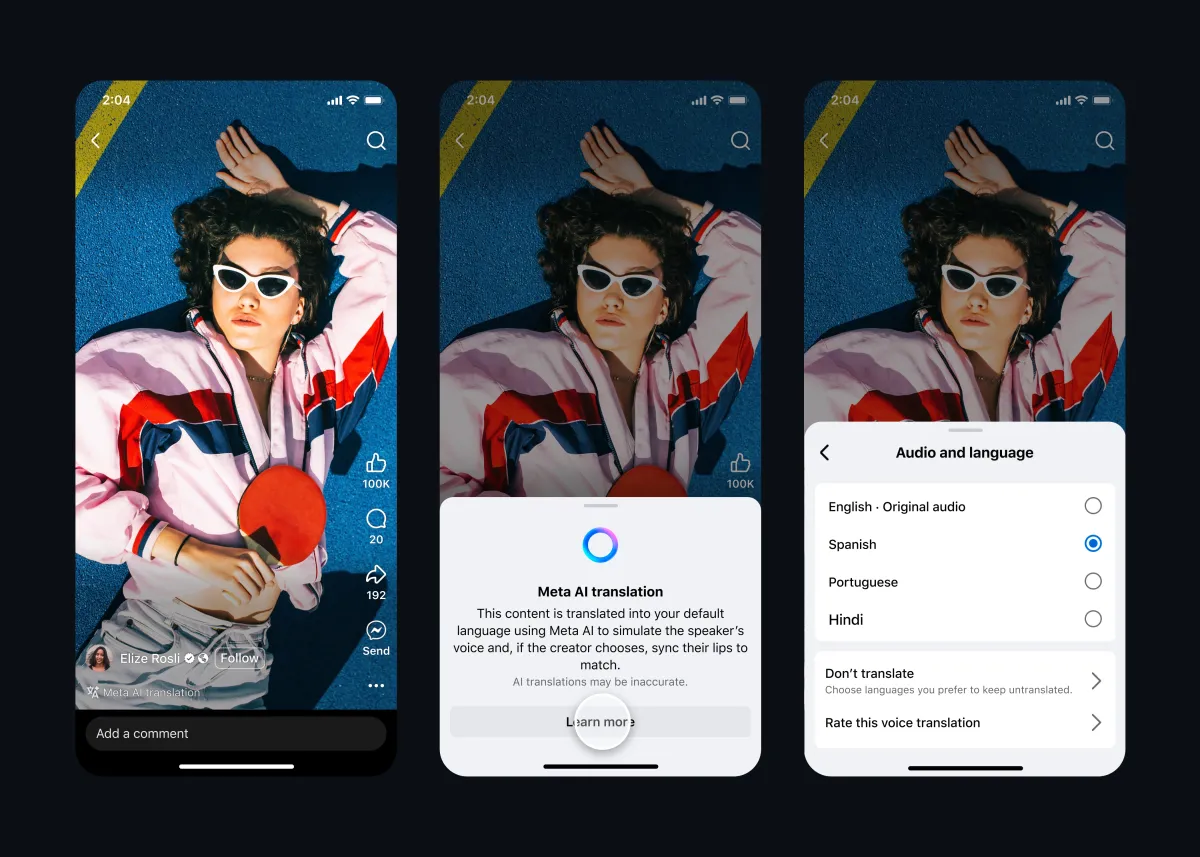
Meta is expanding its AI-powered translation tools for Reels, making it easier for creators to reach global audiences and for viewers to enjoy content in their own language. After launching automated dubbing and translations for English and Spanish in August, the company is now adding Hindi and Portuguese across Instagram and Facebook. The move targets two of the world’s largest creator communities—India and Brazil—while continuing to push Reels front and center on iPad and on mobile in markets like India and South Korea.
The goal is straightforward: break language barriers so creators can be discovered by fans who don’t speak the same language. With automatic translations, more people can make sense of content, and creators can grow audiences beyond their home regions.
Here’s how it works for viewers and creators:
– Viewers can enable automatic translation in their preferred language to watch Reels originally created in a different language.
– Creators can switch on Translate your voice with Meta AI before publishing. After previewing the AI-generated dub with lip-sync, they can choose which languages to translate into.
Meta is also rolling out new capabilities to make translations feel more natural. Facebook Reels already supports multi-speaker AI translations, and that capability is coming to Instagram soon. Beyond voice, the company is building translation for on-screen text and caption stickers; a Translate text on Reels option will help viewers who watch without sound. A new voice-dubbing model is in development to preserve a creator’s natural voice and tone, alongside an improved lip-sync system that better matches mouth movements.
Competition in this space is heating up. YouTube has been investing in translation tools for years and recently upgraded its auto-dubbing with better lip-sync across 20 languages. Meta’s additions of Hindi and Portuguese, plus upcoming features that blend voice preservation, multi-speaker support, and text translation, signal a broader push to make short-form video truly multilingual.
For creators, this means a bigger potential reach with fewer production headaches. For viewers, it means more authentic, understandable content—no matter which language it started in.