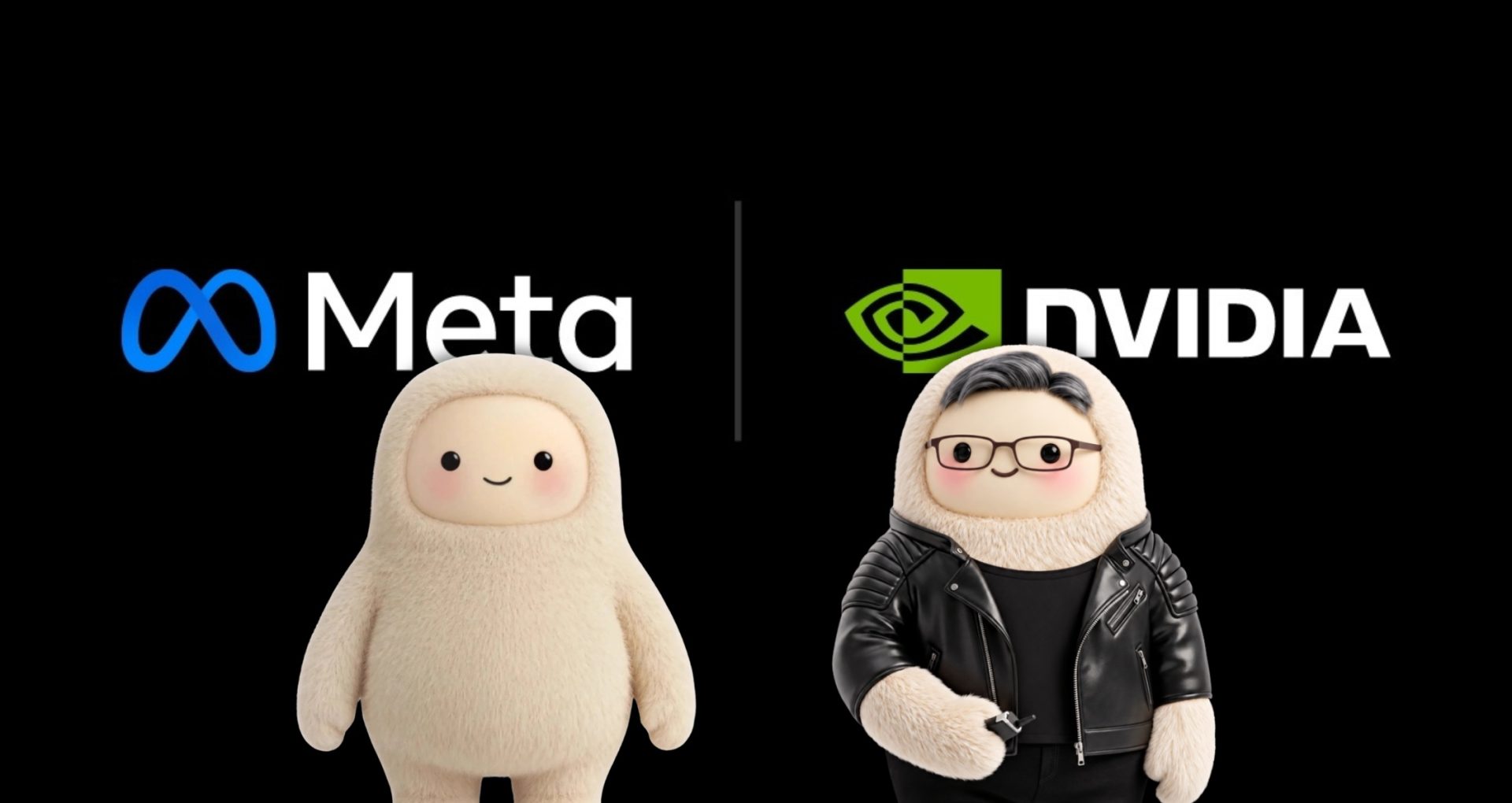
NVIDIA and Meta Expand AI Partnership With Vera Rubin, Vera CPUs, and Next-Generation Agentic AI Infrastructure
NVIDIA and Meta are strengthening their long-running AI partnership with a major expansion focused on faster, more efficient infrastructure for next-generation artificial intelligence models. The collaboration will bring additional deployments of NVIDIA Vera Rubin servers and Vera CPU rack-scale systems to Meta’s AI infrastructure, helping the company scale advanced workloads while improving performance per watt.
The move comes as demand for agentic AI continues to rise. These AI systems are designed to understand user goals, reason through tasks, use tools, and complete work on behalf of people. Meta’s Muse and the broader Muse family of open AI models are central to this effort, with both companies working together to optimize the full computing stack behind these increasingly capable AI agents.
As part of the expanded partnership, Meta will grow its NVIDIA-powered hardware fleet with more Vera Rubin systems and Vera CPU deployments. NVIDIA will also work on performance optimizations across Meta’s AI workflows, aiming to increase efficiency, improve scaling, and reduce total cost of ownership for large-scale AI operations.
The Vera CPU architecture is being positioned as a key building block for agentic AI because of its AI-optimized design, strong efficiency, and rack-scale performance. For Meta, this infrastructure is expected to support the development and deployment of more advanced AI models capable of serving billions of users.
Networking will also play a major role in the expansion. Meta plans to deploy NVIDIA Spectrum-X Ethernet networking and BlueField-4 technology to improve data movement, rack efficiency, and scalability inside AI data centers. These technologies are designed to support large AI factories where thousands of accelerators and servers must work together with low latency and high throughput.
Beyond hardware, NVIDIA and Meta are also exploring additional technology collaborations around AI safety, monitoring, and secure deployment. This includes NVIDIA’s OpenShell Reference Architecture, which is intended to help support safer AI agent deployment, and NVIDIA Sentry, a system designed for monitoring agent behavior. The companies are also considering tools for structured, unstructured, and graph data processing, which are increasingly important for sophisticated AI systems.
NVIDIA is also set to make a $3 billion investment in Meta’s equity offering, further signaling the strategic importance of this partnership. The investment highlights how closely the two companies are aligning around the future of AI infrastructure, personal AI assistants, and large-scale agentic computing.
NVIDIA CEO Jensen Huang described AI agents as a new computing paradigm, where software can understand goals, reason, use tools, and complete tasks for users. He said the expanded collaboration with Meta is focused on optimizing the infrastructure needed to make these agents capable, efficient, and secure.
Meta CEO Mark Zuckerberg framed Muse as part of the company’s broader goal of bringing personal superintelligence to everyone. He said Meta is continuing to work with NVIDIA to build leading personal agents and frontier AI models for billions of people.
This expanded NVIDIA and Meta partnership places Vera Rubin servers, Vera CPUs, Spectrum-X Ethernet, and BlueField-4 at the center of Meta’s future AI infrastructure. With added focus on efficiency, scale, networking, and safety, the collaboration is designed to accelerate the development of powerful AI agents and make advanced personal AI experiences available to users around the world.