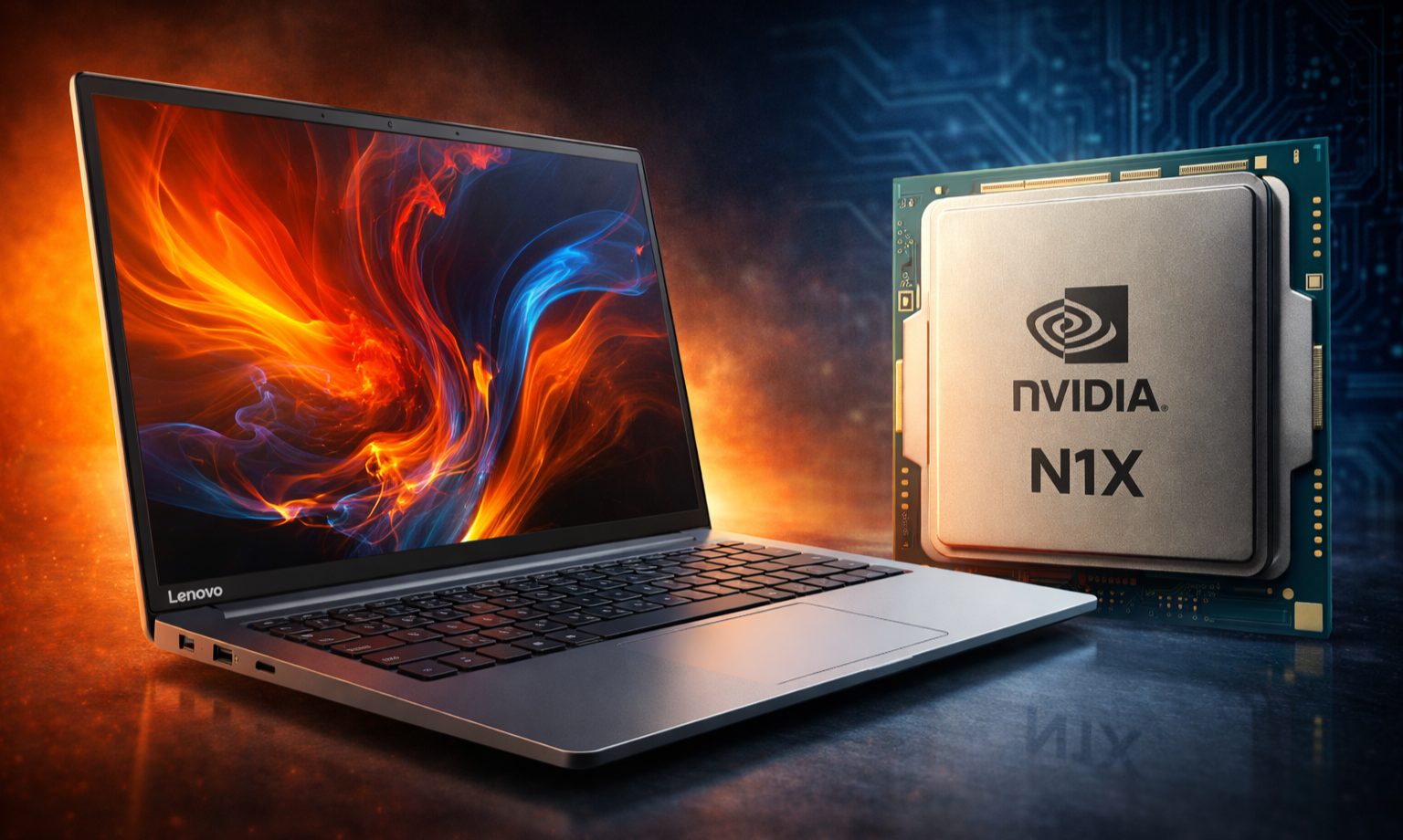
With MediaTek’s keynote unexpectedly pulled from the Computex 2026 schedule, the spotlight is now firmly on NVIDIA CEO Jensen Huang and what could be one of the most important laptop chip reveals of the year: the rumored NVIDIA N1 and N1X laptop SoCs.
PC enthusiasts and laptop buyers have been waiting to see NVIDIA step into the mainstream, low-power notebook space with a processor designed for thin-and-light gaming laptops and AI-focused Windows machines. The big question is how NVIDIA’s collaboration with MediaTek will translate into real-world performance and battery life—and whether NVIDIA is ready to challenge the current heavyweights in laptop silicon, including AMD and Intel, while also taking aim at Qualcomm’s Snapdragon X lineup.
Interest has surged thanks to ongoing rumors that the higher-tier N1X could feature integrated graphics powerful enough to compete with mid-range discrete laptop GPUs. If that claim holds up, it could signal a major shift: laptops that can deliver serious gaming performance without relying on a dedicated graphics chip, potentially improving efficiency, thermals, and overall portability.
Why MediaTek’s cancelled keynote matters
The change came close to the event, making it particularly surprising for attendees and industry watchers. Computex organizers announced that MediaTek CEO Dr. Rick Tsai’s keynote, originally scheduled for June 3, was cancelled due to “scheduling adjustments,” without offering a deeper explanation.
Because the update arrived so near the show, it has sparked speculation about shifting plans behind the scenes—possibly involving partner timing, product readiness, or a strategic decision to save announcements for a different stage. Whatever the reason, the result is clear: NVIDIA’s June 1 presentation is now the main event to watch, especially for anyone tracking next-generation Windows laptops and AI PCs.
All eyes on Jensen Huang and the N1/N1X laptop SoC
With MediaTek stepping back from a keynote slot, expectations are rising for NVIDIA to fill that vacuum with something substantial. Many are anticipating at least a first official look at the N1 laptop SoC family, which is widely believed to target AI-accelerated notebooks built around efficient performance—an increasingly competitive category that blends everyday productivity, on-device AI features, and light-to-mid gaming capabilities.
If NVIDIA positions N1 and N1X as Windows notebook processors with strong AI acceleration and standout graphics, it could create a fresh alternative in a market currently dominated by a familiar set of choices. That would matter not just for gamers, but also for creators, students, and professionals who want higher performance in slimmer designs.
Possible launch window and early signs from laptop makers
While nothing has been officially confirmed, the N1 and N1X chips are widely expected to show up in actual laptops before the end of the year. Adding weight to that idea are early product signals from major PC vendors, including reported listings that suggest prototype or early sample laptops already exist with N1 and N1X configurations.
For buyers, that’s the key detail: this may not be a distant roadmap item. If manufacturers are already preparing systems around these chips, a commercial launch could be closer than many think.
Now, with the event schedule reshuffled, the clearest next step is NVIDIA’s stage time. If the N1/N1X are real—and as ambitious as leaks suggest—Jensen Huang’s Computex presentation could set the tone for the next wave of AI-powered, graphics-forward laptops.