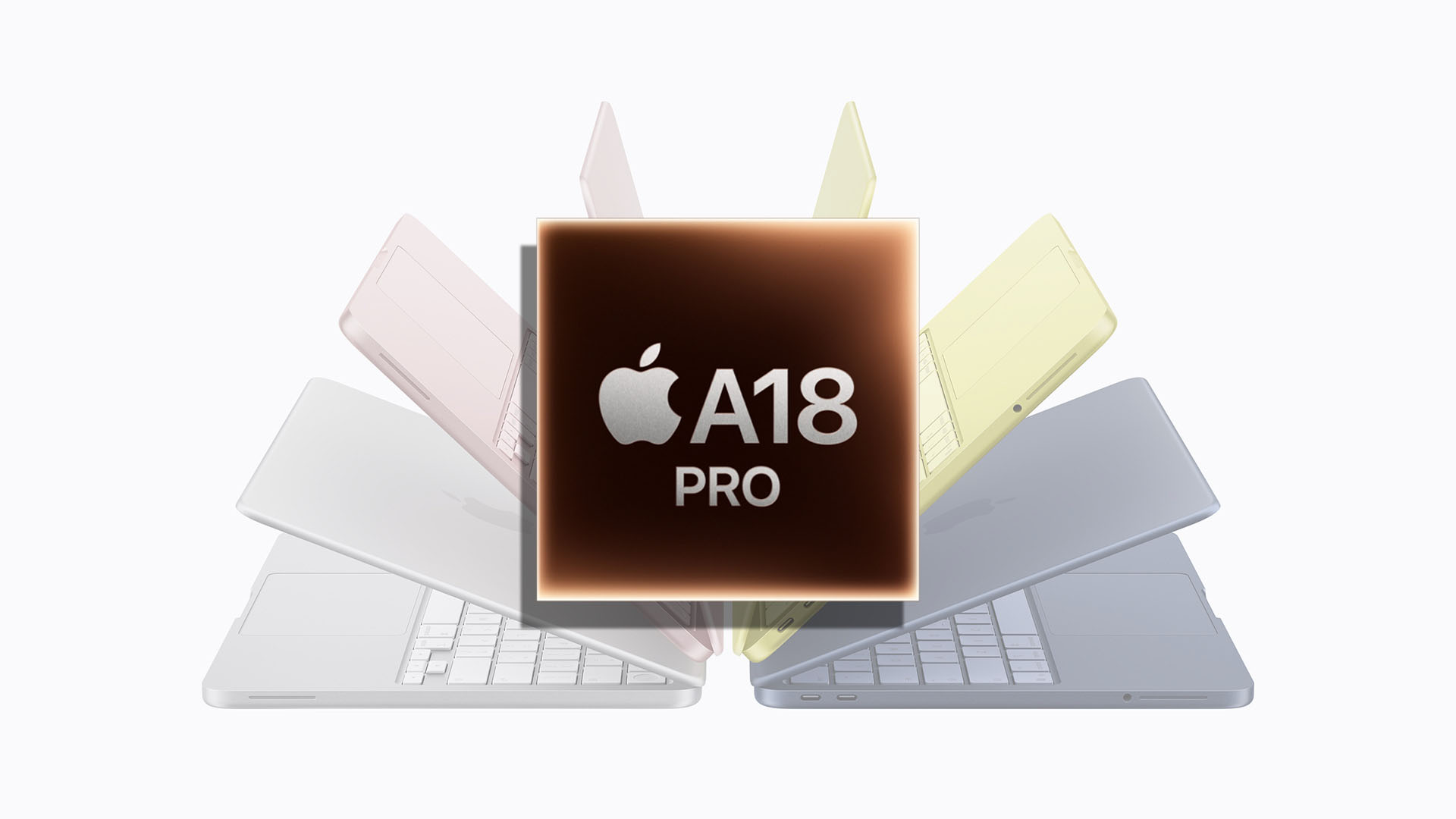
Apple has finally pulled the curtain back on its most affordable portable Mac yet: the MacBook Neo. For months, rumors pointed to one surprising detail—this laptop would run on the A18 Pro, the same chip family used in the iPhone 16 Pro lineup. Now that the device is official, the natural next question is what Apple changed to hit a lower price without sacrificing the “new Mac” experience.
The biggest internal difference comes down to chip-binning. While the iPhone 16 Pro and iPhone 16 Pro Max versions of the A18 Pro ship with a 6-core CPU and a 6-core GPU, the MacBook Neo’s A18 Pro is slightly trimmed on the graphics side. In the Neo, Apple uses the same A18 Pro platform but with a 5-core GPU, meaning the laptop gives up one GPU core compared to the iPhone 16 Pro’s configuration.
This isn’t a one-off decision, either. Apple has been leaning on binned chips across its more budget-friendly products. Recent lower-cost releases have similarly arrived with scaled-back configurations, shaving off performance in targeted areas to keep prices down while retaining the same general architecture and feature set.
The good news is that the rest of the A18 Pro feature package in the MacBook Neo remains largely in line with expectations. The chip still supports hardware-accelerated ray tracing and includes a 16-core Neural Engine, keeping Apple’s on-device AI and machine learning capabilities intact. Apple also disclosed the memory bandwidth figure for this A18 Pro configuration: 60GB/s. That number is modest compared to higher-tier Apple silicon, but it also underscores the Neo’s positioning—it’s not meant to compete with the heavy hitters in the premium laptop category.
What could make the MacBook Neo especially interesting, though, isn’t just the spec sheet—it’s the thermal situation. The A18 Pro in the iPhone 16 Pro models is often limited by the tight space of a phone chassis. In a larger laptop body, the chip should have more room to manage heat, which can translate into better sustained performance during longer workloads. That’s a key advantage for users who care less about bursty benchmarks and more about consistent speed over time.
Still, there’s no getting around the tradeoff: with one fewer GPU core, graphics performance is expected to take a noticeable hit versus the full A18 Pro configuration. How much that matters will depend on what you do with the MacBook Neo—everyday productivity and streaming won’t flinch, but more demanding creative apps and graphics-heavy tasks may feel the difference.
In short, the MacBook Neo’s A18 Pro strategy is classic Apple: deliver the latest architecture and key features, trim performance where most mainstream buyers won’t notice first, and rely on better thermals in a bigger chassis to keep real-world performance feeling snappy.


