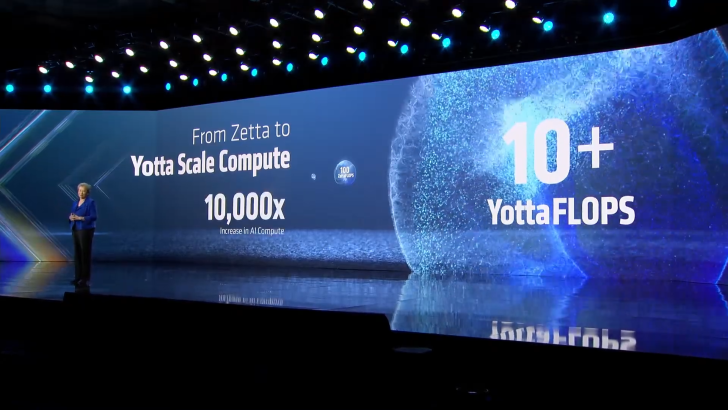
AMD CEO Lisa Su believes computing is about to be measured in a whole new way. According to Su, the industry is entering the “YottaScale” era, a shift fueled by explosive AI demand and the need for dramatically more compute power across nearly every major workload.
AI’s compute appetite isn’t just growing quickly—it’s accelerating. Su outlined a striking projection for the next five years: overall compute capacity requirements could rise by roughly 10,000 times compared with 2022 levels. Looking even further ahead, she suggested the world may require 10+ YottaFLOPS of compute by the end of the decade, signaling a major leap in what “normal” performance looks like for modern infrastructure.
What’s driving this surge is the fact that AI is no longer confined to cloud data centers. It’s spreading into edge computing, personal devices, healthcare, aerospace, and many other mainstream industries. As innovation speeds up across each of these areas, the result is a demand curve that would have sounded unrealistic just a few years ago.
To put the scale into perspective, Su highlighted an eye-opening comparison: 1 YottaFLOPS of AI compute would equal about 344,828 Helios AI racks. Numbers like that help explain why analysts and industry leaders see enormous growth potential in the accelerator and rack-scale infrastructure market—growth that extends beyond any single company.
AMD is clearly positioning itself to compete aggressively in this next stage of the AI infrastructure race. During its CES showing, the company highlighted a broad lineup aimed at both data center and client markets, including Instinct MI455X AI GPUs, EPYC Venice CPUs, and Helios rack-scale solutions. On the PC side, AMD also introduced Gorgon Point APUs, signaling its intent to keep pushing performance improvements in everyday computing as AI features become more common on consumer devices.
These YottaScale projections paint a picture of an AI-driven future with massive upside for the broader computing ecosystem. At the same time, the sheer magnitude of anticipated growth raises inevitable questions about sustainability—especially when considering power consumption, energy infrastructure, and physical space requirements for next-generation data centers.
Still, Su’s message is clear: the AI compute boom is far from over, and the definition of “high performance” is being rewritten for the decade ahead.