GPU Unlock reportedly boosts NVIDIA GeForce compute performance by bypassing software restrictions
A new open-source project called GPU Unlock is drawing attention in the PC hardware and AI community for reportedly bypassing some of NVIDIA’s software-level restrictions on consumer GeForce graphics cards. The tool is said to unlock higher compute performance on supported GPUs, bringing certain workloads closer to what users would normally expect from more expensive professional workstation cards.
According to the project’s developer, known as “zagitta,” NVIDIA limits some compute and virtual GPU features on GeForce products, even when those cards share similar underlying architecture with professional models. These higher-end capabilities are typically reserved for workstation-class GPUs such as Quadro, Tesla, and RTX A-series cards.
GPU Unlock takes an unusual approach. Instead of modifying the hardware, the project dynamically patches the NVIDIA driver module inside the Linux kernel. It intercepts requests for the GPU’s physical PCIe Device ID and replaces the returned identifier with one associated with a compatible professional NVIDIA GPU. In simple terms, the driver is led to recognize a consumer GeForce card as a workstation-grade product, which can unlock features that are otherwise disabled through software.
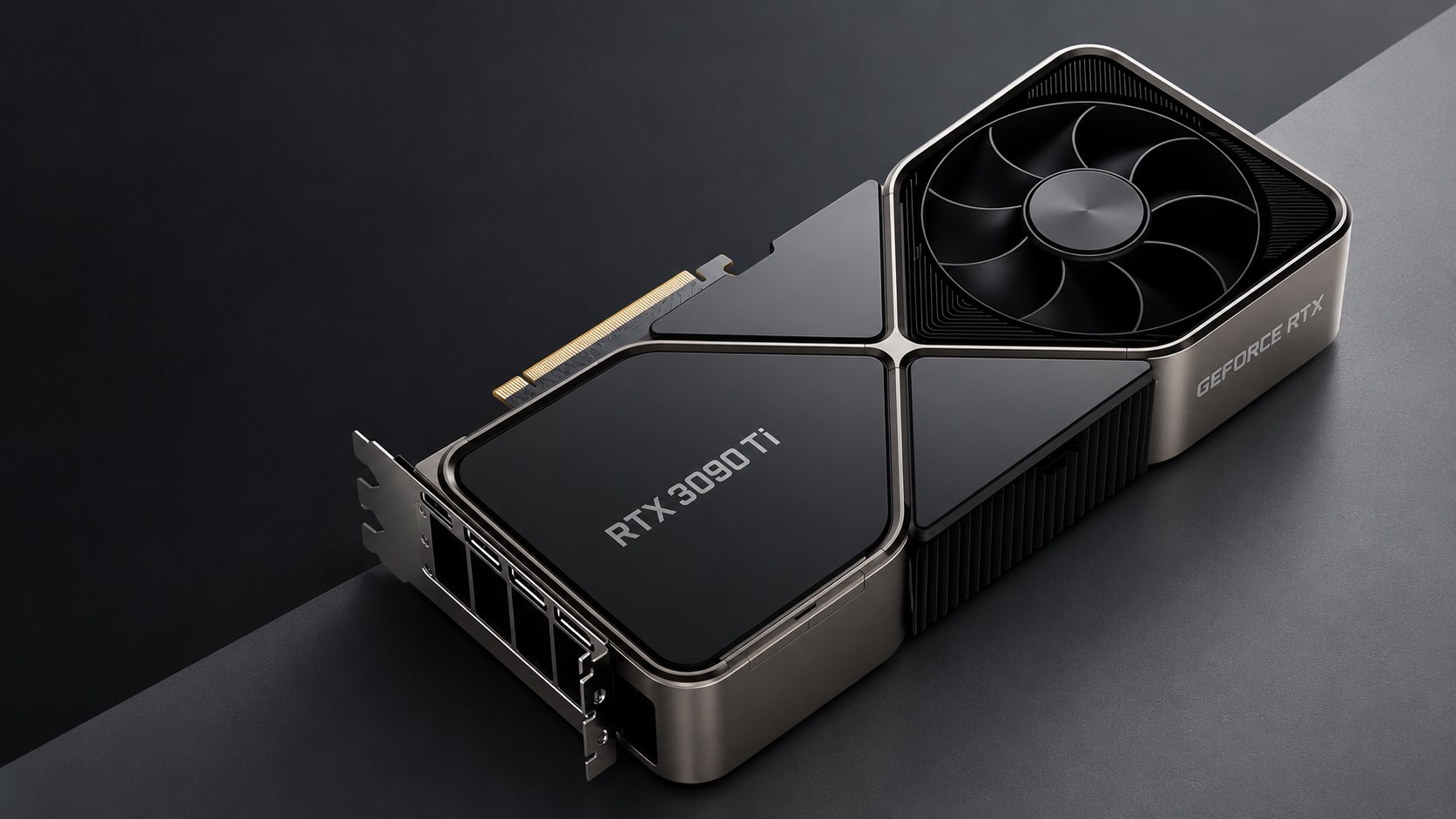
The reported performance gains are especially notable for AI and compute-heavy workloads. On the GeForce RTX 3090 Ti, the developer claims BF16 compute performance increases from 87.5 TFLOPS to 157 TFLOPS, representing an improvement of around 80%. TF32 performance is also said to nearly double, rising from 42.6 TFLOPS to 82.6 TFLOPS.
The GeForce RTX 3080 also reportedly benefits from the tool. Its FP16 and BF16 performance is said to increase from around 65 TFLOPS to between 110 and 113 TFLOPS, while still operating within its default 320W power limit. For users experimenting with machine learning, AI inference, and other compute workloads, these gains could make older high-end GeForce cards significantly more capable.
The tool also appears to improve performance in vLLM, a popular inference engine used for large language model workloads. The developer reports a 33% to 36% boost in long-context Prefill processing speeds, along with a 25% reduction in Time-To-First-Token latency. However, Decode performance remains largely unchanged, since GPU Unlock does not remove memory bandwidth limitations.
At the moment, GPU Unlock is limited to Linux systems. It currently supports NVIDIA GeForce GTX 900, GTX 1000, RTX 20, and RTX 30 series graphics cards. Newer RTX 40 and RTX 50 series GPUs are not supported.
While the project is likely to interest enthusiasts, AI hobbyists, and developers looking to get more compute performance from existing hardware, it is also important to note that this is an unofficial modification. Users should understand the risks before attempting to use it, including possible driver instability, compatibility problems, or conflicts with NVIDIA’s intended product segmentation.
Still, GPU Unlock highlights a long-running debate in the hardware community: how much performance is truly defined by silicon, and how much is limited by software? If the reported results hold up across more systems, this project could give supported GeForce GPUs a surprising second life in AI and high-performance compute workloads.


