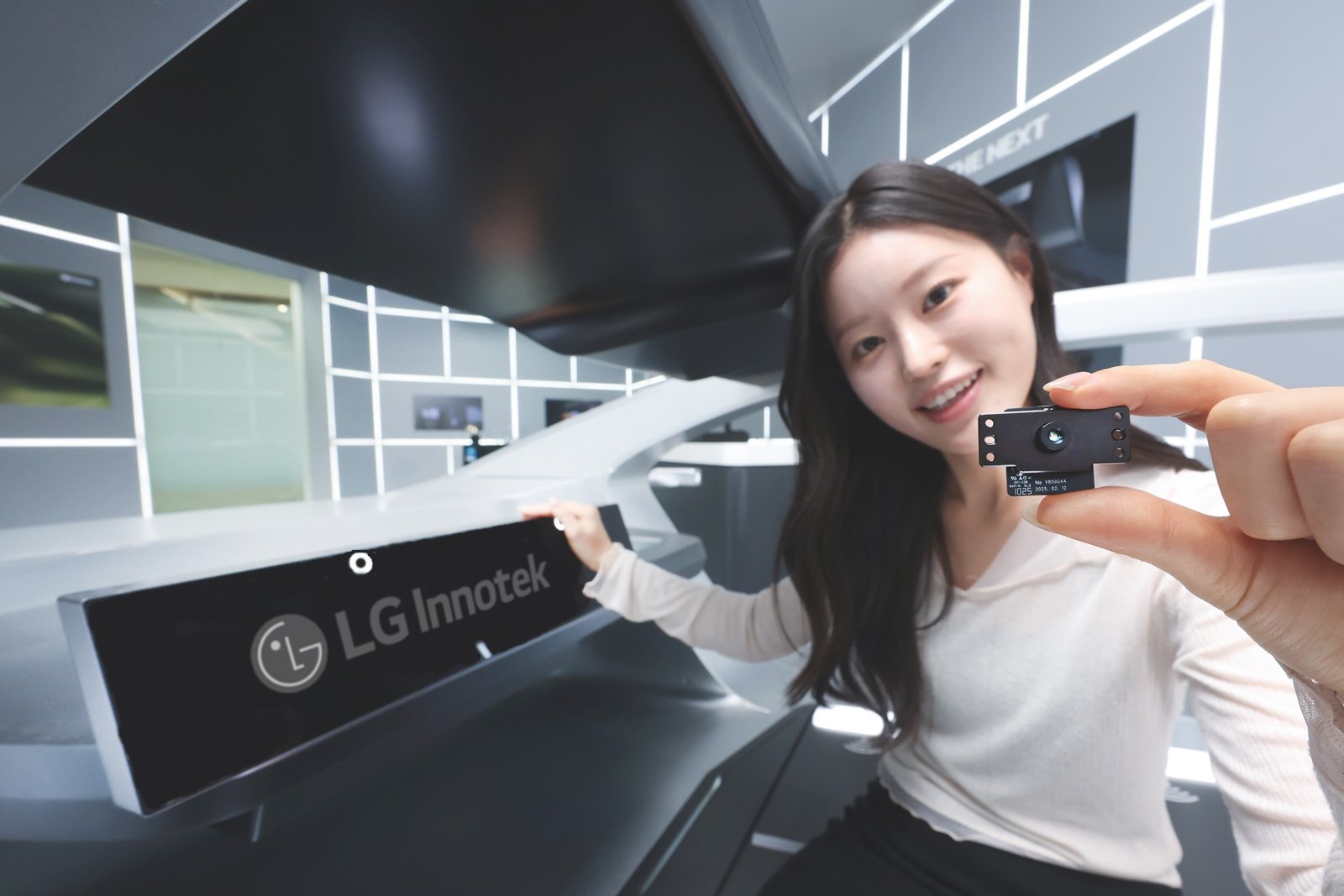
LG Innotek, a key Apple camera component supplier, is preparing to debut a next-generation under-display camera (UDC) at CES 2026, running from January 6 to January 9. While this particular version is designed for automotive use, the underlying tech is highly relevant to smartphones—and it could be an important step toward the truly “bezel-less” iPhone experience that’s been rumored for a future iPhone 20.
One of the biggest drawbacks of today’s under-display cameras is image quality loss. Because the camera has to see through an OLED panel, the display can interfere with light and detail, sometimes cutting quality by around 30 percent compared with a normal, unobstructed camera. LG Innotek claims it has addressed this issue with an AI-driven image restoration approach that can bring results much closer to a standard camera.
According to reported details, LG Innotek’s solution relies on real-time processing to rebuild the image after it passes through the display layer. Using algorithms such as deblurring and denoising, the system works to correct the softness, haze, and noise that commonly affect under-display shots. The company says the output can reach over 99 percent equivalence to video captured without a display in front of the camera—a notable claim in a category where quality compromises have been the biggest barrier to mainstream adoption.
There is a catch, though: the camera being shown is only 1.5 megapixels. That’s far below what you’d expect for a front-facing smartphone camera in a premium device, and it wouldn’t make sense for an iPhone intended to deliver top-tier selfies, video calls, and social video. However, the low resolution appears to be a deliberate choice for automotive reliability. In vehicles—where cameras may be used for monitoring and safety-related functions—longevity and consistent operation can matter more than high megapixel output. LG Innotek reportedly reduced resolution to improve durability, which suggests the company may be capable of scaling the technology up to smartphone-grade specs when needed.
This is where Apple’s roadmap gets interesting. LG Innotek has been linked in reports to Apple’s under-display camera ambitions, including expectations around a future iPhone 20 pursuing an all-screen look. Separately, Apple is also rumored to be exploring in-screen Face ID testing for the iPhone 18 family. If that happens, early designs could still rely on a punch-hole selfie camera while shifting more sensors under the panel—an incremental but meaningful step toward a cleaner, more immersive display.
There’s also talk that Apple’s first foldable iPhone could use an under-display camera, which would make sense given the industry’s push to hide camera cutouts on large, premium displays. If LG Innotek’s AI-based reconstruction techniques translate well from automotive modules to thin smartphone designs, it could become one of the enabling technologies for Apple’s next design shift.
With CES 2026 acting as a public showcase of what LG Innotek can do, the next couple of years will be worth watching. If the company can maintain near-full image fidelity while moving beyond 1.5MP and meeting the tight space, power, and thermal constraints of phones, under-display cameras could finally move from “cool demo” to a real solution—potentially helping Apple deliver the bezel-less iPhone experience many users have been waiting for.