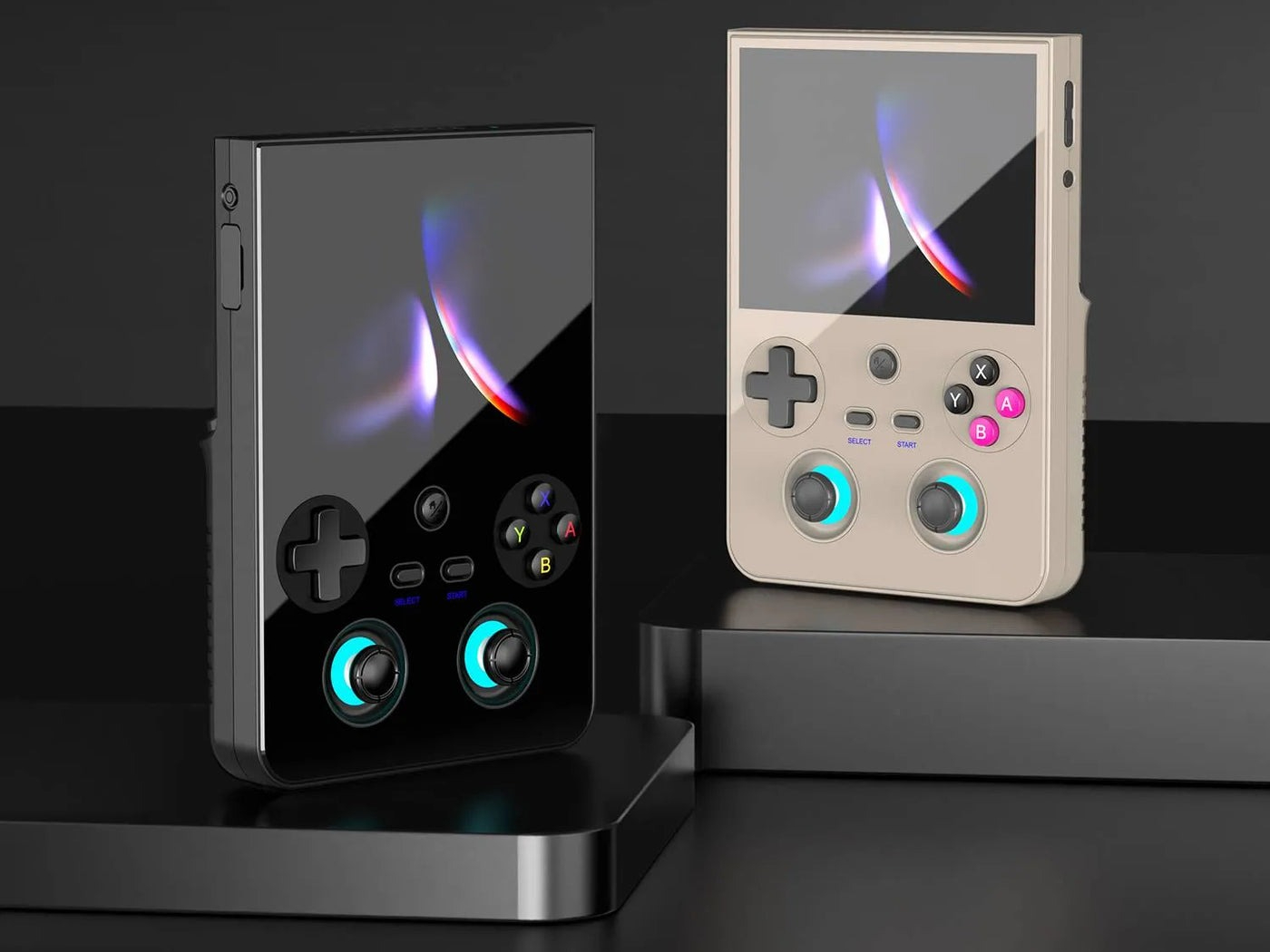
Early impressions of the Anbernic RG477V are already in, even though the handheld doesn’t officially go on sale until December 20. And if these first reviews are anything to go by, Anbernic may have its most ambitious vertical retro gaming handheld yet—one that nails the basics like comfort and controls, while still running into a few notable performance and GPU-related quirks.
One of the most detailed early looks calls the RG477V “probably the best vertical handheld” Anbernic has made so far. A big reason for that praise comes down to the physical design. The RG477V is noticeably larger than other popular vertical-style handhelds, and it also packs the biggest screen in that category. If you’ve ever wished a classic Game Boy-inspired device had more modern ergonomics and a roomier display, that size jump could be a major selling point.
That bigger body isn’t just for looks—it also seems to help with comfort. The RG477V is described as easy to hold for longer sessions, which matters a lot for anyone who plays RPGs, platformers, or long arcade runs. The one caution: at 339 grams, it has enough weight that you probably don’t want it slipping while you’re playing lying down.
Controls get a mostly positive grade. The buttons and overall input experience are praised, though there’s a mention of joystick dead zones and the sticks being a bit on the larger, squarer side. Even with those drawbacks, the sticks are still said to feel good in real gameplay, which is ultimately what matters for emulation and modern Android titles.
Performance is where the story gets more complicated—but also more encouraging. In early testing, the RG477V reportedly had a serious high-performance mode issue that caused heavy overheating, reaching 105°C, and it also failed a Wild Life Extreme Stress test with a steep performance drop after the first loop. The good news is that after the issue was reported, Anbernic pushed an OTA update that fixed the problem in performance mode. With that patch applied, performance is described as being in the same neighborhood as the Ayaneo Pocket DMG—despite that competing device costing nearly twice as much.
For retro emulation, the RG477V’s screen aspect ratio plays a big role in how games look. Expect black bars with classic handheld systems like Game Boy, Game Boy Color, and Game Boy Advance, since those libraries commonly use a 3:2 aspect ratio. On the other hand, platforms that fit the RG477V’s 4:3-friendly layout—such as NES, SNES, PlayStation 1, SEGA Genesis, arcade titles, GameCube, and Dreamcast—should look right at home.
Where the RG477V really aims to shine is GameCube and PS2 emulation, with early impressions suggesting it’s a strong match for those systems at up to around 2.25x resolution. However, a recurring limitation shows up thanks to the Mali GPU inside the MediaTek Dimensity 8300. In at least one example, a GameCube title had a major rendering problem under Vulkan (a key character didn’t appear), but switching the emulator backend to OpenGL resolved it. The practical takeaway is simple: for the best results, users may need to toggle between Vulkan and OpenGL depending on the game.
That Mali GPU challenge appears again in other areas. Some Nintendo Switch emulation reportedly struggles, and PC game streaming or play via Gamehub doesn’t deliver the kind of smooth experience some buyers might expect. There was also a surprising issue with the Android version of Diablo Immortal where controls didn’t respond at all, although other Android games were said to run fine.
Pricing and configurations are already set. The Anbernic RG477V launches December 20 with a starting price of $219 for the 8GB RAM and 128GB storage model, while the 12GB RAM and 256GB storage version starts at $239. That introductory discount lasts three days. After that, prices rise to $239 and $259, respectively.
Overall, the Anbernic RG477V is shaping up to be a compelling vertical retro handheld: premium-feeling build, comfortable ergonomics, strong GameCube and PS2 potential, and pricing that undercuts some higher-end rivals. The main caveat is that the Mali GPU may require more tinkering than usual—especially if you plan to push demanding emulation or expect perfect compatibility across every system and renderer.


