South Korea just turned up the volume on the future. The 2025 Future Innovation Technology Expo, widely called Korea’s CES, opened in Daegu with a four-day showcase of flying cars, humanoid robots, next-gen electric vehicles, and breakthrough AI hardware. With 585 companies filling 2,000 booths, FIX 2025 delivers a sweeping look at where mobility, robotics, and artificial intelligence are headed next.
The show floor plays like a preview of tomorrow’s cities. Attendees are seeing Urban Air Mobility concepts—flying taxis designed for crowded skylines—alongside advanced autonomous driving systems and next-generation EVs. Robotics is everywhere, from humanoid performers to service and manufacturing machines, while a dedicated pavilion spotlights the AI chips and quantum computing designed to power the next wave of intelligent automation.
“FIX 2025 is not just an exhibition; it represents our shared vision for innovation,” said Daegu Acting Mayor Kim Jung-ki at the opening ceremony, noting the city’s plan to accelerate its Advanced Transformation by prioritizing robotics and future mobility.
Global players helped set the tone. Guests encountered Hyundai Motor’s latest hydrogen and EV models, HL Robotics’ autonomous parking robots, and Aerobot’s K-Humanoid—each one signaling how quickly smart machines are moving from labs to real-world use. A crowd favorite came from Unitree, whose humanoid boxing demonstration showcased impressive agility and balance, hinting at how dexterous robots could soon assist in complex tasks.
The biggest buzz belonged to a modular flying car revealed by XPeng Aero, newly rebranded as ARIDGE. The concept combines a standard EV platform with a VTOL drone module, effectively turning a road-going car into an aerial vehicle. “We’re differentiating ourselves by giving cars real wings,” said Wang Dan, vice president of XPeng Aero, adding that the company is now aiming for global commercialization of its flying vehicles.
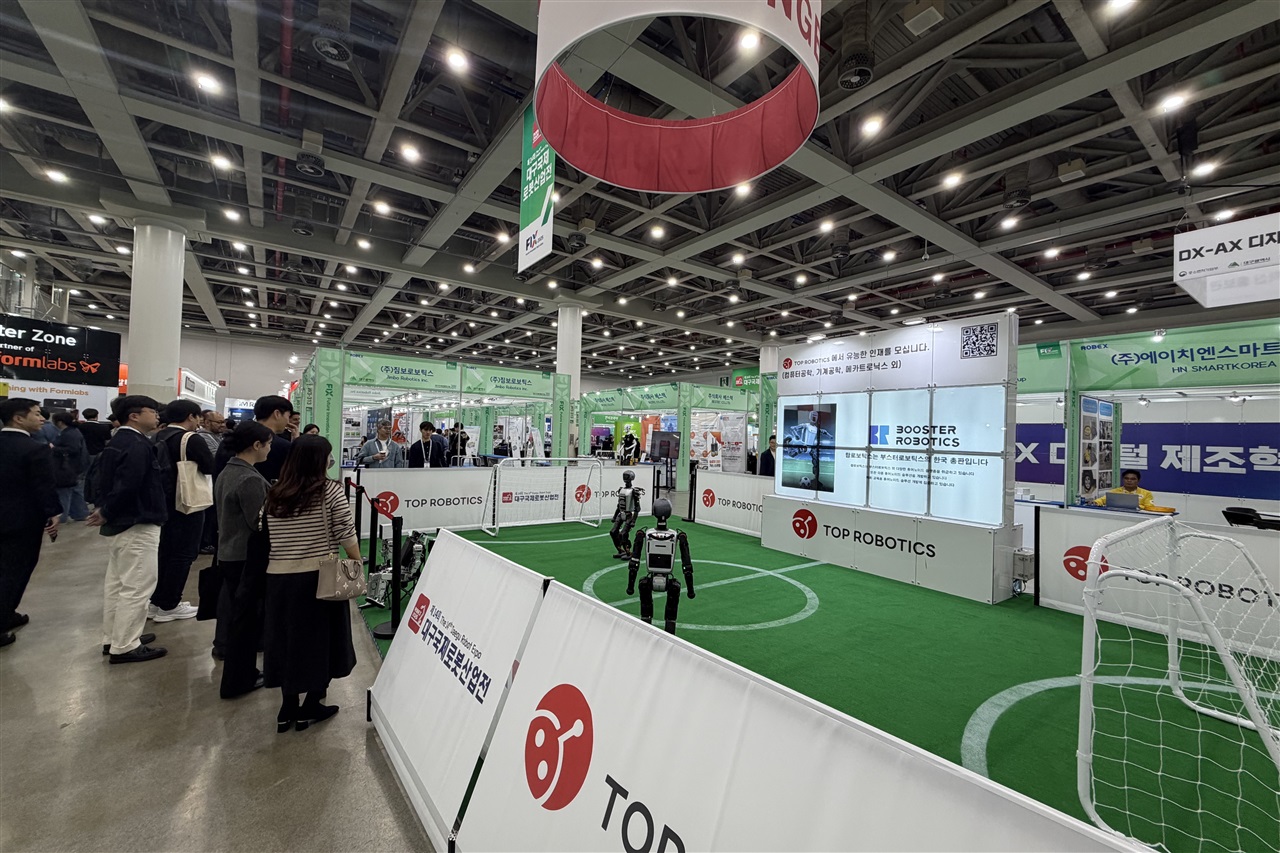
Interactive experiences drew long lines. Visitors took a simulated flight in XPeng’s X2 aerial vehicle and watched humanoid robots square off in soccer and boxing demos. In a clever nod to history, the lobby paired classics like the Ford Model T and James Dean’s Porsche 356 with modern test drives from BYD and Hyundai, underscoring how far mobility has come—and how fast it’s evolving.
Beyond the spectacle, FIX 2025 sends a strategic message. Daegu is positioning itself as a national hub for AI and robotics, using events like this to attract investment, talent, and global partnerships. From flying taxis and autonomous parking to AI chips and quantum computing, the expo makes a clear case: South Korea intends to lead the next era of intelligent, automated mobility.
For anyone tracking the convergence of Urban Air Mobility, humanoid robots, and zero-emission transportation, FIX 2025 offers a compelling snapshot of what’s next—and how quickly it’s arriving.