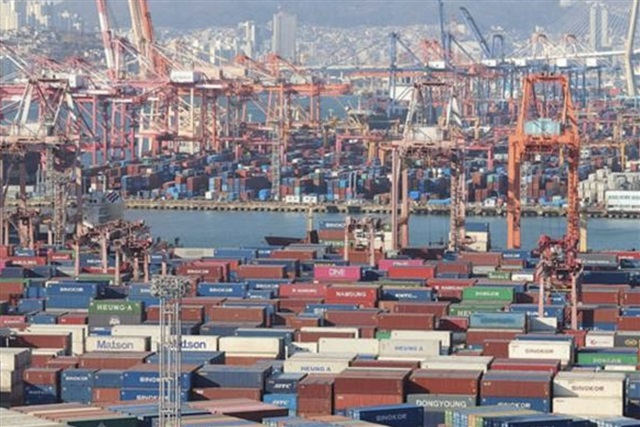
South Korea’s export engine is roaring again, and this time the fuel is artificial intelligence. A powerful wave of global demand for AI-focused semiconductors is pushing the country’s overseas shipments to record highs, signaling a new chapter in Korea’s trade story after a long stretch of uncertainty for the chip sector.
At the center of this surge are advanced semiconductors used to train and run AI models—chips that are now essential for data centers, cloud services, and next-generation devices. As companies around the world race to expand computing capacity for AI, orders for high-value memory and related semiconductor components have accelerated, giving South Korea’s export numbers a major lift.
This momentum matters because semiconductors sit at the heart of Korea’s economy and manufacturing strength. When chip demand rises, it doesn’t just boost a single industry—it supports a broad network of suppliers, logistics providers, and technology partners. The current upswing suggests the global AI buildout is not a short-lived spike, but an ongoing investment cycle that’s reshaping trade flows and production priorities.
Still, the picture isn’t entirely risk-free. Growing geopolitical tensions continue to cast a shadow over global supply chains, with trade restrictions and strategic competition adding unpredictability for technology exporters. At the same time, companies are facing cost pressures that can squeeze margins, from higher input costs to operational expenses tied to scaling production quickly.
Even with those challenges, South Korea’s ability to capitalize on AI-driven semiconductor demand is keeping exports at historic levels. For businesses, investors, and anyone tracking the global tech supply chain, Korea’s record shipments are a clear signal: AI is no longer just a software story—it’s a hardware supercycle, and semiconductors are leading the charge.