Prokop Jirsa didn’t join Warhorse Studios expecting to become one of the key voices shaping its future. When he arrived in 2014, he had a degree in business and economics, not a traditional game development background, and he applied for a role simply labeled “designer.” At the time, the term was used broadly in the Czech games scene, and Jirsa found himself learning game design as he went. Twelve years later, that same newcomer is now a creative director at Warhorse Studios, sharing the role with Viktor Bocan after serving as lead designer on both the original Kingdom Come: Deliverance and Kingdom Come: Deliverance 2.
Jirsa’s rise mirrors the studio’s identity: practical, stubborn, and unapologetically committed to doing role-playing games its own way. And if there’s one belief that defines his approach to RPG design, it’s this: a great RPG shouldn’t always feel smooth. It should feel challenging on purpose.
In a recent interview with Czech Crunch, Jirsa described the philosophy behind Warhorse’s refusal to “fix” every rough edge that players might consider inconvenient. In many modern games, the instinct is to eliminate anything that slows players down—anything that creates extra steps, friction, or a sense of struggle. Warhorse takes the opposite approach. Jirsa explained that when friction is intentional, it becomes part of what makes the experience satisfying. Overcoming obstacles doesn’t just move the story forward; it makes players feel like they genuinely solved something difficult, not simply followed a path the game cleared for them.
He emphasized that this kind of resistance isn’t an accident. It’s a tool. The challenge is there to create a stronger emotional payoff—because when progress requires effort, the reward feels earned rather than handed out.
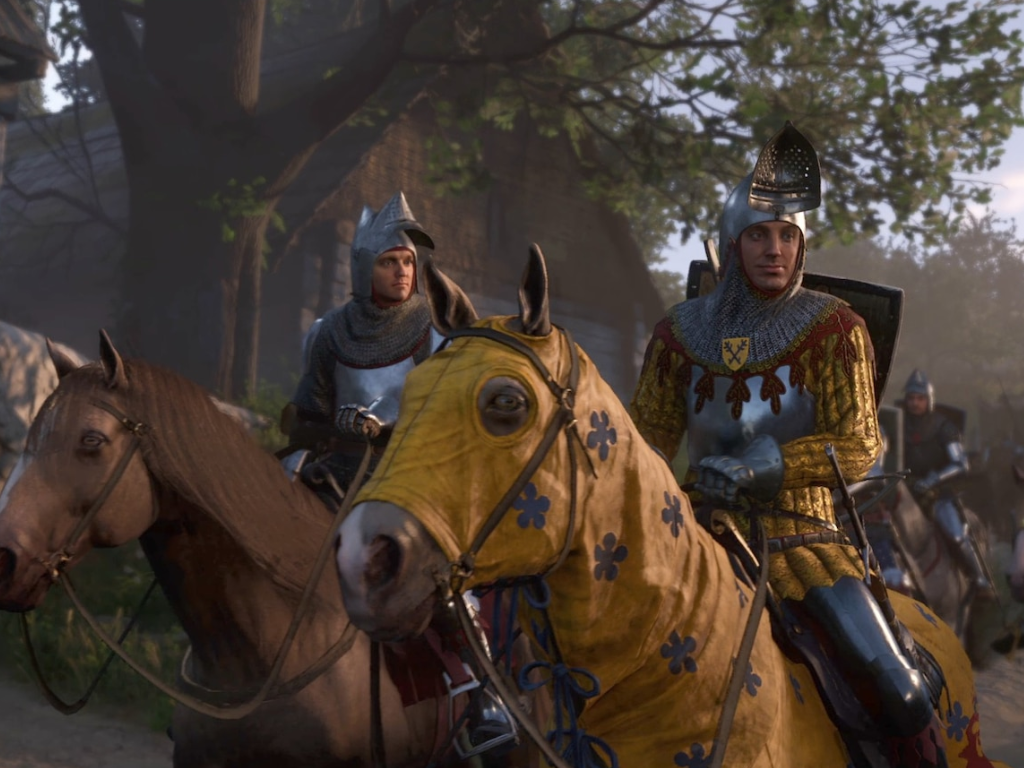
That mindset is especially noticeable in Kingdom Come: Deliverance 2. Jirsa pointed out that the sequel is designed to feel harsh early on, with the player starting from nothing. The difficulty isn’t meant to punish; it’s meant to build meaning. When you finally succeed—when you craft what you need, survive what seemed overwhelming, and make it through a time-sensitive objective—it hits harder because the game didn’t soften the experience for you.
The sequel offers clear examples of this “earned reward” approach through its hands-on RPG mechanics. In one notable early quest, “Whom the Bell Tolls,” you’re put under pressure to act quickly, including manually creating a Fever Tonic to cure Captain Thomas and prevent Hans from facing execution within a strict time limit. Even the crafting systems commit to the same idea: during the first part of that quest, you’re required to make a horseshoe step by step using the game’s blacksmithing mechanics, rather than clicking through a simplified menu. It’s slower, more involved, and more demanding—exactly the kind of friction Warhorse believes makes the payoff real.
This design philosophy didn’t appear out of nowhere. It traces back to the earliest days of Kingdom Come: Deliverance, when Warhorse was a small, financially constrained studio building a 15th-century medieval Bohemia simulation RPG with the help of a Kickstarter campaign. Back then, Jirsa wasn’t even designing quests—he was helping shape the campaign that would determine whether the game could exist at all. The studio’s limited resources and big ambitions helped forge a mindset of committing fully to its identity rather than chasing broad appeal.
When Kingdom Come: Deliverance launched in 2018, it was famously buggy and divisive. Yet it also built a passionate, cult-like fanbase drawn to its complex systems, demanding combat, layered role-playing mechanics, and unwillingness to compromise on realism. That same spirit—where friction is a feature, not a flaw—continues to define Warhorse’s approach today, with Jirsa now helping lead the studio into its next chapter.
For players who want an RPG that respects their time by never wasting it, Warhorse’s approach may not always feel comfortable. But for those who crave immersion, realism, and the satisfaction of true problem-solving, Jirsa’s design ethos explains why Kingdom Come: Deliverance and its sequel stand out: they don’t just let you role-play a medieval life. They make you work for it.


