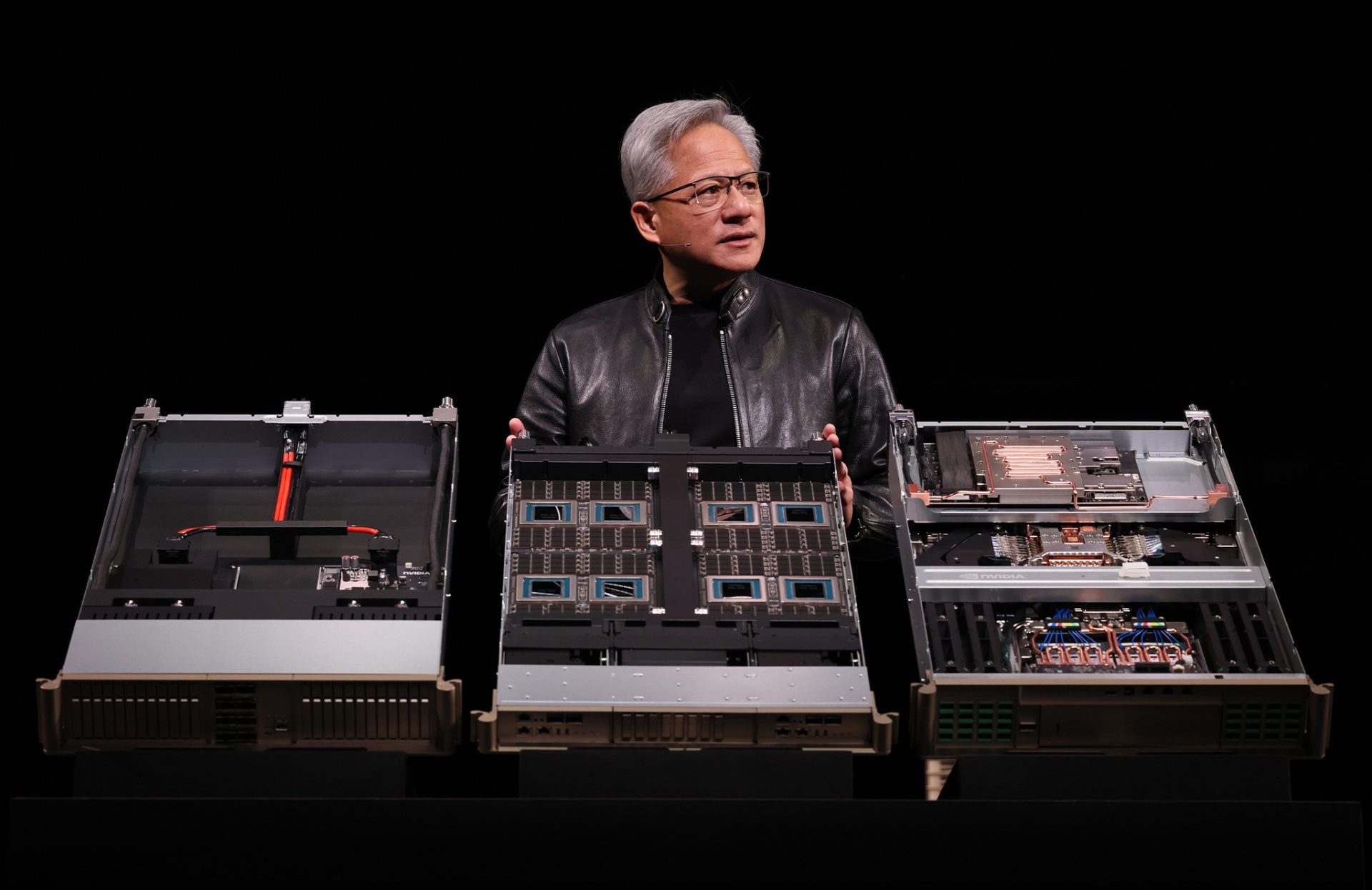
NVIDIA CEO Jensen Huang has made it clear that China should not gain access to the company’s most advanced AI chips, including the Blackwell and Rubin generations. As U.S. export restrictions on high-end AI hardware continue to tighten, Huang’s remarks reinforce a U.S-first approach for cutting-edge GPU technology while still arguing that American companies must remain competitive worldwide.
The shift in U.S. policy targeting advanced AI chip exports to China has been building for years, starting with restrictions that affected NVIDIA’s Hopper lineup and expanding further into the newer Blackwell generation. With demand for AI accelerators exploding across industries, the question has become not only what can be sold, but how the United States maintains a technological lead while keeping American companies strong in global markets.
In a recent exchange during a televised discussion, Huang agreed that the U.S. should always keep its lead in advanced AI computing. When asked directly whether China should receive the “latest and greatest” chips, he answered no, emphasizing that the United States should have “the first, the most, and the best.” His position: NVIDIA is an American company, and its newest AI capabilities—both hardware and software—should prioritize U.S. needs.
At the same time, Huang argued that limiting the very top-tier products doesn’t mean U.S. firms should retreat from global competition. He framed global sales as a national advantage, connecting exports and revenue growth to larger economic strength. In his view, stronger revenue leads to stronger tax contributions, and that financial base supports national security, including defense and broader economic resilience. The message is straightforward: protect the highest-end AI technology, but ensure American technology continues to win across international markets at every layer.
These comments also arrive amid signs that NVIDIA’s position in China has weakened dramatically. Huang recently stated the company effectively has no share there anymore, as Chinese buyers increasingly turn toward domestic alternatives. China’s push for in-house AI solutions has accelerated, and local technology giants—most notably Huawei—have been gaining momentum as demand for AI compute continues to rise.
Huang also confirmed that NVIDIA has not shipped any Hopper H200 GPUs to China. This stands out because there had been discussion about possible paths to supply certain chips under strict terms, including financial arrangements that would route a portion of sales to the U.S. government. Even so, Huang’s latest statements suggest that, in practice, shipments of key AI hardware into China remain off the table.
Meanwhile, the Blackwell family continues to be viewed in the U.S. as NVIDIA’s most advanced AI platform. Former U.S. President Donald J. Trump has publicly praised Blackwell GPUs as highly advanced, and there has been speculation that a heavily limited version with significantly reduced capabilities could potentially be offered to China. However, there’s been no clear progress on that front, and Huang’s stance indicates that Blackwell and Rubin-level performance should stay out of reach.
For businesses tracking AI infrastructure, the bigger takeaway is that geopolitical policy and semiconductor exports are now deeply intertwined. NVIDIA’s leadership is signaling a firm boundary around its most advanced AI chips, while also urging that American companies continue to compete aggressively worldwide—because, as Huang argues, economic strength and national security increasingly move together in the age of AI.