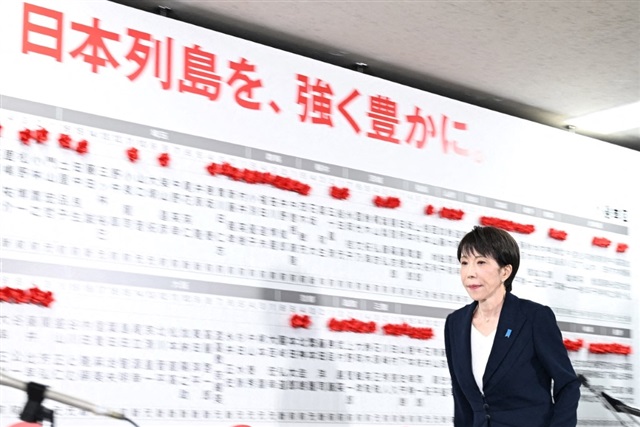
Japan’s February 2026 lower house election is being treated by investors and industry leaders as far more than a domestic political milestone. With Prime Minister Takaichi emerging from the vote in a commanding position, markets are interpreting the result as a clear signal that Japan is preparing to push harder on industrial policy, technology sovereignty, and long-term capital strategy. In other words, this election may reshape how Asia competes in semiconductors and other critical technologies.
A stronger mandate in Tokyo tends to reduce political uncertainty, and that matters in a sector like semiconductors where investments are massive, timelines are long, and supply chains are highly sensitive to regulation. The global chip industry has been remade over the past few years by government intervention—through subsidies, export controls, and national security screening—and Japan is increasingly positioning itself to be a central player in this new era of state-backed competition.
One of the biggest takeaways traders and strategists are watching is policy direction: a supermajority-style outcome typically makes it easier to pass budgets and accelerate large national programs. For semiconductors, that could translate into faster funding for advanced manufacturing, stronger incentives to attract overseas partners, and deeper support for domestic research and development. Japan already has key strengths in semiconductor materials, manufacturing equipment, and precision components. A more forceful industrial agenda could build on those advantages, aiming to move further up the value chain and secure a larger share of next-generation chip production.
The election result is also being viewed through the lens of technology sovereignty—Japan’s ability to secure its own supply of critical components while remaining a trusted supplier to allies. In a world where geopolitical risk can disrupt everything from lithography tools to advanced packaging, governments want resilience. A stable political environment with a clear industrial strategy may encourage companies to commit capital to Japan, especially for projects that require policy continuity for a decade or more.
Beyond factories and subsidies, the outcome has implications for capital flows across Asia. When a major economy signals it will prioritize strategic industries, it can influence where private investment goes, how multinational firms diversify supply chains, and which countries become preferred hubs for high-tech production. If Japan deepens support for chipmaking, it could intensify competition with other Asian semiconductor centers—not necessarily by replacing them, but by redefining the regional balance of specialization and capacity.
For global markets, the key theme is that Japan’s election is being interpreted as an inflection point. A strengthened administration can move faster on industrial planning, coordinate more closely with partners, and take a more assertive stance on economic security. In the semiconductor race, where the next wave of breakthroughs will depend on coordinated investment, talent, and supply-chain reliability, Japan’s political shift could have consequences well beyond its borders.
As the post-election policy agenda comes into focus, the semiconductor sector will be watching for concrete signals: funding levels, timelines, domestic production targets, and how Japan plans to balance openness to international collaboration with the push to secure critical technologies at home. Whatever the specific measures, markets are already treating the vote as a moment that could reshape Asia’s chip competition—and influence the next chapter of global tech manufacturing.