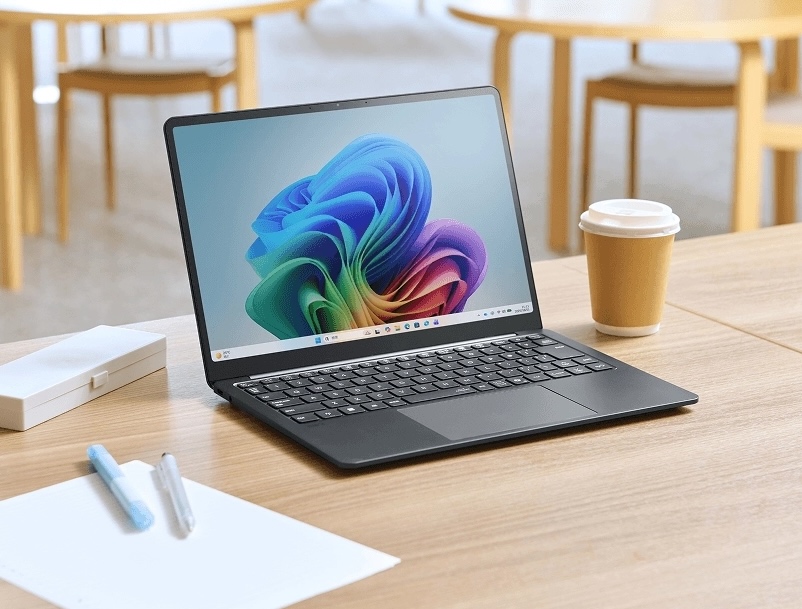
NEC Lavie S13 and N13 bring premium 13-inch Japan-made laptops with Intel’s latest chips
NEC Lavie has expanded its premium laptop lineup in Japan with two new compact models, the Lavie S13 and Lavie N13. Both machines are designed for users who want a lightweight 13-inch laptop for productivity, travel, study, and everyday work, but they target slightly different performance needs.
The Lavie N13 is the more practical option for users who want a capable, compact notebook without chasing high-end performance. It comes with Intel Wildcat Lake processor options, topping out at the Intel Core 7 350. This chip features a 6-core, 6-thread layout with 2 performance cores and 4 efficiency cores, making it suitable for web browsing, office apps, video calls, document editing, and moderate multitasking.
For buyers with lighter needs, NEC also offers a Core 5 320 version. This variant is expected to be slower than the Core 7 model, but it should still handle basic productivity tasks smoothly. The Lavie N13 can be configured with up to 32 GB of LPDDR5X memory and up to 1 TB of PCIe-based storage, giving users enough headroom for everyday workloads and file storage.
The Lavie S13 is the more powerful and premium choice. It is available with Intel Core Ultra 5 322 or Core Ultra 7 355 processors, giving it a noticeable advantage for demanding productivity tasks. The Core Ultra 7 355 model is especially appealing for users who regularly work with large spreadsheets, heavy browser sessions, photo editing, occasional video editing, and more intensive multitasking.
Performance differences between the models are significant. The Core Ultra 7 355 version of the Lavie S13 is said to be around 47% faster than the Core Ultra 5 322 variant in Cinebench 2024. It also delivers roughly 43% higher performance than the Core 7 350 used in the Lavie N13. That makes the S13 the better pick for buyers who want a compact laptop that can do more than basic office work.
Portability is another major highlight of the Lavie S13. Despite being the stronger machine, it is also lighter than the N13. The Lavie S13 weighs about 1,088 grams, or around 2.4 pounds, while the Lavie N13 weighs roughly 1,177 grams, or about 2.6 pounds. The S13 also has a very slim 12.9 mm chassis, making it attractive for frequent travelers, students, and professionals who carry their laptop daily.
Battery capacity also favors the S13. It includes a 76.1 Wh battery, which is larger than the 54 Wh battery inside the N13. While real-world battery life will depend on usage, screen brightness, wireless connectivity, and processor configuration, the S13 appears better equipped for long working sessions away from a charger.
Both laptops use 13-inch-class IPS displays with a 1920 x 1200 resolution, offering a taller 16:10-style workspace that is useful for documents, spreadsheets, and web browsing. The Lavie N13 includes a 13.3-inch IPS screen with optional touch support, while the Lavie S13 also uses a 1920 x 1200 IPS panel, though detailed brightness and color coverage figures have not been specified.
Connectivity differs sharply between the two models. The Lavie N13 offers a more traditional and flexible port selection, including two USB 3.2 Gen 2 Type-C ports, two USB 3.2 Gen 1 Type-A ports, HDMI, a 3.5 mm audio jack, a microSD card slot, and Wi-Fi 6E. This makes it convenient for users who still rely on older accessories, external displays, memory cards, or wired peripherals.
The Lavie S13 takes a more modern, minimalist approach. It includes three USB 3.2 Gen 2 Type-C ports, a 3.5 mm headphone jack, Wi-Fi 7, and Bluetooth 5.4. While this setup is cleaner and more future-focused, some users may need adapters for HDMI, USB-A devices, or SD card use.
The S13 also includes dedicated AI acceleration hardware, with its NPU rated at 46 TOPS on the Core Ultra 5 model and 49 TOPS on the Core Ultra 7 version. This makes the laptop better prepared for AI-assisted features and future productivity tools that rely on on-device processing. It also includes dual 2 W stereo speakers and ships in three color options.
Pricing places both laptops firmly in the premium category. The Lavie N13 starts at ¥279,840, roughly $1,774, for the configuration with a Core 5 320 processor, 16 GB of RAM, and a 256 GB SSD. The Lavie S13 starts at ¥299,860 with a Core Ultra 5 322 processor, 16 GB of RAM, and 256 GB of storage.
For buyers choosing between the two, the Lavie N13 makes sense if port variety, a slightly lower starting price, and everyday productivity are the priorities. The Lavie S13 is the stronger option for those who want better performance, a lighter body, a larger battery, Wi-Fi 7, and more future-ready AI capabilities.
As with many NEC Lavie products, the S13 and N13 are expected to remain focused on the Japanese market. Buyers outside Japan may need to look at import options if they want one of these lightweight, made-in-Japan premium laptops.