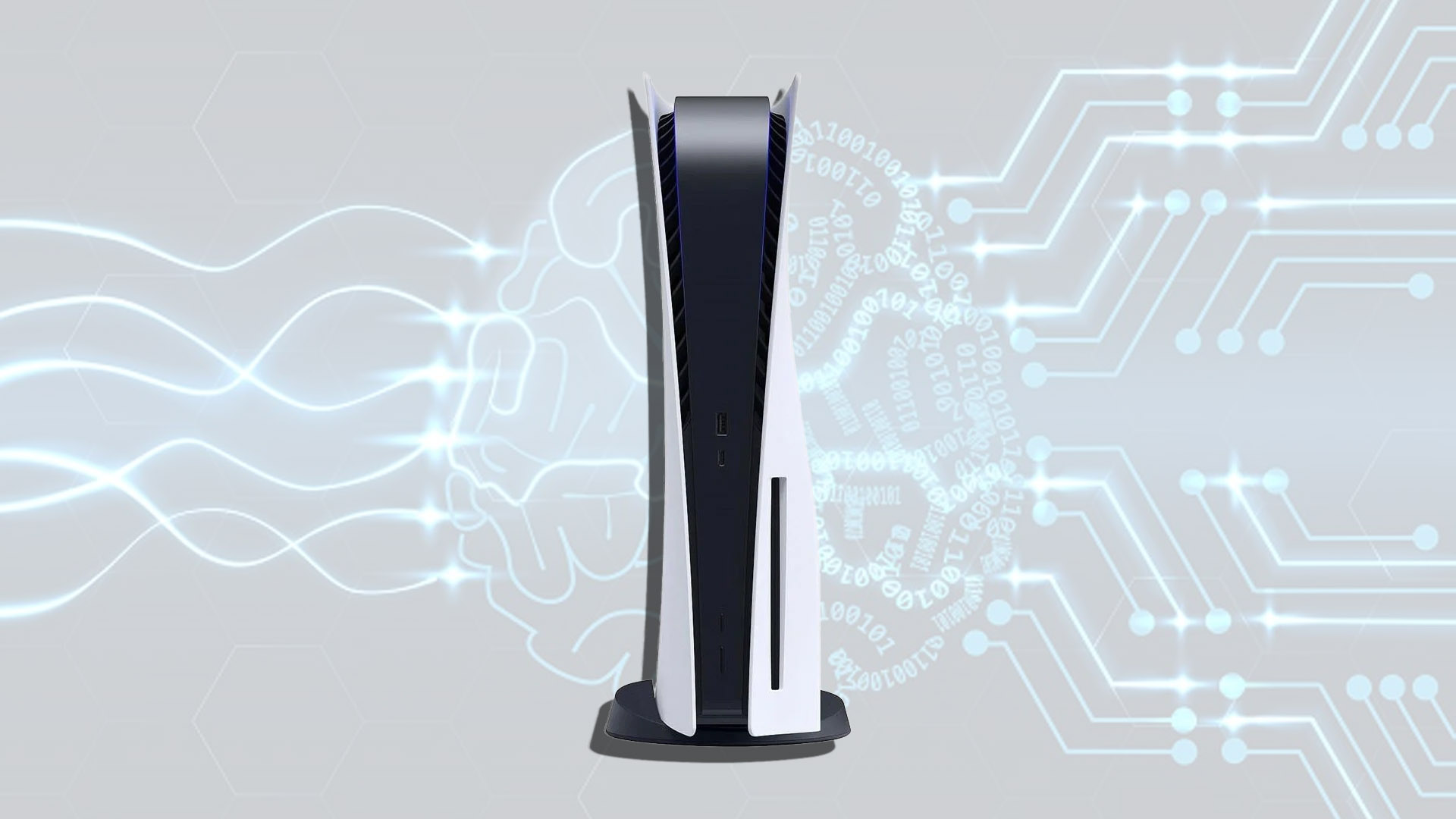
PS5 Runs a 27-Billion-Parameter AI Model in Impressive Homebrew Experiment
The PlayStation 5 was built for high-end console gaming, but a recent homebrew experiment shows that Sony’s console can do far more than render blockbuster titles. Thanks to its 16GB of GDDR6 memory and 448GB/s memory bandwidth, the PS5 has enough raw hardware potential to run a local AI model, and one user has now demonstrated exactly that.
The project, known as PS5LM, managed to get Qwen3.8-27B, a 27-billion-parameter large language model, running on the console. That sounds almost impossible for a gaming machine, especially since large AI models typically demand far more memory than a PS5 can provide. However, the experiment worked by shifting the workload away from the CPU and onto the GPU, freeing up more usable memory in the process.
Initially, an unofficial llama.cpp port allowed AI models to run on the PS5 by using the CPU as a payload. While that approach proved the concept was possible, it came with a major drawback: available memory was limited to around 6GB. That is not enough for larger models, especially when the system also needs memory for other tasks.
A Reddit user later improved the setup by bringing llama.cpp to the PS5 as a native app. This was done using Vulkan through a RADV port, an open-source AMD driver from Mesa. That change dramatically increased usable memory from roughly 6GB to 11.4GB, giving the console enough room to attempt a heavily compressed version of Qwen3.8-27B.
Running a 27B AI model normally requires far more memory. At 16-bit precision, Qwen3.8-27B would need around 54GB, which is well beyond the PS5’s 16GB memory pool. That kind of requirement is usually handled by a powerful workstation with multiple GPUs or a GPU paired with a large amount of system memory.
To make it work on the PS5, the user ran Qwen3.8-27B-UD-IQ2_XXS, a heavily quantized version of the model. This version stores weights at roughly 2 bits each, shrinking the model down to about 6.8GB. That reduction is what made the experiment possible on console hardware.
The trade-off is quality. Heavy quantization can make an AI model less accurate, more prone to mistakes, and weaker at complex reasoning. In other words, while the PS5 can run the model, users should not expect the same performance or response quality they would get from a full-precision version running on a dedicated AI workstation.
Even with those limitations, the performance numbers are impressive. With the context window set to 64K, total memory usage reached 91 percent. Qwen3.8-27B achieved around 20.9 tokens per second, with the GPU running at 100 percent and the CPU barely working at around 2 percent.
Smaller AI models performed even better. Gemma 4 E4B reportedly reached 61 tokens per second, while Llama 3.2 3B climbed to 124 tokens per second. Those results show that the PS5’s memory bandwidth and GPU architecture can be surprisingly capable for local AI workloads when the software is properly adapted.
Power efficiency was also notable. The console reportedly drew around 86W during the test and stayed at about 54°C, meaning it remained cool while running the AI workload. For hardware designed primarily for gaming, that is a strong result.
Still, this is not something most PS5 owners should rush to try. Running llama.cpp as a native app on the PS5 requires a jailbroken console, which can void the warranty and may lead to restrictions or bans from online gaming services. It is also not a practical replacement for dedicated AI hardware, especially if the goal is high-quality responses from large language models.
The biggest limitation remains memory. The PS5’s 16GB unified memory pool is useful, but it forces larger AI models to be heavily quantized. That makes the setup more of a technical showcase than a practical everyday AI machine. Smaller models, however, appear to run much more comfortably and deliver far higher token generation speeds.
Even so, the experiment is a fascinating example of what modern game consoles can do beyond gaming. The PS5 may not be designed as an AI workstation, but with the right software, driver support, and plenty of technical effort, it can run local large language models in a surprisingly capable way.