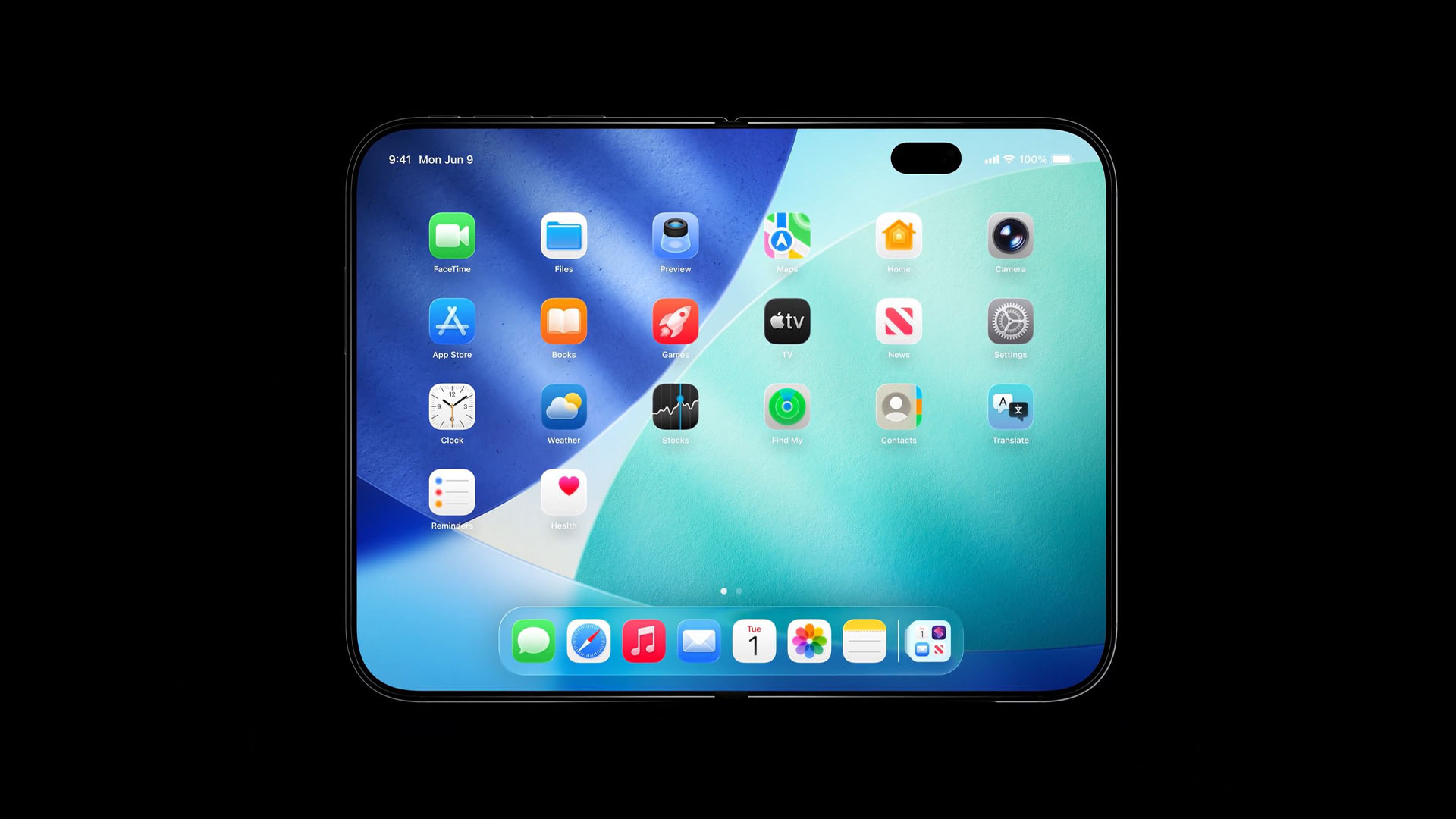
Apple’s first foldable iPhone is shaping up to be a study in trade-offs. Widely rumored to arrive as the iPhone Ultra, the device appears designed around one overriding goal: keep a slim, premium profile even if it means leaving out features many buyers would expect from a roughly $2,000 flagship.
Newly leaked metal dummy units shared by tipster Vadim Yuryev suggest two surprising omissions: MagSafe charging support and a dedicated LED flash. On the dummy, there’s no visible MagSafe coil layout, and the rear camera area doesn’t show the usual separate flash module. If this reflects the final design, Apple may be prioritizing internal space for foldable-specific hardware—like the hinge mechanism and display stack—over conveniences that have become standard on modern iPhones.
The dummy units also highlight another notable design choice: a large camera bump. That matches a broader trend in Apple’s upcoming phones, as the same source claims the iPhone 18 Pro models could also get thicker camera modules. One cited measurement pegs the iPhone 18 Pro Max at 13.77mm including the camera bump, up from 12.92mm on the iPhone 17 Pro Max. The increase is believed to be connected to a variable aperture camera system expected to debut in the Pro lineup.
A major reason Apple’s foldable is such a delicate balancing act comes down to the hardest problem in foldables: the display crease. Over time, foldable screens can develop visible creasing caused by subtle misalignments in the display’s neutral layers. Repeated bending concentrates stress at the fold, potentially leading to micro-cracks and long-term deformation.
To minimize that, Apple is reportedly exploring several engineering solutions. One involves Ultra-Thin Glass (UTG) with variable thickness, where the folding area is thinner than the rest of the panel to reduce stress where it bends most. Another potential upgrade is the use of Optically Clear Adhesive (OCA) with viscoelastic properties—staying flexible during slow bending to ease strain, then hardening quickly when force is applied. The adhesive may also help “micro-fill” tiny cracks, potentially slowing crease progression.
There’s also talk Apple could use a layered approach, effectively sandwiching the display with dual layers of ultra-thin glass materials (UTG and Ultra-Thin Flexible Glass) to spread folding stress more evenly and reduce wear from hinge contact. One report claims Apple is targeting an extremely shallow crease depth of around 0.15mm, which would be a significant achievement in the foldable category.
On top of durability work, Apple is expected to chase a thinner, more efficient OLED stack using a Color Filter on Encapsulation (CoE) approach. In simple terms, CoE can replace the traditional thick circular polarizer with a thinner color filter layer deposited directly in the panel structure. When paired with a black pixel definition layer, it can boost light transmittance and cut power use. For a foldable, a thinner and lighter display stack isn’t just about looks—it can also lower mechanical stress and enable a smaller, gentler folding radius that may improve longevity.
Pricing is still fluid, but one report out of South Korea suggests Apple could aim for a starting price around $2,000. That would be lower than earlier claims that put the first foldable iPhone closer to $2,300–$2,400, though it would still place the iPhone Ultra firmly in ultra-premium territory.
On the software side, the foldable iPhone is expected to lean into productivity. The interface is said to use iPad-like layouts and side-by-side apps designed for multitasking, but without copying the more desktop-like direction seen in recent iPad software. The internal screen is expected to be approximately iPad-sized with a wider aspect ratio, while the outer display is described as closer to a small iPhone. This supports earlier rumors that Apple may use a passport-like, wider form factor rather than an ultra-tall foldable shape.
More design and camera details have also surfaced. The outer display is rumored to include a small hole-punch cutout, while still using the Dynamic Island-style interface for notifications. Face ID is reportedly being dropped on this model, with Touch ID integrated into the side button—likely another space-saving move given the tight packaging demands of a foldable. Apple has also been testing an under-display camera for the internal screen, but current results are reportedly not good enough, making it less likely to appear in final retail units.
As for cameras, current expectations point to a dual rear camera system, with past reports suggesting 48MP sensors for both lenses. The front-facing camera could reach up to 24MP.
Other rumored iPhone Ultra specifications include:
A dedicated vapor chamber for improved cooling
An internal display resolution of 2,713 x 1,920 with a 4:3 aspect ratio
A20 Pro chip paired with 12GB RAM
An in-house C2 5G modem
A battery in the 5,400–5,800mAh range
An eSIM-only launch configuration
If these leaks and reports hold up, the iPhone Ultra may not win everyone over with a traditional “everything included” flagship checklist—especially if MagSafe and an LED flash truly don’t make the cut. But Apple appears to be betting that crease reduction, thin-and-light engineering, and a tablet-like multitasking experience will matter more to early foldable adopters than familiar extras.