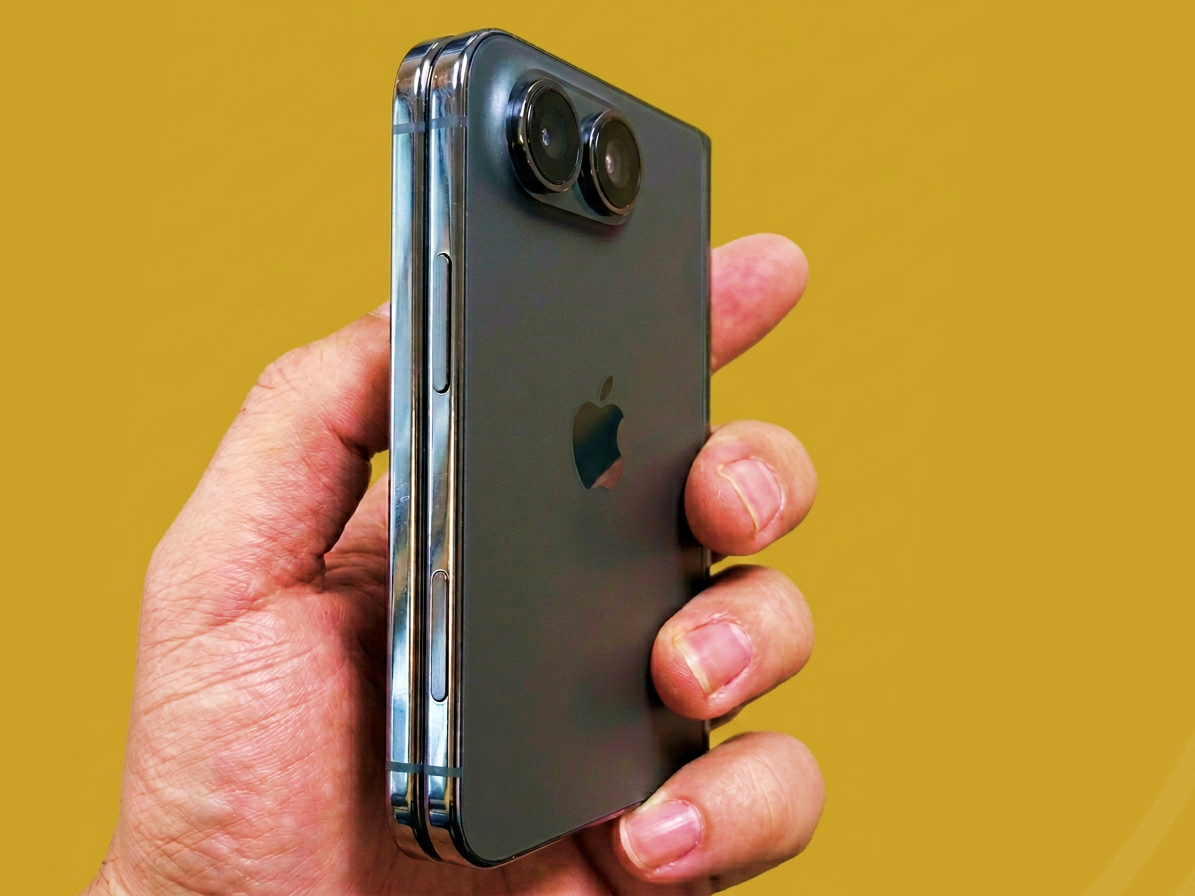
Fresh leaked dummy units are giving fans their clearest look yet at what’s being described as the final design for Apple’s first foldable iPhone, often referred to as the iPhone Ultra/Fold, alongside the upcoming iPhone 18 Pro. And if these design units reflect what Apple will actually ship, the foldable model is shaping up to be far more controversial and conversation-worthy than the Pro.
On the surface, the iPhone 18 Pro seems to play it safe. The design appears largely unchanged compared to the previous generation, which suggests Apple may be focusing its major hardware experimentation elsewhere this cycle. That “elsewhere” is the foldable iPhone, where Apple looks ready to make a few bold choices that will instantly split opinion.
The biggest headline: Touch ID appears to be coming back. According to the dummy unit design, the right-side power button is expected to double as a fingerprint sensor. For many users, this could feel like a practical win. Side-mounted Touch ID is familiar, fast, and reliable, and it avoids some of the compromises that can come with face-based unlocking on devices that fold, rotate, or are used at unusual angles. It’s a very “Apple” way to simplify authentication on a new form factor: choose the method that works consistently in more positions.
But the more surprising change might be the button layout—specifically the volume controls. Instead of placing volume buttons on the right side where most smartphone users instinctively expect them, Apple appears to have moved them to the top edge of the iPhone Ultra/Fold.
That choice starts to make sense once you think about what kind of foldable this is rumored to be: wider and shorter when opened, leaning into a small-tablet experience. In that tablet-style, landscape-first mode, top-mounted volume buttons can be easier to access and can feel more natural when you’re holding the device like a mini iPad for videos, gaming, or reading.
The trade-off is obvious, though. In the folded “phone” state, top-mounted volume buttons could be awkward for one-handed use, forcing many people to stretch a finger higher than usual just to adjust volume quickly. For a device aimed at doing double duty as both a phone and a tablet, this is the kind of compromise that can either feel like a clever optimization or a daily annoyance—depending on how you use it.
There’s also a lingering question about another element visible on the dummy unit: a cutout on the right side that resembles a 5G antenna line. Some are wondering if that piece could actually hide an alternative volume control mechanism, like a rocker-style solution built into the frame. The fact that it appears flush makes it look more like an antenna than a button, but with dummy units, small details can still be misread—or intentionally simplified.
If Apple does stick with top-mounted volume buttons, it may try to balance the ergonomics with software. A gesture shortcut, a quick-access volume slider, or a tap-based control could reduce the need to reach for physical buttons. Apple has a long history of using software to smooth over hardware limitations, especially when introducing new categories.
One more detail worth noting: the foldable dummy unit shown also appears without the familiar MagSafe ring markings. That doesn’t confirm MagSafe is gone, but it does add to the mystery around how Apple plans to handle magnets, wireless charging alignment, and accessory support on a folding chassis.
Taken together, the dummy units suggest a clear direction: Apple may be prioritizing the “iPad mini experience” of the foldable iPhone over the classic one-handed iPhone feel. That’s a statement, and it signals what Apple thinks a foldable should be used for most often—media, multitasking, and tablet-style interaction first, traditional phone ergonomics second.
If these leaks hold up, the iPhone Ultra/Fold won’t just be Apple’s first foldable. It’ll be Apple’s first foldable designed around a very specific idea of how people should use it—and that’s exactly why the button placement and Touch ID decision will be debated the moment it’s announced.